



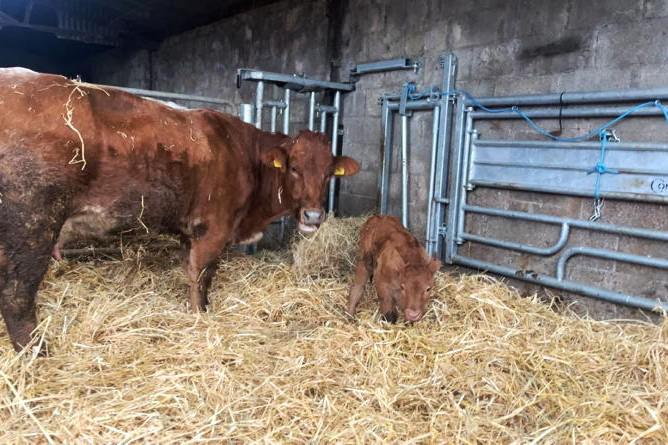
Over the coming weeks, suckler farmers will be gearing up for spring calving. Ensuring cows and sheds are fully prepared now improves hygiene, reduces stress, and supports easier calving and healthier calves.
Pre-calving minerals
High-quality pre-calving mineral powders should be fed to cows 6-8 weeks before calving because they supply the key trace elements needed for calf growth and cow immunity.
Adequate magnesium, selenium, iodine, and vitamins help prevent issues such as weak calves and retained cleansings.
These minerals also support hormone function and colostrum quality, ensuring healthier newborns. Feeding a reliable mineral ensures cows calve down in good condition, return to heat faster, and face fewer metabolic risks around calving.
Vaccination programme
Where scour is an issue, a vet-led vaccination plan can help. Pre-calving vaccines targeting rotavirus, coronavirus, E. coli, and cryptosporidium are available, but correct timing – typically 4-6 weeks before calving – is crucial.
For the vaccine to work, calves must receive adequate, high-quality colostrum so the antibodies are passed on effectively. Proper timing and good colostrum management are essential for achieving the best protection.
Feeding cows to appetite
Feeding in-calf suckler cows to appetite is vital because rumen capacity naturally shrinks as the calf grows, reducing how much forage the cow can consume. It ensures the cow receives enough energy to maintain body condition before calving.
Restricting forage reduces intake, increases condition loss, and weakens cow and calf performance.
Calving pens
Dirty calving areas increase the chance of metritis, mastitis and retained cleansings, all of which can reduce fertility and impact milk production. Clean, disinfected pens dramatically lower the risk of faecal–oral transmission, the primary route for disease-causing pathogens.
Even good-quality colostrum cannot fully protect a calf if it receives an overwhelming dose of pathogens immediately after birth. A hygienic environment gives colostrum the best chance to work effectively.
Ensure the disinfectant used on calving pens covers the relevant diseases present on the farm and that it is mixed at the correct dilution rate; otherwise, it will be insufficient to kill pathogens.
Safety and lighting
A calving gate is essential for safety at calving time. It securely restrains the cow, protecting the farmer when assisting difficult births or handling newborns. Using a calving gate reduces stress, prevents injury, and ensures safer, more controlled intervention during busy calving periods.
Lighting is often overlooked, and it is only when cows calve during the night that the value of good-quality lighting becomes clear. Installing lights over calving pens and ensuring proper lighting at calving gates makes the process much easier for both farmer and cow.



SHARING OPTIONS