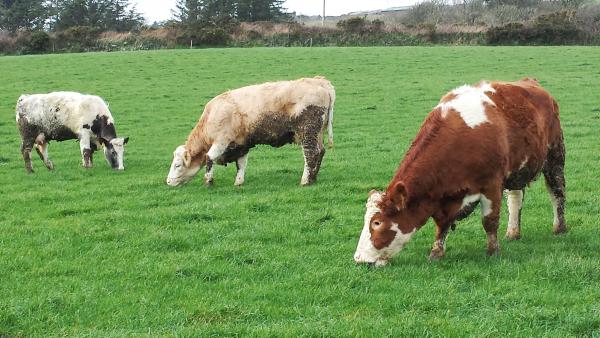
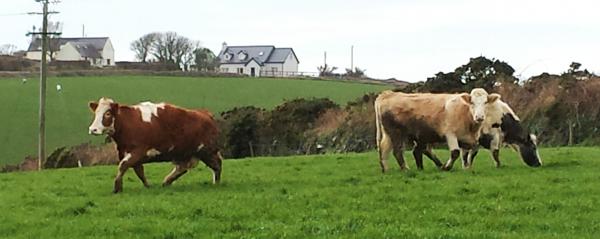
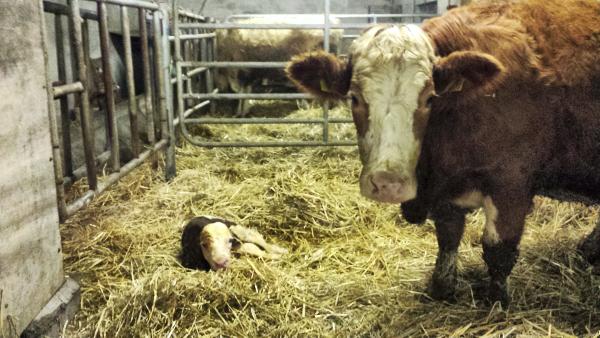
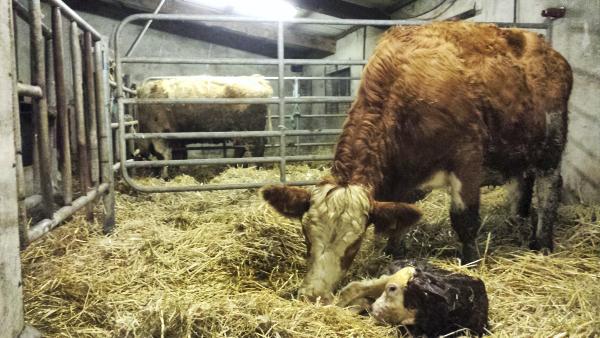
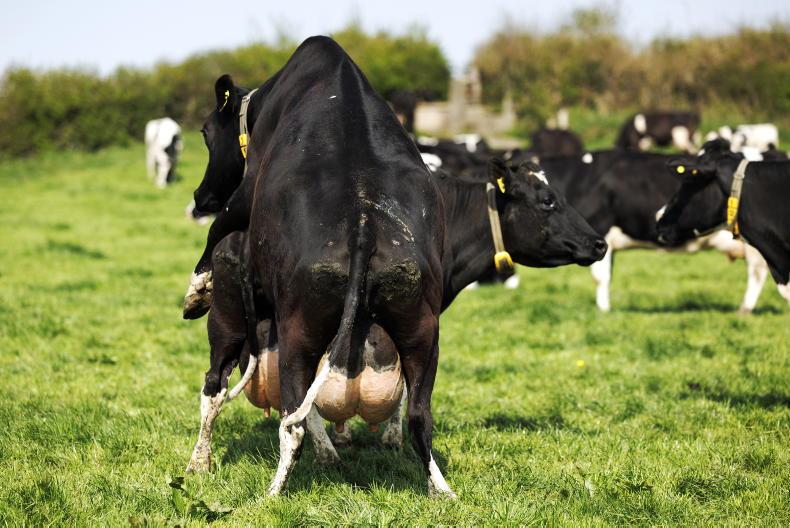
It’s proving to be a very slow start to calving but some of the calved cows got out to grass for a few hours on Thursday. This is my fourth year doing this and is proving useful in getting high quality grass into the cows’ diet. Also it makes them easier to handle as it gets the cows used to routine. Paddocks closest to the yard are closed first allowing their use once calving starts. It’s a small bit tricky separating the cows from their calves on day one, but from then on it’s a case of open the door and stand back. They have the incentive of grass to go out to and the calf to come back into after eating their fill. I leave the gate open to avoid the cows panicking so they can run back (they don’t walk the first day) to the house and look at the calves, which they do at least three to four times. This avoids determined cows finding anyway they can back to the calves and creating more work in the form of fence repairs. It can be funny watching a cow happily eating grass suddenly bolt back to the shed after realizing her calf isn’t with her. After a few minutes roaring at the calf in the shed, she gets bored and heads back for grass.
The first of the 2014 heifers calved this week having a 35 kg bull calf. She was a few days over 23 months at calving and ended up penned next to her full sister who had her third calf at 47months. A look at the ICBF suckler cow report showed that there was a sale from that cow at 33 months. My father started a suckler herd in 1989 with heifers calving at 2years of age and it’s a policy that’s been kept up over the years. On a farm walk held here in 2012 the following table was put together showing the difference that calving at three years instead of two years would have on the output of the herd.
Table 1: What age to calve down heifers?
ADVERTISEMENT
Calving at 2 years
Calving at 3 yrs
Difference on 40 ha
Livestock units
72
72
Cows
60
52
0-1 years
12
10
1-2 years
12
10
2 yr
0
10
Sales
€55,300 (59)
€47,800 (51)
€7,500
Register for free to read this story and our free stories.
This content is available to digital subscribers and loyalty code users only. Sign in to your account, use the code or subscribe to get unlimited access.
The reader loyalty code gives you full access to the site from when you enter it until the following Wednesday at 9pm. Find your unique code on the back page of Irish Country Living every week.
CODE ACCEPTED
You have full access to the site until next Wednesday at 9pm.
CODE NOT VALID
Please try again or contact support.
It’s proving to be a very slow start to calving but some of the calved cows got out to grass for a few hours on Thursday. This is my fourth year doing this and is proving useful in getting high quality grass into the cows’ diet. Also it makes them easier to handle as it gets the cows used to routine. Paddocks closest to the yard are closed first allowing their use once calving starts. It’s a small bit tricky separating the cows from their calves on day one, but from then on it’s a case of open the door and stand back. They have the incentive of grass to go out to and the calf to come back into after eating their fill. I leave the gate open to avoid the cows panicking so they can run back (they don’t walk the first day) to the house and look at the calves, which they do at least three to four times. This avoids determined cows finding anyway they can back to the calves and creating more work in the form of fence repairs. It can be funny watching a cow happily eating grass suddenly bolt back to the shed after realizing her calf isn’t with her. After a few minutes roaring at the calf in the shed, she gets bored and heads back for grass.
The first of the 2014 heifers calved this week having a 35 kg bull calf. She was a few days over 23 months at calving and ended up penned next to her full sister who had her third calf at 47months. A look at the ICBF suckler cow report showed that there was a sale from that cow at 33 months. My father started a suckler herd in 1989 with heifers calving at 2years of age and it’s a policy that’s been kept up over the years. On a farm walk held here in 2012 the following table was put together showing the difference that calving at three years instead of two years would have on the output of the herd.
If you would like to speak to a member of our team, please call us on 01-4199525.
Link sent to your email address
We have sent an email to your address. Please click on the link in this email to reset your password. If you can't find it in your inbox, please check your spam folder. If you can't find the email, please call us on 01-4199525.
ENTER YOUR LOYALTY CODE:
The reader loyalty code gives you full access to the site from when you enter it until the following Wednesday at 9pm. Find your unique code on the back page of Irish Country Living every week.






SHARING OPTIONS