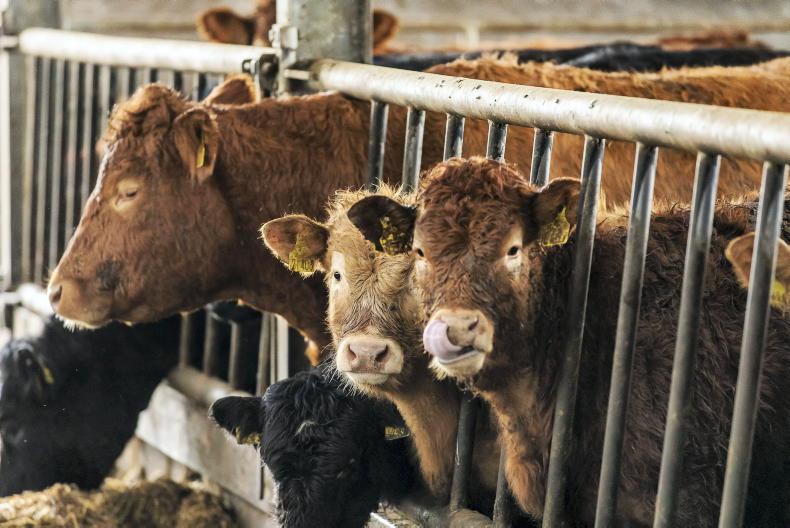
Calving preparation: we’re only a few short weeks away from calving getting under way on many beef farms. A small amount of preparation ahead of this will lead to an easier time when calves do start to hit the ground.
A calving box per 10 cows is usually sufficient; ensure that these are cleaned, power washed and disinfected before any cows start calving. Be sure that there is ample straw available to keep calves warm and dry, and reduce the risk of infection; if stocks are tight, purchase some now.
Cows closest to calving (within one week) should be drafted together in a shed close by in a group/individual calving box for ease of management. The ideal setup is where these cows have access to a slatted area for feeding, with a bedded lie back – if a cow was to calve earlier than expected, she would hopefully do so on the lie back, as opposed to the slats.
Other boxes to tick are supplies such as calving aids, colostrum supplementation and medicines. It’s never any harm to have a second pair of calving ropes, or even a second jack, while a supply of powdered or frozen donor cow colostrum should be on hand to feed calves as required.
A refractometer can be used to test colostrum for quality. While most suckler cows have good-quality colostrum due to lower volumes, some colostrum sourced from dairy farms may be of lower quality.
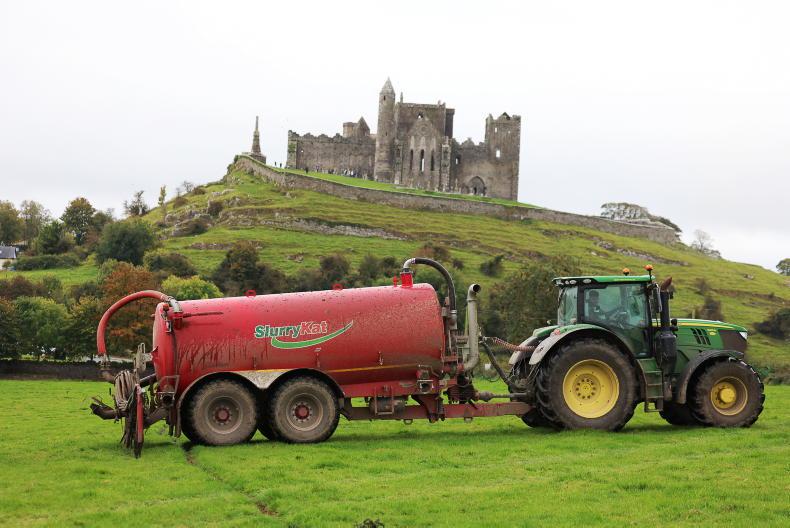
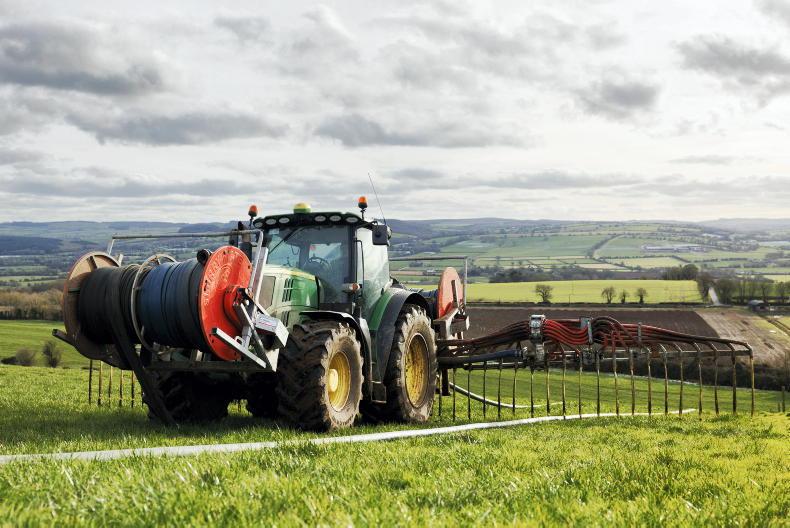
Slurry: the open period for spreading slurry will commence for many farmers in the next week or so. Farmers in Zone A can begin spreading slurry and farm yard manure (FYM) on 13 January, with farmer in Zone B permitted to spread from 16 January onwards. Farmers in Zone C are reminded that the open season doesn’t commence until 1 February.
Slurry spreading rules dictate that for two weeks following the opening of the spreading period, slurry must be kept at least 10 metres away from rivers, streams, watercourses and drains.
This reverts to five metres once this time period has elapsed. It’s important to remember that slurry cannot be spread on fields that are frozen or snow covered, waterlogged, flooded or likely to flood, or heavy rain is forecast within 48 hours. Teagasc advises to maximise the nutrient content of slurry by spreading using the following guidelines:
Soil temperatures are at 6°C and rising.Soils are trafficable and are not saturated. Slurry is targeted to drier fields with a requirement for P and K and have a good pH balance.Application rates of slurry must match growth rates of the crop.Grazing infrastructure: while it may seem premature, get a check done on paddocks to ensure troughs are flowing and fences are stock proof ahead of the busy calving/turnout period.
While ground conditions don’t currently allow it, it may be wise to have a paddock or two close to the yard to allow fresh-calved cows to be turned out in February, should the weather be right for it.
Calving preparation: we’re only a few short weeks away from calving getting under way on many beef farms. A small amount of preparation ahead of this will lead to an easier time when calves do start to hit the ground.
A calving box per 10 cows is usually sufficient; ensure that these are cleaned, power washed and disinfected before any cows start calving. Be sure that there is ample straw available to keep calves warm and dry, and reduce the risk of infection; if stocks are tight, purchase some now.
Cows closest to calving (within one week) should be drafted together in a shed close by in a group/individual calving box for ease of management. The ideal setup is where these cows have access to a slatted area for feeding, with a bedded lie back – if a cow was to calve earlier than expected, she would hopefully do so on the lie back, as opposed to the slats.
Other boxes to tick are supplies such as calving aids, colostrum supplementation and medicines. It’s never any harm to have a second pair of calving ropes, or even a second jack, while a supply of powdered or frozen donor cow colostrum should be on hand to feed calves as required.
A refractometer can be used to test colostrum for quality. While most suckler cows have good-quality colostrum due to lower volumes, some colostrum sourced from dairy farms may be of lower quality.
Slurry: the open period for spreading slurry will commence for many farmers in the next week or so. Farmers in Zone A can begin spreading slurry and farm yard manure (FYM) on 13 January, with farmer in Zone B permitted to spread from 16 January onwards. Farmers in Zone C are reminded that the open season doesn’t commence until 1 February.
Slurry spreading rules dictate that for two weeks following the opening of the spreading period, slurry must be kept at least 10 metres away from rivers, streams, watercourses and drains.
This reverts to five metres once this time period has elapsed. It’s important to remember that slurry cannot be spread on fields that are frozen or snow covered, waterlogged, flooded or likely to flood, or heavy rain is forecast within 48 hours. Teagasc advises to maximise the nutrient content of slurry by spreading using the following guidelines:
Soil temperatures are at 6°C and rising.Soils are trafficable and are not saturated. Slurry is targeted to drier fields with a requirement for P and K and have a good pH balance.Application rates of slurry must match growth rates of the crop.Grazing infrastructure: while it may seem premature, get a check done on paddocks to ensure troughs are flowing and fences are stock proof ahead of the busy calving/turnout period.
While ground conditions don’t currently allow it, it may be wise to have a paddock or two close to the yard to allow fresh-calved cows to be turned out in February, should the weather be right for it.






SHARING OPTIONS