


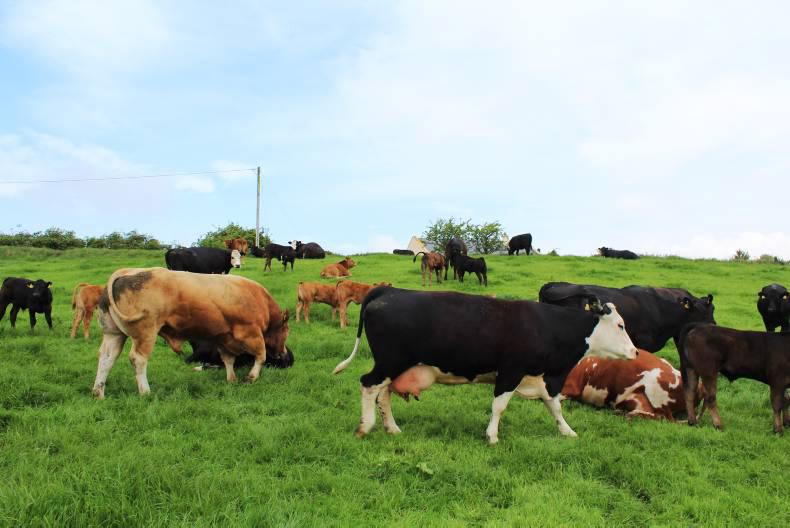
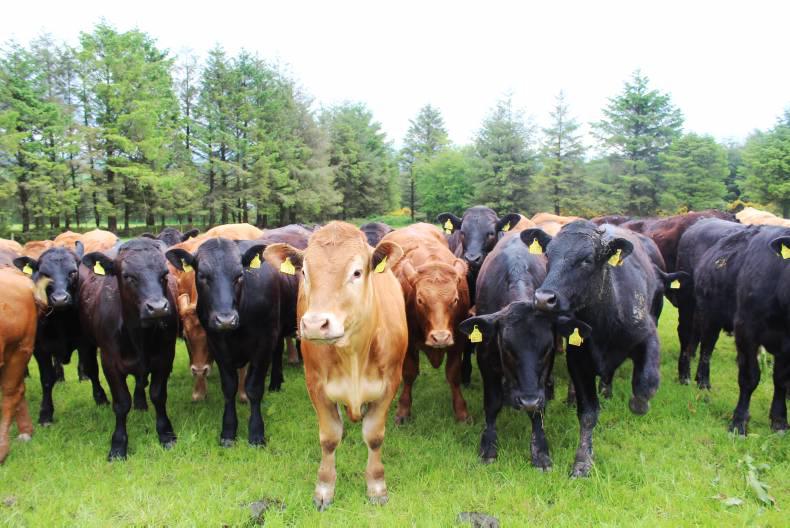
David Walsh farms 42ha (104acres) near Newcastle, Co Tipperary. The land is heavy in nature, but despite this, David has pushed the stocking rate up every year since joining the programme. In 2011, he started at 1.22LU/ha and has increased it to 2.37LU/ha last year. This year, he is looking at carrying all cattle through to slaughter and will be stocked at about 2.7LU/ha.
Carrying such a high stocking rate is not without its challenges, particularly in a wet spring like we had this year.
Heavy rainfall over the winter and through the spring meant that turnout was delayed on the farm. In addition, cattle that were turned out in April had to be rehoused for a period and the last of the cattle only went to grass in late April.
Because of this, David has said that cattle are about a month behind in terms of weight. Weighing is due to take place on the farm in the coming weeks.
Finishing all cattle
David has changed his system from selling store cattle to a combined suckler-to-finishing system.
Housing has been one of the biggest constraints on the farm in relation to finishing. It has been the limiting factor in the number of cattle he can slaughter off the farm each year.
This year, he started work on an additional four-bay shed, which will give him the scope to finish all of the yearlings he can on the farm.
Grass supply
Grass is not overly abundant on the farm, despite the past few weeks of strong growth. The grazing area is stocked at 4LU/ha and it has an average cover of 869kg DM/ha.
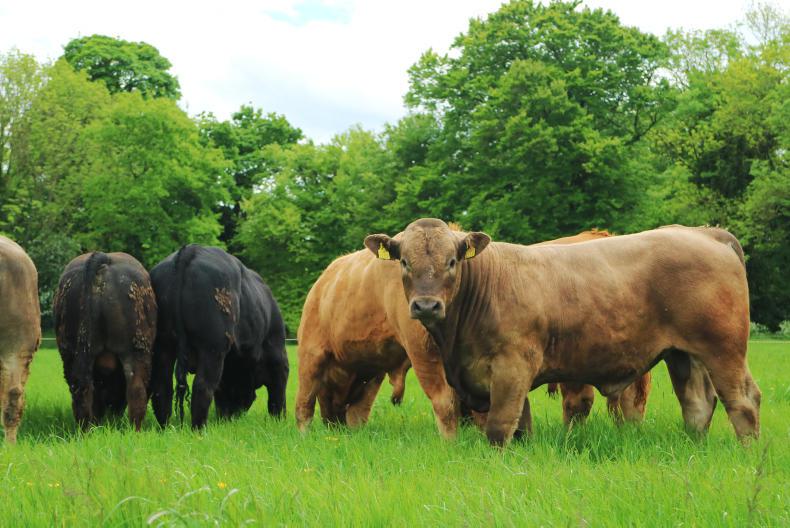
There are two groups of cows, each running with a stock bull. The third group is 55 bullocks and heifers, which are being run together. This is the first time that he has opted to run them as one bunch in order to reduce the labour input for grassland management.
While this is working well at the moment, David said that in the difficult weather in the spring, there was a lot of activity in the group, with bullocks mounting heifers that were bulling.
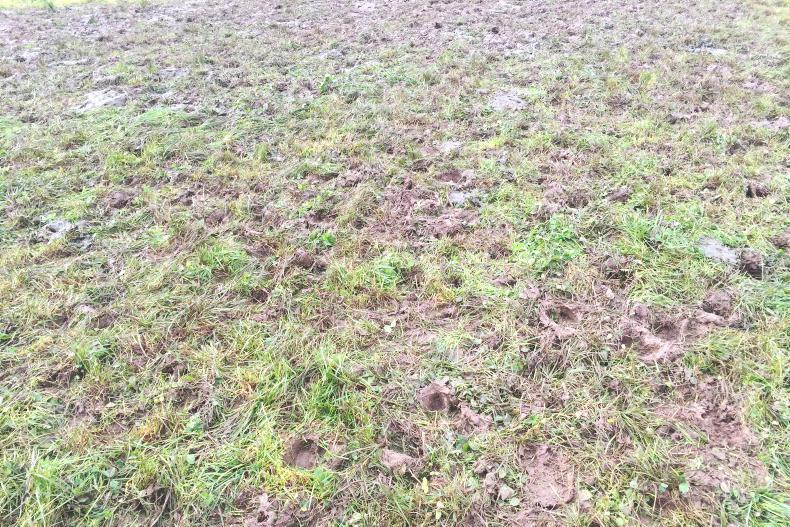
With ground conditions poor at the time, they did some damage in paddocks along the wires.
There is about 30 acres of the home farm closed for silage at the moment, with an additional seven acres which will come in from a temporary rented field.
With silage cutting date delayed for another week or two, demand will remain high on the grazing block. To keep grass growth rates up, he is following with about a bag and a half of 18:6:12 after each grazing at the moment.
The farm was low in P and K and over the past few years, David has focused on improving soil fertility through applying lime and using compound fertilisers.
Silage budget
Making enough silage on the farm when stocked heavily is a major issue. So far, David has closed about 30 acres of his own farm for first-cut silage and another seven-acre temporarily rented field will also be cut in the first cut.
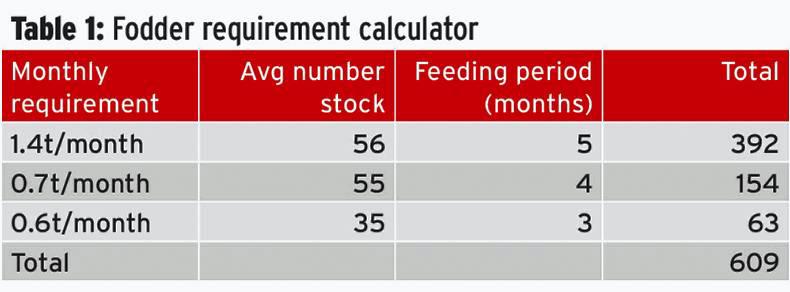
Table 1 details a rough estimate of the silage supplies required for the winter.
“We are presuming that a share of the store heifers will be finished off grass in the autumn along with some of the heaviest bullocks,” said David. “We are aiming for a four-and-a-half-month winter for the cows. However, this can be as high as five months, depending on the weather.
“For the weanlings, we are estimating that they will be housed in mid-October and will go back to grass in February.
“The finishing cattle will be housed and placed on about 6kg to 7kg of concentrates from October to December with the aim of finishing them prior to Christmas,” he said.
With limited supplementation, these cattle will eat up to 1.3t/month. However, as they are on a high level of finishing ration, a silage intake of about 0.6t/head over the three-month finishing period should suffice.
The total silage requirement for the winter on the farm will be about 610t this year. Approximately 37 acres will be made in the coming weeks, which should give about 370t.
The crop is not as heavy as other years, so silage supplies will have to be assessed again after the first cut is made. In addition to this, David has bought in 50 bales of silage so far. At an average of 750kg of silage to a bale, this will bring the silage reserve to about 409t.
David was focusing on closing about 20 acres of his own ground along with the rented field for second-cut silage. This should give him 162t of second-cut silage. However, this may still leave him a little short on winter feed.
The options
In the past, David’s silage was 70+DMD. If the silage quality is good again this year, as all the cows are spring calving there may be a possibility of feeding them a restricted silage diet for a month or two early in the winter in order to manage body condition. However, this can only be done if the cows are housed in excess body condition score (BCS).
All changes in BCS will have to be done by about eight weeks pre-calving when they will again be placed on an ad-lib diet. Restricting silage intake to about 32kg/day fresh from ad-lib levels will save up to 23t/month of silage.
He has the option of closing more ground for the second cut, but this will depend on grass growth rates in the coming weeks.
No surplus paddocks have been taken out as silage so far, but if strong growth rates continue in the coming weeks, then they should be taken out where possible.
Another option for the finishing cattle is to place the bullocks on ad-lib meal feeding during the finishing phase or close to ad-lib levels.
In the case of bullocks and heifers, feeding over 7kg of ration per day will not increase growth rates, so the additional cost cannot be got back, but it may be necessary if silage supplies are tight.
The final option is to buy in extra bales of silage. Depending on first-cut yield, if there is still a deficit, buying in additional silage bales over the 50 already purchased may be a viable option.
Adviser comment
The biggest issue when David joined the BETTER farm programme in 2012 was lack of output. With a stocking rate of 1.2 LU/ha and a 35-cow herd selling yearlings out of the shed, scope for profit was limited. The plan that was put in place was to at least double the stocking rate over four or five years.
The main change in system was to move from selling yearlings to either selling forward stores in the autumn or finishing in late autumn. This was done in conjunction with increasing cow numbers to 55.
Managing cashflow during the expansion period was a challenge, especially during 2013, when costs increased due to weather, but now all the pieces are starting to fall into place.
Total stock sales this year could make close to €100,000, compared with €36,000 in 2012, while variable costs haven’t increased dramatically.
David’s grassland management skills have improved to allow him manage a stocking rate of 4LU/ha at peak times during the grazing year. A new finishing shed will be constructed this year and while this will increase fixed costs slightly, the extra output and margins gained from finishing should cover the costs over time.
Alan Dillon



SHARING OPTIONS