Joe Burke, Bord Bia, and Jack Kennedy, Irish Farmers Journal, pictured during the livestock demonstration at the Ploughing Championships at Ratheniska. Picture: Donal O'Leary
Our live demonstration of animals at the Irish Framers Journal stand at the recent Ploughing Championships, in conjunction with Bord Bia and ICBF, generated a lot of debate around the beef industry’s breeding policies and the direction in which things are going over the next few years.
The Beef Data and Genomics Programme (BDGP) has changed the landscape and has made many farmers think more of maternal genetics when choosing either AI or stock bulls to breed replacements. Many farmers believe that this will be to the detriment of maintaining quality in the national suckler herd and farmers will suffer when slaughtering males from these maternal genetics. On the other hand, farmers who went down this route said that they find that maternally bred bulls are generally easier calving and this more than makes up for any negative effect on carcase weight and conformation in the males.
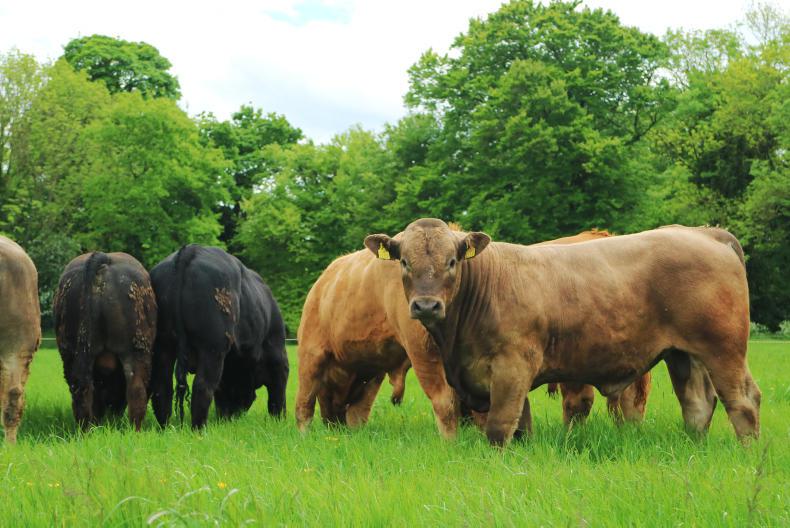
Two of the steers that were on display were born in April 2015 and were sired by the maternal Simmental sire LZZ who has a replacement index of €146, which is both five stars within the breed and five stars across the breed. Both steers had very good conformation and when asked about current specs, Joe Burke from Bord Bia said that both would fit into current carcase specifications. The four steers on display at the demo had average daily lifetime gains of 1.17kg/day since birth, which was an exceptional weight gain and would be up there with the performance of some of the best terminal bulls.
ADVERTISEMENT
Bear in mind that the farmers in question were hoping for heifers and these steers were almost a secondary product when compared with the breeding potential of a heifer.
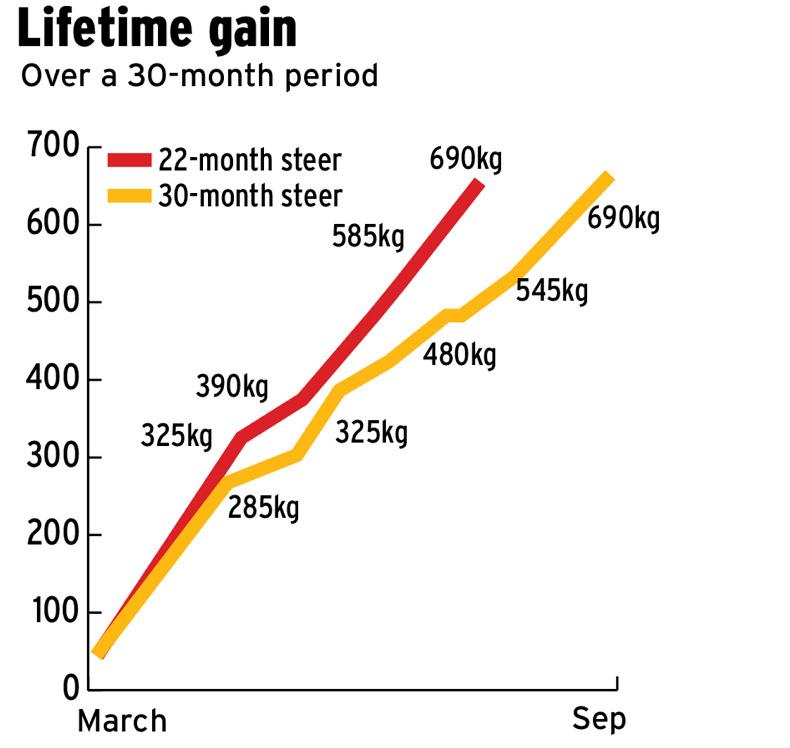
An interesting note on the two steers of the same age and by the same sire was the 100kg liveweight difference between the two. The lighter steer weighed 500kg in early September and most likely will be stored over the winter and grazed next spring with a target finish at 30 months in September 2017. The heavier steer weighed 600kg in early September and with a 100-day finishing period is on track to kill into 400kg carcase at 22 months. The 22-month steer will leave €200 to €300 more than the lighter steer over his lifetime. Being able to finish cattle at younger ages and at carcase weights which meet current carcase specifications will be much more profitable for suckler farmers when compared with having long store periods, increased slaughter age and heavier out-of-spec carcases. These older cattle are more costly to produce and have a higher carbon footprint which may become more important in the future marketing of our beef.
Using maternal genetics does not automatically mean poor grades and weights.
There are still a high proportion of beef traits in the current replacement index.
Beef finishers should invest in a weighing scales to monitor performance on their farms.
High average lifetime gain is of huge importance in determining profitability of finishing systems.
Register for free to read this story and our free stories.
This content is available to digital subscribers and loyalty code users only. Sign in to your account, use the code or subscribe to get unlimited access.
The reader loyalty code gives you full access to the site from when you enter it until the following Wednesday at 9pm. Find your unique code on the back page of Irish Country Living every week.
CODE ACCEPTED
You have full access to the site until next Wednesday at 9pm.
CODE NOT VALID
Please try again or contact support.
Our live demonstration of animals at the Irish Framers Journal stand at the recent Ploughing Championships, in conjunction with Bord Bia and ICBF, generated a lot of debate around the beef industry’s breeding policies and the direction in which things are going over the next few years.
The Beef Data and Genomics Programme (BDGP) has changed the landscape and has made many farmers think more of maternal genetics when choosing either AI or stock bulls to breed replacements. Many farmers believe that this will be to the detriment of maintaining quality in the national suckler herd and farmers will suffer when slaughtering males from these maternal genetics. On the other hand, farmers who went down this route said that they find that maternally bred bulls are generally easier calving and this more than makes up for any negative effect on carcase weight and conformation in the males.
Two of the steers that were on display were born in April 2015 and were sired by the maternal Simmental sire LZZ who has a replacement index of €146, which is both five stars within the breed and five stars across the breed. Both steers had very good conformation and when asked about current specs, Joe Burke from Bord Bia said that both would fit into current carcase specifications. The four steers on display at the demo had average daily lifetime gains of 1.17kg/day since birth, which was an exceptional weight gain and would be up there with the performance of some of the best terminal bulls.
Bear in mind that the farmers in question were hoping for heifers and these steers were almost a secondary product when compared with the breeding potential of a heifer.
An interesting note on the two steers of the same age and by the same sire was the 100kg liveweight difference between the two. The lighter steer weighed 500kg in early September and most likely will be stored over the winter and grazed next spring with a target finish at 30 months in September 2017. The heavier steer weighed 600kg in early September and with a 100-day finishing period is on track to kill into 400kg carcase at 22 months. The 22-month steer will leave €200 to €300 more than the lighter steer over his lifetime. Being able to finish cattle at younger ages and at carcase weights which meet current carcase specifications will be much more profitable for suckler farmers when compared with having long store periods, increased slaughter age and heavier out-of-spec carcases. These older cattle are more costly to produce and have a higher carbon footprint which may become more important in the future marketing of our beef.
Using maternal genetics does not automatically mean poor grades and weights.
There are still a high proportion of beef traits in the current replacement index.
Beef finishers should invest in a weighing scales to monitor performance on their farms.
High average lifetime gain is of huge importance in determining profitability of finishing systems.
If you would like to speak to a member of our team, please call us on 01-4199525.
Link sent to your email address
We have sent an email to your address. Please click on the link in this email to reset your password. If you can't find it in your inbox, please check your spam folder. If you can't find the email, please call us on 01-4199525.
ENTER YOUR LOYALTY CODE:
The reader loyalty code gives you full access to the site from when you enter it until the following Wednesday at 9pm. Find your unique code on the back page of Irish Country Living every week.










SHARING OPTIONS