Bord Bia estimates that this year’s fall in cattle numbers will surpass 150,000 prime cattle, with the total drop of the cattle kill when calves are included being closer to 200,000 head in 2025.
Looking ahead, it is predicting the reduction in supplies to continue into 2026, with an estimated 35,000 to 45,000 head reduction forecast in 2026.
This could see the 2026 kill drop below 1.6 million head, one of the lowest kills in recent decades.
Comparing prices with our main markets in Europe and the UK, the Irish market is currently performing well in 2025, tracking behind the UK price by 23c/kg and ahead of the average EU price by 7c/kg.
There has been a converging of all three prices in recent weeks, with very a small gap now between the EU, UK and Irish prices.
The beef industry is continuing to grapple with lower carcase weights, but the last few months of 2025 has seen an arrest of that decline.
Young bull carcase weights have increased by 1.9kg, with bullock carcase weights up 1.5kg.
The processing industry continues to concentrate on initiatives to support increased quality of cattle coming from the dairy herd.
Speaking at the seminar Bord Bia’s Joe Burke said: “We’ve also seen some farmers delay the marketing of cattle in the last few weeks and that’s as a function of getting some good prices for cattle already in 2025 and also some are anticipating a price rise towards the end of 2025.”
The only issues of concern were around beef consumption and the effect that higher beef prices are having on consumer purchases of beef products.
“We are seeing retailers undertake less price promotions on beef cuts in comparison to other years.
“In the UK market we’ve seen the overall spend on beef up by 7%, but the actual volume purchased is down by 8%.”
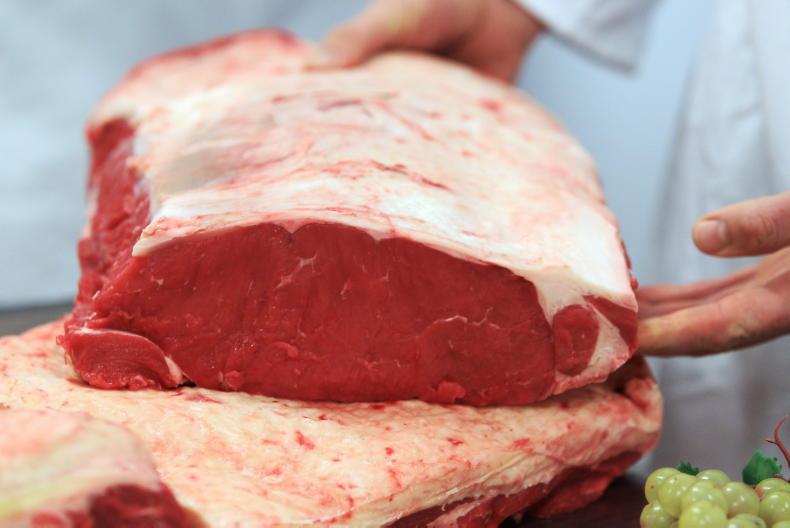
The most pronounced impact has been on the higher priced cuts, with many consumers switching to lower priced cuts like mince over the last few months.
“A 2kg roast has seen a very significant reduction of 22% in purchase volumes as a result of the price going up.
“One of the challenges with these price increases is the fact that it’s leading to some substitution, with cheaper proteins like chicken being purchased more,” Burke said.