


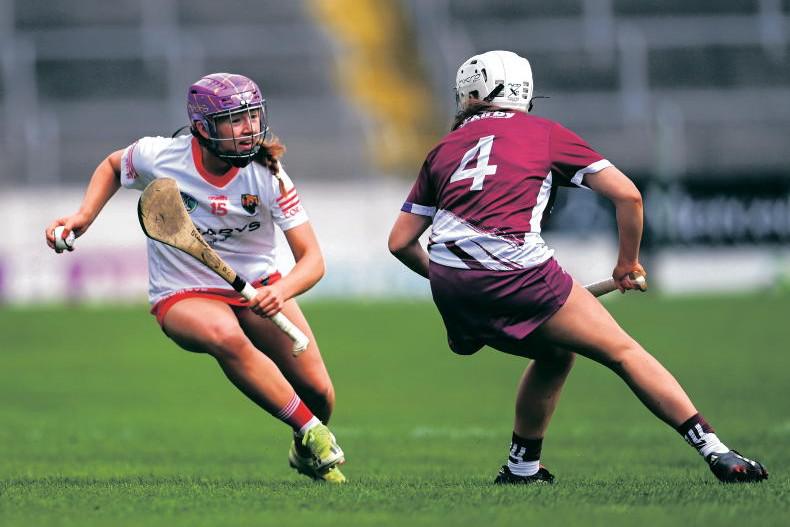
In one sense, it has been a revolutionary year for camogie but, even so, there has been a familiar look to proceedings, in both literal and figurative terms.
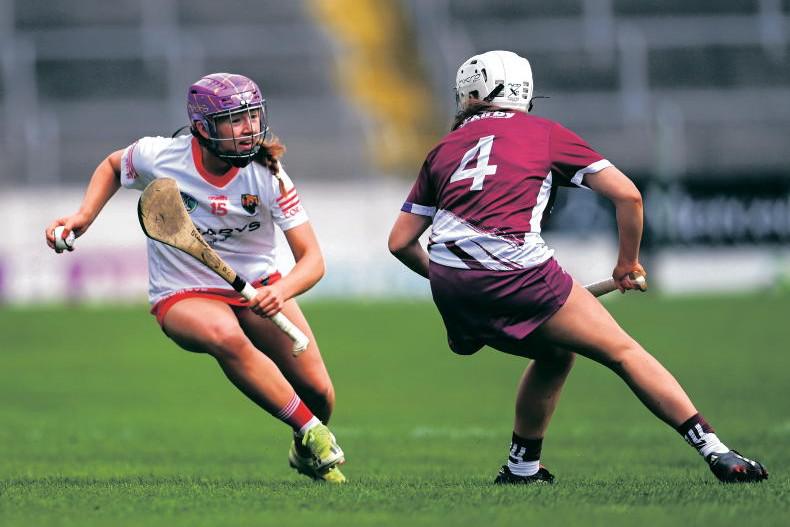
If you have glanced at a championship match this year and been able to say that the appearance is jarring because more players are wearing shorts rather than skorts, you have a sharper eye than us. We would say that the most common experience has been to notice nothing different, especially given the pace of the game.
On teams where there is a mix of skorts and shorts, they are the same colour as each other, so uniformity has not been affected, either. There may have been a news item examining the breakdown in preference for the new option compared to the traditional attire but, if there was, we didn’t see it – the key aim of those pushing for change was to give players a choice over what they wore and they now have that. Hopefully, everybody is happy.
We would also say that hopefully, there won’t be any more controversial issues that put camogie front and centre for negative reasons – unfortunately, history would indicate that such a flash-point is never too far away. For now, we will take relief in the fact that the focus is on the action within the white lines.
Sunday’s Glen Dimplex All-Ireland Senior Camogie Championship final at Croke Park will provide something that spectators of the sport have become accustomed to over more than a decade.
Dominant trio
In 2012, Wexford defeated Cork to win the O’Duffy Cup for the third year in a row; unfortunately for the Model County, they have yet to make it back to the All-Ireland final since then and the showpiece day has become the preserve of three counties.
There have been 26 final spots up for grabs in the interim and 25 of them have been taken up by either Cork, Galway or Kilkenny – in 2023, Cork beat Kilkenny in the quarter-final and were then drawn with Galway in the semis, with Waterford beating Tipperary in the other last-four clash to make the decider for the first time in 78 years.
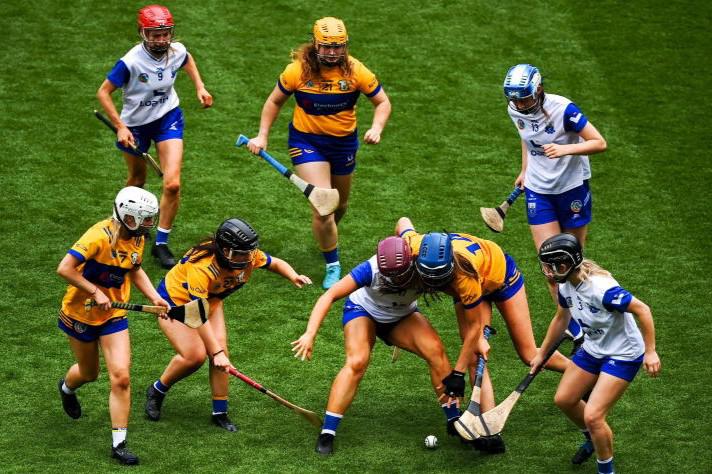
Unfortunately for the Déise, it did not prove to be a springboard – they lost to Cork by 5-13 to 0-9 and were knocked out in the quarter-finals in 2024. While they did make it to the semi-finals this year, Cork were too strong as they eased to a ten-point win in the final.
Galway had seven points to spare over Tipperary in the other semi, meaning Sunday’s game is a repeat of last year’s final, which Cork won by 1-16 to 0-16.
Without wishing to pit camogie and ladies’ football against each other, the latter does tend to have a more even spread of quality
Since 2013, Cork have won six titles, losing three more finals with three wins each for Galway (three final defeats) and Kilkenny (five losses). Beyond Wexford, you have to go back to 2006 and Tipperary for the next-most-recent involvement of a different county. Tipp did beat Kilkenny in the quarter-finals this year but that 2006 appearance was their eighth final in a row, winning five of those.
Without wishing to pit camogie and ladies’ football against each other, the latter does tend to have a more even spread of quality. While Cork won 11 All-Ireland LGFA titles in 12 years, they beat six different counties during that run – and the year they didn’t win, 2010, the side beaten in the final by Dublin were Tyrone, who had knocked the Rebels out but never met them in a decider.
While Dublin saw success in Croke Park last weekend, this year was Meath’s third ladies’ football All-Ireland final in five seasons. It comes straight after their intermediate victory of 2020; the counties earning promotion from intermediate to senior in camogie have found the step up somewhat more difficult to manage. Indeed, the reigning intermediate champions are Cork, who beat Kilkenny last year – however, that marked the end of an era as the Camogie Association put an end to counties’ second teams competing at intermediate, with a stand-alone U23 grade created to cater for players outside the stronger counties’ senior panels.
Of course, having a small number of elite teams capable of winning the ultimate prize is not something unique to camogie; one only has to look at major European football leagues or international rugby union. The association can rightly point to the increased participation numbers in counties where the sport never had a foothold as a valid measure of growth. However, equally, a sense of competitiveness at the top is a positive sign.
Not that that will be of concern to Cork and Galway, whose attitude will be that anyone who wants to shake the current duopoly can earn the right to do so.
Going on recent form against Galway, Cork will be favourites – but you don’t have to go back too far to find a Leeside team that went to Croke Park with such a tag and left without the trophy.
The match starts at 5.15pm; it is preceded by the premier junior final between Armagh and Laois at 1pm and the intermediate decider, Offaly v Kerry, at 3pm.



SHARING OPTIONS