



The must fundamental thing to understand about wanting to have a successor is that you must love farming yourself. If you are inclined to say to your children “don’t become a farmer, don’t be like me, it’s a tough life”, then you won’t succeed.
Instead, you have to be full of enthusiasm from the very start, loving the life and what you do. Farming is a lifestyle too, and it’s very hard to separate it away from daily living.
My granddaughter Katie is already in love with farming. She’s out in the thick of it most days, bringing in cows on her parents’ backs and she’s only 18 months.
That love of farming starts early. It may not last, but there’s every chance that it can. Another love that goes hand and hand with farming is the love of the environment, the care of nature, the protection of habitats and even the creation of them. All of it is beautiful for growing children.
Teenagers
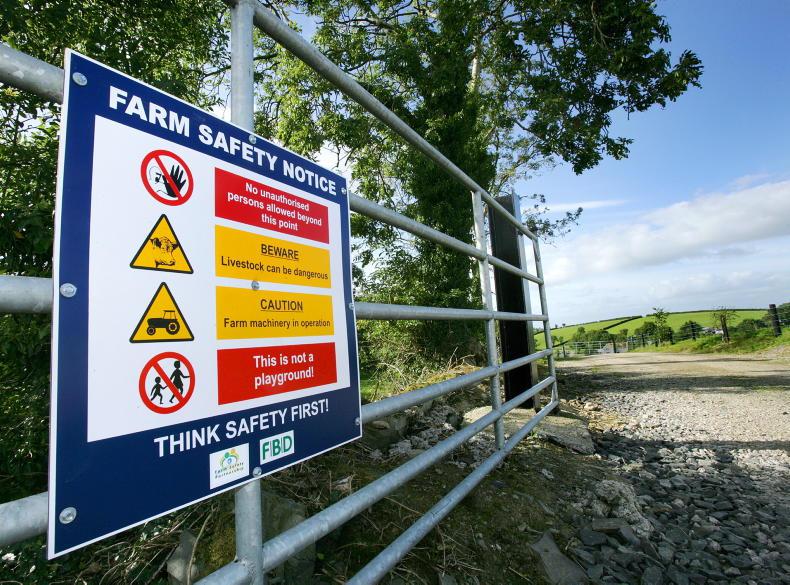
The middle years are a bit tricky through late national school and secondary school, because children and adolescents want to explore and do jobs themselves. This is the time when you have to put serious emphasis on farm safety. It is also the time to take them to Moorepark, to farm walks, conferences and open days.
It allows them to see other great farming systems and possibilities for the home farm. It is also the opportunity to start valuing their work – which means paying them for what they do on the farm.
A good solid, appropriate third-level education is a must for any young person wanting to go into farming. It is a competitive and very technical business.
My son Colm did the dairy business degree in UCD. This gave him work experience on the technical side in Teagasc, Moorepark, and a valuable six months in New Zealand. He had different experience abroad, working on a large dairy farm. He came home with broader perspective.
Once the young person comes home, it is important that he/she is trusted with responsibility. Each farm is different but this part requires planning around what the special interests of the newly educated person are; is it in the financial area, the management of grass or driving the genetic merit of the animals, and so on. There are plenty of choices.
My granddaughter Katie is already in love with farming. She’s out in the thick of it most days, bringing in cows on her parents’ backs and she’s only 18 months
The important thing is that decisions are now made together in partnership. For young people to want to farm they need to see how the farm can progress and where they fit in. The farmer handing over also wants to see that progression and succession plan working.
A pension has to be planned for in the early days, so that the retiring farmer has an adequate income too.
Challenges
It is important that during a succession plan the challenges on both sides are accepted. Young people want things to happen fast. There are many legal things to be ironed out and that end of it takes time. It can be frustrating.
No matter how positive the experience – and we have had a very positive one handing over the ownership of the farm to Colm – there still is a total role reversal.
It is much harder for the person who has grown up on the farm and has owned it for the longer time to hand it over. It’s what Tim always planned for and worked towards, but that doesn’t mean that it isn’t a difficult transition. Colm will probably find it just as difficult when it comes to his turn to hand over to the next generation. That’s just the nature of succession. Seeing the next generation farming alongside us is incredibly satisfying. Nevertheless, the process starts early.



SHARING OPTIONS