



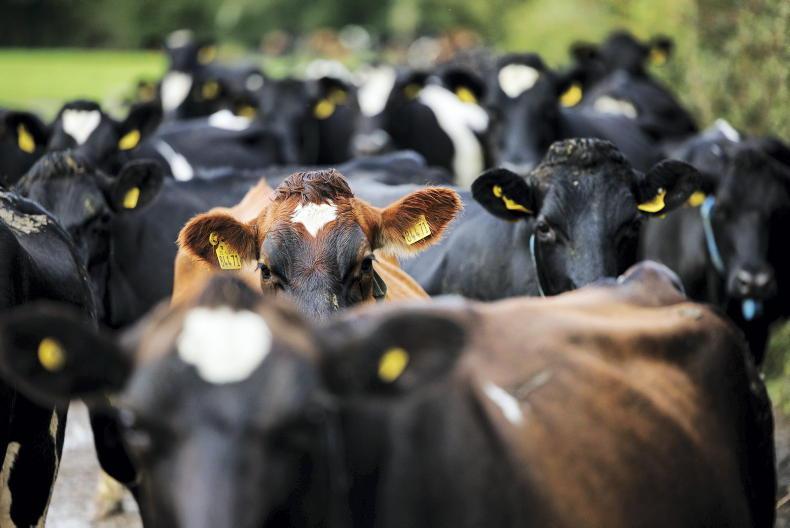
The European Commission has accepted that it will limit the granting of nitrates derogations to areas clearly meeting the requirements of the relevant EU water quality directives.
It is to consider an area's water quality trends, the impact of water quality measures in place and progress towards the goals of all relevant environmental directives when deciding on derogation requests from 2024.
The European Court of Auditors (ECA) recommended that the derogation is limited further in a new report.
Slurry production rises
The auditors’ report looked at the impact of the nitrates derogation in Ireland from 2015 to 2018 and found that over this time, the amount of slurry produced on farms with derogations rose by 27% more.
This coincided with a drop in the overall volume of slurry produced on farms stocked below 130kg organic nitrogen/ha, as average cattle numbers dropped on these farms.
In 2018, the report stated that one-third of all cattle in the country were kept on only 14% of farmland, with these cattle accounting for 36% of all slurry produced.
A further 20% of cattle are kept across another 11% of farms – those stocked between 131kg nitrogen/ha and 170kg/ha – while the remaining more extensive 46% of the herd is spread over 58% of land.
The auditors found a “strong correlation” between the size of the national herd and the overall volume of surplus nitrogen applied to farmland.
The nitrogen surplus was 40% higher in 2015 in Ireland than it was in 2009 and it was also stated that there was a “marked increase” in this surplus from 2015 onwards following the abolition of milk quotas.
Above EU standards
The report shows that Ireland performs better on other environmental criteria than other EU member states.
Only one in every eight acres of land across the EU is expected to enter voluntary environmental schemes in the new CAP, but this rises to almost one in every three acres in Ireland.
However, the auditors stated that the uptake of agri-environmental schemes is mostly from small farms, as they prove “less attractive financially” for “larger, full-time, intensive farms in the south and east”.
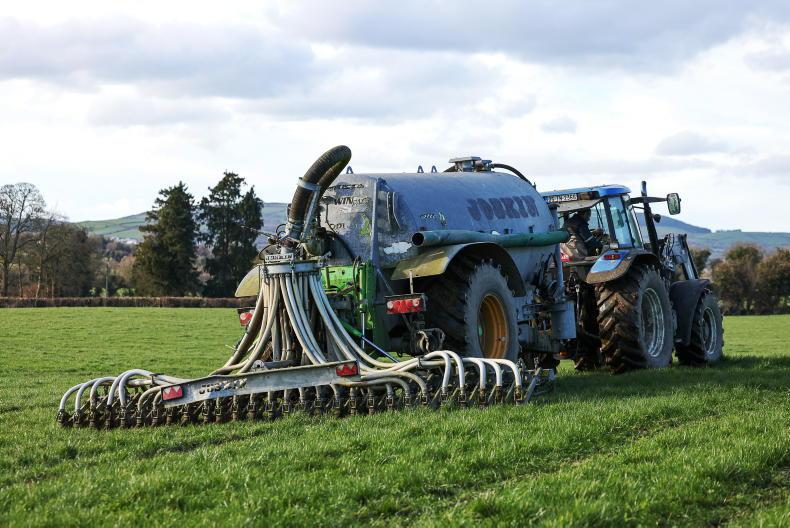
Ireland goes beyond the minimum EU standards for slurry storage and closed spreading periods by splitting the country into zones based on soil type and rainfall.
“This is not mandatory, but responds to a specific national need, as Ireland has one of the highest surpluses of phosphorus in the EU,” the auditors said.



SHARING OPTIONS