Movement in futures price continues – up a bit, then down a bit. Meanwhile, physical prices remain broadly similar.
Lack of active demand is the main reason prices remain static. Offer prices are generally up as sellers ask for more, but the buyers are not responding on the basis that global supply is high.
ADVERTISEMENT
There has been some short covering by shippers who need to prise grain out of stores to fill ships, but psychology is having an impact on both sides. Sellers would sell if only the price moved to a round higher figure. Buyers might buy if price moved to a lower round price. And buyers find it difficult to pay €170/t for something that they have already bought for €150/t earlier in the season.
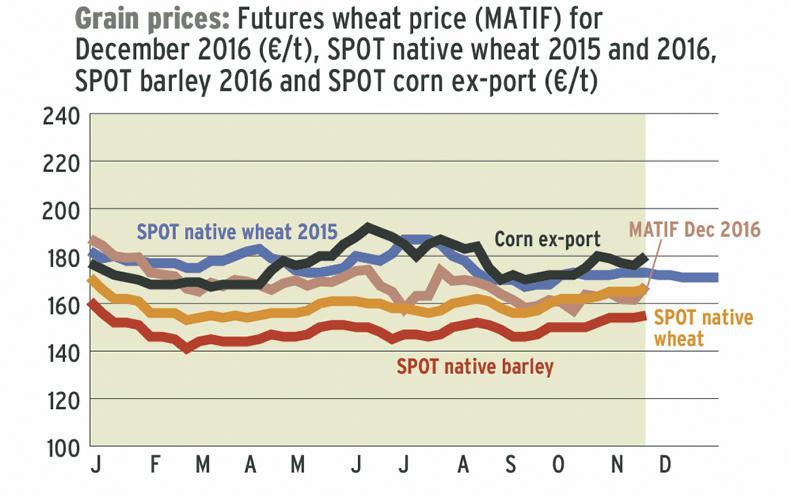
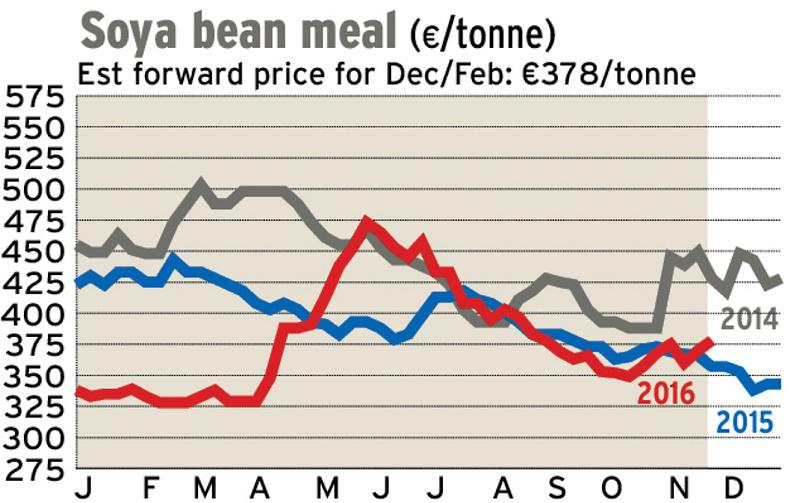
Imported maize has gone up again to around €180/t, partly as a result of currency and partly as a result of logistics, as the eastern Europe harvest is delayed due to wet. Soya bean meal prices have also increased, partly due to currency but also to solid physical demand internationally.
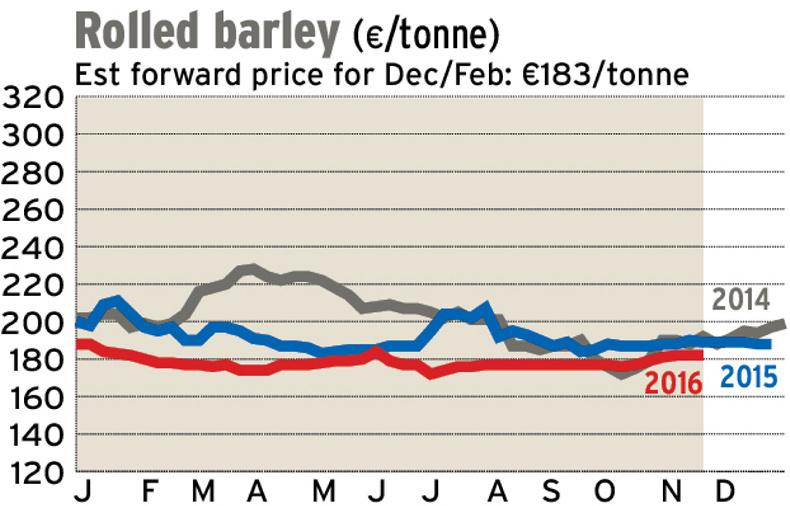
Native grain prices remain broadly similar, with spot wheat at the lower end of a €165 to €168/t range and barley at €155 to €156/t. March to May sees wheat around €173/t and barley at €160/t. November 2017 wheat is around €170/t with barley at €158/t. Earlier this week, Glanbia offered €170/t for wheat for November 2017 and €160/t for barley.
Oilseed rape is now around €400/t up to May and around €390/t for next November. Worth considering!
Register for free to read this story and our free stories.
This content is available to digital subscribers and loyalty code users only. Sign in to your account, use the code or subscribe to get unlimited access.
The reader loyalty code gives you full access to the site from when you enter it until the following Wednesday at 9pm. Find your unique code on the back page of Irish Country Living every week.
CODE ACCEPTED
You have full access to the site until next Wednesday at 9pm.
CODE NOT VALID
Please try again or contact support.
Movement in futures price continues – up a bit, then down a bit. Meanwhile, physical prices remain broadly similar.
Lack of active demand is the main reason prices remain static. Offer prices are generally up as sellers ask for more, but the buyers are not responding on the basis that global supply is high.
There has been some short covering by shippers who need to prise grain out of stores to fill ships, but psychology is having an impact on both sides. Sellers would sell if only the price moved to a round higher figure. Buyers might buy if price moved to a lower round price. And buyers find it difficult to pay €170/t for something that they have already bought for €150/t earlier in the season.
Imported maize has gone up again to around €180/t, partly as a result of currency and partly as a result of logistics, as the eastern Europe harvest is delayed due to wet. Soya bean meal prices have also increased, partly due to currency but also to solid physical demand internationally.
Native grain prices remain broadly similar, with spot wheat at the lower end of a €165 to €168/t range and barley at €155 to €156/t. March to May sees wheat around €173/t and barley at €160/t. November 2017 wheat is around €170/t with barley at €158/t. Earlier this week, Glanbia offered €170/t for wheat for November 2017 and €160/t for barley.
Oilseed rape is now around €400/t up to May and around €390/t for next November. Worth considering!
If you would like to speak to a member of our team, please call us on 01-4199525.
Link sent to your email address
We have sent an email to your address. Please click on the link in this email to reset your password. If you can't find it in your inbox, please check your spam folder. If you can't find the email, please call us on 01-4199525.
ENTER YOUR LOYALTY CODE:
The reader loyalty code gives you full access to the site from when you enter it until the following Wednesday at 9pm. Find your unique code on the back page of Irish Country Living every week.









SHARING OPTIONS