



The International Cow Fertility Conference “New Science – New Practices” was held last week in Westport, Co Mayo. A total of 470 delegates from 28 countries attended.
The conference was jointly organised by the British Society for Animal Science, Teagasc, University College Dublin, Cattle Association of Veterinary Ireland and the British Cattle Veterinary Association.
The conference covered fertility in both dairy and beef cows, and there was a strong emphasis on the transfer of new knowledge from research to farm practice to improve the reproductive performance and efficiency of both dairy and beef herds.
Over the past decade, significant progress has been made in our understanding of key biological processes underlying cow fertility and in the development of technologies to assist reproduction at farm level.
Some of the more important developments are covered in this brief article.
Automation of heat detection
Detecting the cow in oestrus and inseminating her at the correct times remains a challenge in all production systems dependent on using AI.
At oestrus, cow activity is increased by up to 400%. Technologies have now been developed that can measure cow activity and download this information on a computer system as cows enter or exit the milking parlour.
This is one of the areas where significant progress has been made in recent years, with the development of accelerometers that measure the increased activity associated with heat behaviour.
These systems are gaining popularity in confined non pasture-based dairy systems. It was most pleasing to see an Irish company, Dairymaster, to the fore in this area of technology development with its MooMonitor system.
Similarly, technologies that can collect a small sample of milk from the cow as she is being milked measure in-line the concentration of progesterone in the sample. These technologies are now emerging as a very useful method to predict the most appropriate time to inseminate a cow.
Combining automatic cow identification with the progesterone measurement and electronic data storage, computer algorithms can now identify the most appropriate time to inseminate a cow.
Field testing of such in-line progesterone measurement systems is showing significant promise. One such system, Herd Navigator, is marketed by DeLaval worldwide.
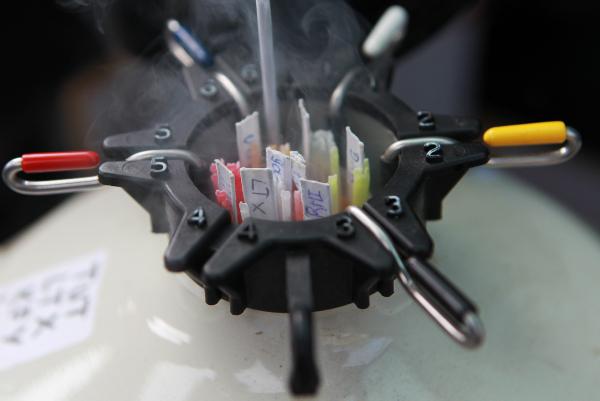
Sexed semen
There has been rapid progress in the development of sexed semen technology over the past 10 years. Currently, two million doses of sexed semen are sold annually in the US.
Present success rates record a conception rate of between five and 10 percentage points below those obtained with conventional frozen-thawed semen, with 90% of calves born being females.
To date, the technology has been less successful in separating out “X” carrying, male generating, sperm. The use of sexed semen, particularly semen generating 90% heifer calves, is now becoming a realistic option for use in heifers and high-fertility cows (cows calved > 60 days calved) to produce high genetic merit females for both dairy and beef herds.
The remainder of herd can be bred to beef bulls strong on terminal traits. Ultimately, its uptake at industry level will depend on the pricing of the semen and the financial benefits that accrue at farm level from its use. The widespread adoption of sexed semen at industry level could have profound implications for the AI industry.
Oestrous synchronisation and ovulation control
Major advances have been made in our understanding of the establishment of pregnancy and particularly the role of progesterone, both in the cycle before insemination and during the first week post-insemination.
High concentrations of progesterone are required in the cycle preceding AI to ensure high conception rates after AI. The challenge with dairy cows is whether the required concentrations can be achieved, particularly in high-yielding cows, as high levels of milk production cause a reduction in circulating concentration of progesterone.
This new information has been incorporated into hormonal strategies to control ovulation in dairy cows. Such systems, examples of which are commonly known as Double Ovysnch and Pre-Synch-Ovsynch, are gaining popularity in large confined dairy herds across the world because of the improved conception rates achieved.
Reported conception rates for such systems are now in the order of 45-50%, compared with 30-40% for cows inseminated at an observed standing heat.
The application of these procedures, which involve up to five hormonal treatments over a three-week period, is more questionable for pasture-based systems of milk production such as in Ireland.
However, they are becoming popular in large confined herds where there are problems with heat detection and conception rate are low.
Genetics
Over the past 10 years, the inclusion of traits that reflect improved fertility in the breeding indices at up to 40% of the overall index, is now beginning to show a modest but very welcome improvement in dairy cow fertility.
With the advent and more widespread use of genomic and SNP chip technologies, it is expected that this improvement in herd fertility will continue.
The next challenge is the inclusion of cow health and intake traits into the indices. Increasing the intake of grazed grass would be particularly relevant to Irish production systems. It would reduce problems with negative energy balance in early lactation and drive milk production from grazed grass.
However, this is more challenging because of the difficulty of reliably and cheaply measuring health and feed intake in large numbers of animals. Greater national and international collaboration will be required to make progress with improving health and intake traits.
While significant new knowledge on cow fertility is being generated on an on-going basis, it is heartening to see how much of this is finding application at farm level. New questions are now being posed, including:




SHARING OPTIONS