


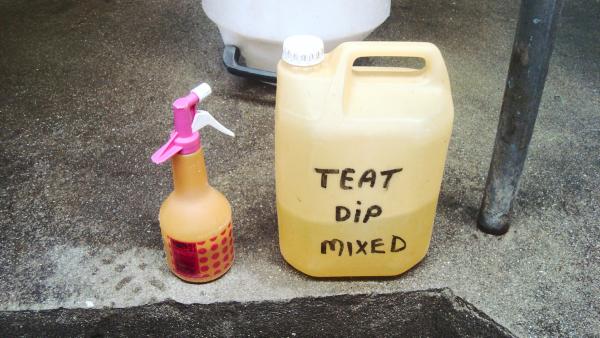
E coli mastitis is the most common form of mastitis seen by this practice at this time of year. It differs from many other forms of mastitis insofar as the bacteria do not adhere to the lining of the teat or udder, so chronic carriers don’t happen (as distinct from, say, Staph aureus).
The spread of E coli is from the environment, with high numbers present in faeces and soiled bedding resulting in infection when hygiene and cleanliness is not up to standard. Damp and humid conditions increase the incidence of infections.
E coli can penetrate the teat end from dirty teats in the milking parlour, particularly when teat impact is high, i.e. when machines are not properly maintained.
The toxic, and potentially fatal, effects of E coli are due to the toxins released from an exposed bacterial cell wall as the cow’s immune system destroys the bacteria. This can happen rapidly, resulting in death in some cases within 12 to 24 hours of the onset of signs.
The symptoms of E coli mastitis can vary in severity. Generally, it appears as a hard, hot and swollen quarter with a watery discharge. It is generally seen in the first weeks after calving, though can be seen shortly before calving. In cold weather, we often see an increase in the number of cases.
It always needs urgent treatment. There is nothing a vet dreads more than not being called in time to such cases. Many farmers will try to treat the animal with whatever antibiotic he happens to have, but this is false economy.
Firstly, any antibiotic used will have to be against gram negative bacteria (E coli is gram negative), and will need to be pharmaceutically suitable for intravenous administration. Secondly, antibiotics at a certain stage may be of little use, as the cow’s condition is deteriorating due to toxic shock, and it will need anti-inflammatory and fluid therapy, and leaving it too late is not an option. Sometimes very large quantities of fluids will be required intravenously and orally.
Prevention is aimed at reducing the E coli load through good husbandry and hygiene in the dry period and in early lactation, good milking technique and good machine maintenance. Teat sealing at drying off is also very useful.
Early and correct treatment can mean a full recovery of the cow and, in some cases, the quarter can be saved.




SHARING OPTIONS