



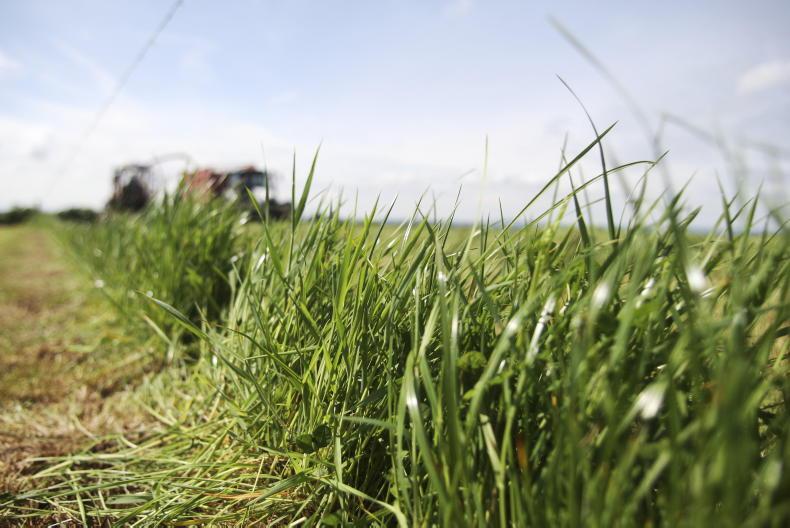
As expected, grass has gotten very tight here in Abbeyleix. We’ve now gone over four weeks with only 10ml of rain, and it’s starting to show.
Growth last week had already slipped back to 42kg DM/ha, and this week it’s dropped again – to just 33kg DM/ha. While cover per cow held reasonably well at 195kg DM/ha for a while, it has now fallen to 145kg DM/LU.
With demand sitting at 55 kg DM/ha and still no rain in the forecast, I had no choice but to take action.
Earlier this week I began feeding silage, starting with one bale per grazing, which works out at roughly 3.5kg DM per cow. I will now have to double this to two bales per grazing to reduce demand to 35kg DM/ha.
There’s no paddock left with a cover over 1,000kg DM/ha at this stage, so things are looking fairly bleak.
I’ll stick with 4kg of meal and increase silage rather than upping the meal – silage gives a better gut fill and keeps the cows that bit more content in my opinion.
Milk yield has slipped again, now back to around 22l, but on the plus side, butterfat is holding steady at 4.4% and protein has climbed to the 4% mark, which I’m delighted with under the circumstances.
Last week we had a case of E coli mastitis in one of the cows. She was fine at morning milking, but her collar flagged her as ‘urgent’ by that evening.
By then she was down to just 2l of milk and clearly unwell. Thankfully, we caught it early thanks to the collar system.
She got a strong course of antibiotics and was already back to herself on the collar by the following morning.
Our somatic cell count (SCC) has been ranging between 95,000 and 120,000 on recent collections, which is manageable.
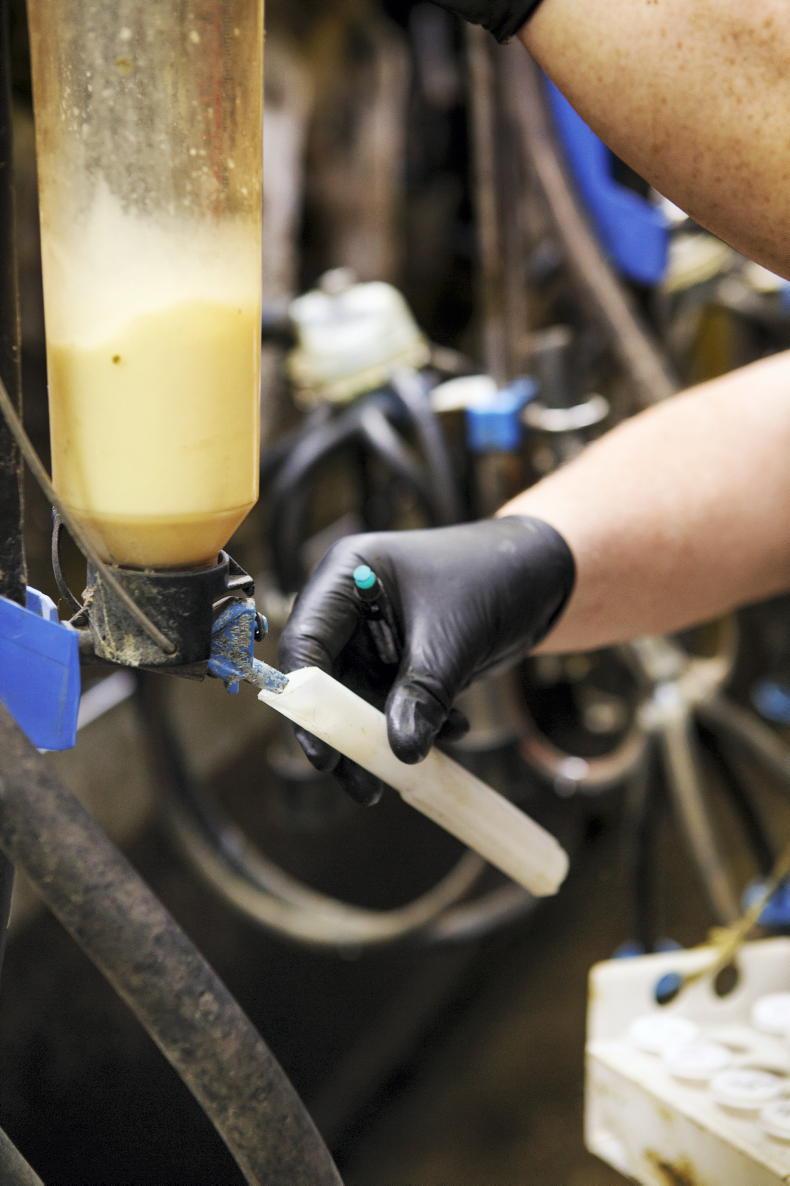
We did a milk recording last week and had five cows show SCCs well over a million. Gavin CMT-tested them and all five had one affected quarter. We’re trying garlic tubes first – four per affected quarter – and if there’s no improvement, I’ll move to antibiotic tubes.
Reseeding
On the reseeding front, we sprayed two weeks ago and got a good kill.
There was a mix of weeds – redshank, chickweed, nettles, dandelions, lambs quarter – and some well-established docks coming back stronger than I’d like.
I had to go with Forefront at half rate, even though it meant sacrificing the clover.
There was a great hit of clover in it, which was a pity to lose, but I’d rather have no clover than a paddock full of docks again. I can oversow clover next year once the weeds are fully under control.
The field got a second roll recently, and I also spread 3,000gl/ac of soiled water. It made a big difference on the drier, patchier parts of the field – encouraging tillering and helping reduce stress.
I’ll go again with more soiled water after I take a light cut of bales off it this week. Cutting will help open the canopy and let light in at the base, which should help the new grass establish better.
I’m also planning the third cut on another silage block – it’s six weeks since it was last cut and if it’s not taken now, it’ll just start wilting.
On a more positive note, we received the grant payment this month for the collecting yard tank we installed back in December. The paperwork and wait were long, as anyone who’s been through it will know, but it’s definitely worth it.
Realistically, the only area you can try to reduce cost on a tank is the steel – and saving 60% through the grant is a no-brainer. You wouldn’t make that kind of saving any other way.
Dad finished the spring barley harvest a couple of weeks ago – the earliest in years. It yielded around 2.7t/ac, which he’s happy enough with given it was continuous spring barley ground.
Unfortunately, the price outlook isn’t as positive, especially with input costs where they are.
He got the last of the straw delivered this week and will be moving on to sowing the catch crop shortly.


SHARING OPTIONS