



Everywhere you go in the world, you meet Dutch farmers. In fact, Britain and Ireland are probably one of the few places where there are not that many Dutch farmers or descendants of Dutch emigrant farmers.
In contrast, Dutch settlers have had a major and overwhelmingly positive impact on farming in countries throughout Europe and as far away as North and South America, Africa and New Zealand.
It’s unsurprising really that for centuries, young Dutch farmers have spread their wings, when you consider that the Netherlands is a small country with lots of good farmers and very high land prices.
This was the dilemma facing Hermjan Darwinkel in the 1990s. Even though Hermjan’s parents were not farmers, his grandparents were farmers with his uncles farming the family land.
Undeterred, Hermjan studied agriculture at university and it is there that he met Elke. Together, they had a dream of running their own farm.
“With Dutch land prices so high, we knew we wouldn’t be able to do it in the Netherlands and so we were prepared to go abroad.
"We considered New Zealand, Russia and Denmark but in the end we went to France because it’s not too far from home, it has a good climate and plenty of wine,” he says.
Hermjan was the first to move to France, working as a farm worker on a 50-cow farm in Brittany, which he says was a great education. Elke followed him over and they worked on the farm for a year.
In Hermjan’s own words after a year of working on the farm, they still liked France and still liked each other so they got married and decided to settle in France.
Their next move was to the farm that they currently own which is near the city of Le Mans, made famous by the Formula One race track.
Le Mans is about half way between Paris and the west coast of France.
“Location-wise its really good because it’s on the border of the main dairy regions of Brittany and Normandy and the main arable areas so the farms are a bit bigger than in the core dairy areas and they also have better infrastructure.”
The initial farm they purchased at the end of 2001 had 50 cows on 100ha. Hermjan says that getting permission to buy the farm from the local authority was challenging but the fact that they had already been working in France was a help.
Purchasing or leasing land in France is controlled by a local board or authority called Sociétés d’Aménagement Foncier et d’Etablissement Rural (SAFER), who consider the applications and decide on who is the best person to take on the farm.
The thinking behind this board is to avoid speculation on land, help young farmers to get established and to protect the fabric of rural life in France.
Over the next 20 years, Hermjan and Elke grew the business by taking on nearby leases to the point where they were milking over 200 cows on 210ha.
In 2020, with opportunities for further expansion limited, the Darwinkels went into partnership with a neighbouring arable farmer.
This has allowed the business to expand and today the farm has 400 cows, with 330 cows milking at any one time.
As in Ireland, French farmers had to navigate the end of the quota era carefully.
When Hermjan started farming at Le Mans, he decided to join a small local privately owned milk processor.
This decision was made mostly as a result of access to milk quota, but Hermjan says in hindsight the benefits for the farm were far more than just quota.
The milk processor is part of a consumer-based organisation that commits to paying a fair price to farmers for their milk.
There are certain criteria to be met, including making sure cows have access to pasture and are fed non-GMO dairy feeds, but Hermjan says the extra price for milk is more than worth it.
“Like with most other things, there are extra terms and conditions and these keep growing.
“For example, next year we can only buy feed that is grown in France, meaning we cannot buy in feeds from other countries,” he says.
With a current milk price of 54c/l and with most of the feed used grown on the farm, the changes won’t have much of an impact on the Darwinkel farm.
Ten years ago, the milk price paid by the processor was at the bottom of the French milk price league, but now it’s at the top so Hermjan is rightfully happy to be a supplier.
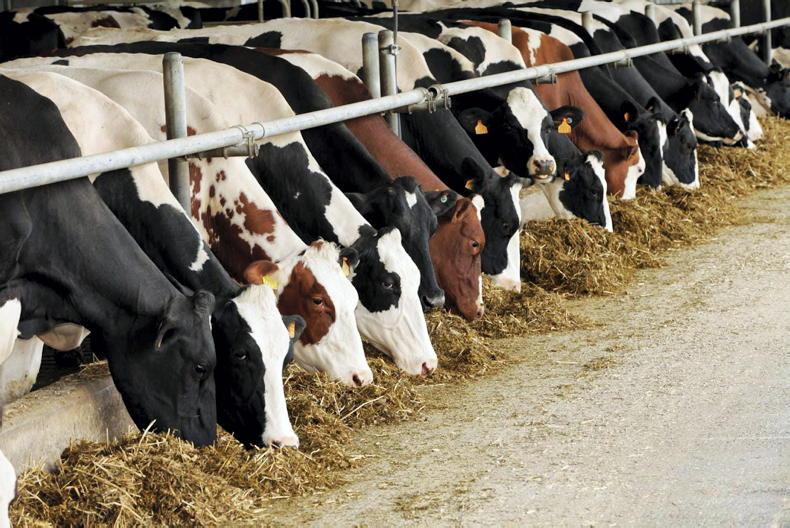
The cows are mostly fed a total mixed ration (TMR) diet but the farm does make use of grazed grass when it can. The farm produces 3.6m litres of milk annually, with per cow production of 10,500l/cow at 4.20% fat and 3.60% protein.
He says grass growth averages around 7t DM/ha/year, but with maize growing 12t DM/ha/year, maize is the backbone of the forage system at two thirds maize and one third grass silage in the TMR.
Hermjan says grass starts growing in February and cows go out to grass in April, with grazing continuing through to the end of June, before drought usually kicks in.
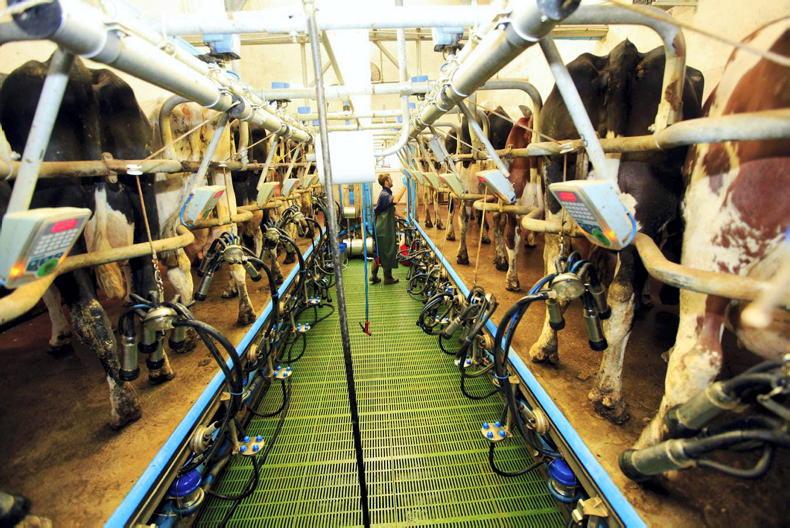
Milking the 330 cows takes 4.5 hours at a time and cows are milked twice a day through the farms eight unit double-up parlour. I asked Hermjan would he consider upgrading the parlour and he said he would, joking that the banks would need to agree first.
Aside from the family and the business associate, there are nine other employees on the farm.
Each person works a 39-hour week based off a seven-hour shift so everyone has two days off per week.
For some, their day off is mid-week and one weekend day off. Staff operate on two daily shifts, with the first shift starting at 5am to 1pm and the second shift running from 1pm to 9pm at night.
In terms of roles, Hermjan and Elke run the dairy side of the business while the business associate runs the arable business. Hermjan says there are challenges for the French dairy sector, with a shortage of employees and young people looking to farm.
He says that the most common approach for many farmers now is to milk 100 cows and have two milking robots. Where the next generation don’t want to stay milking and if the farm is big enough, it goes back to tillage but he says that “the wheat price isn’t very interesting now”.
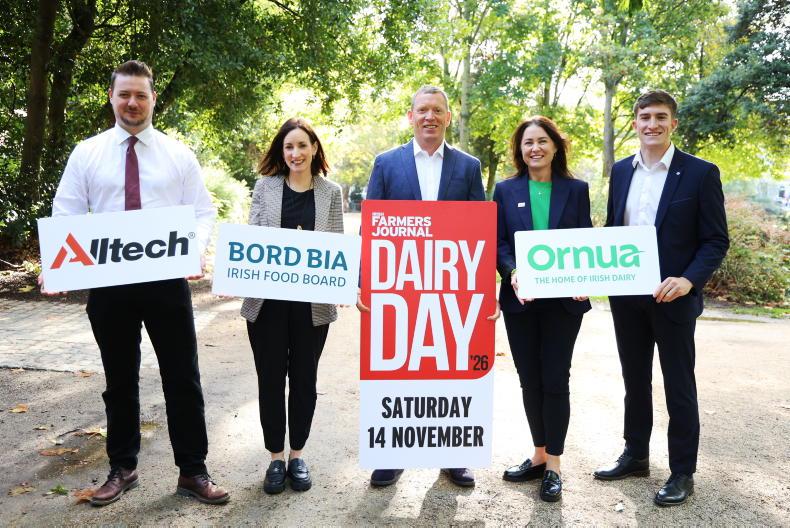
Hermjan will be speaking about his experiences from farming in France and global travels at the international outlook session at Dairy Day.



SHARING OPTIONS