



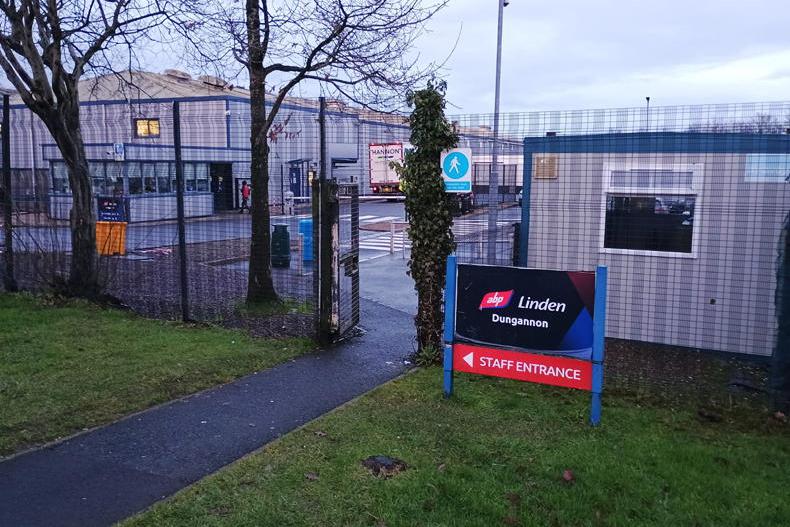
The announcement by ABP this week of its “intention to cease retail packing” at their ABP Linden retail packing facility in Dungannon, Co Tyrone, came as a shock to the industry in Northern Ireland and beyond.
It was only last week that a similar announcement by Kepak about reviewing its deboning and cutting operations at Clonee, Co Meath, was announced.
Interestingly in both cases, the excess capacity appears to be on the further processing side of the business as opposed to the abattoir part.
Processing capacity
There has been a long-held view across the island of Ireland and in Britain as well that there is an excess of beef processing capacity in relation to cattle supply.
If there was a pre-existing problem with capacity, it got worse in 2025. The sharpest decline in cattle numbers last year occurred in the Republic of Ireland where the number of cattle slaughtered was down 11.7% compared with the previous year to just under 1.6 million head (Bord Bia).
North of the border, it was the same story on a smaller scale, with the cattle kill was down 4.9% compared with 2024 at 491,282 head (LMC).
Across in Britain, where both ABP and Kepak are major players, the cattle kill up to the end of November 2025 was down 94,000 head according to the AHDB, an almost 5% decline.
There was a similar theme around the announcement by both companies on reviewing their operations and it was to better align their processing capacity with the projected longer-term cattle supply.
Kepak has substantial stand-alone deboning capacity in the midlands, while ABP has modern retail packing facilities in Britain that are understood to be operating well under capacity. Against this background, it isn’t a surprise that companies are reviewing their operations and it provokes the thought will other businesses in beef processing be doing the same, though, so far, behind closed doors?
Not just an Irish experience
The case of falling supply affecting processing capacity isn’t confined to this part of the world.
Late last year, Tyson Foods, the largest meat processor in the US, announced that it would be closing its Lexington, Nebraska, factory this month, which it now has done.
This is one of the largest beef abattoirs in the US, with the capacity to process 5,000 cattle per day and had around 3,000 staff.
The reason for this closure is that the US cattle herd has fallen to its lowest level in 70 years and the shortage of cattle supply has meant factories losing money.
In its most recent accounts for the year ending 30 September, Tyson posted a loss of S1.135bn (€980m), the third year in a row of losses in its beef business and by far the worst.
The major Irish beef processing companies are privately owned and don’t publish annual accounts.
However, there is a general consensus that they struggled to pass all of the higher cattle costs on to their customers in 2025 and profits will have been squeezed if not eliminated in some cases.
If there is less product available for processing, processors will move to reorganise their businesses to maximise their efficiency and this often means production suspension or even closure in some cases.
This also comes at a price - in the first instance to the employees who lose their jobs and then the wider community that no longer has the wages from the employees that have lost their jobs circulating.




SHARING OPTIONS