


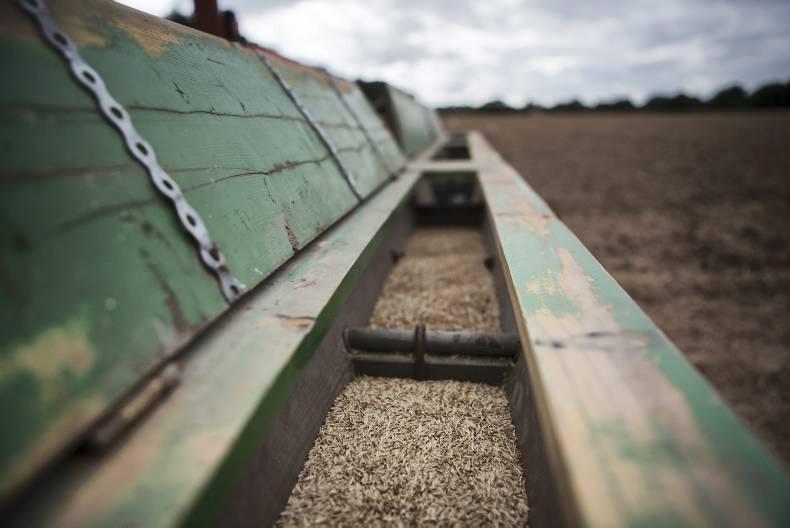
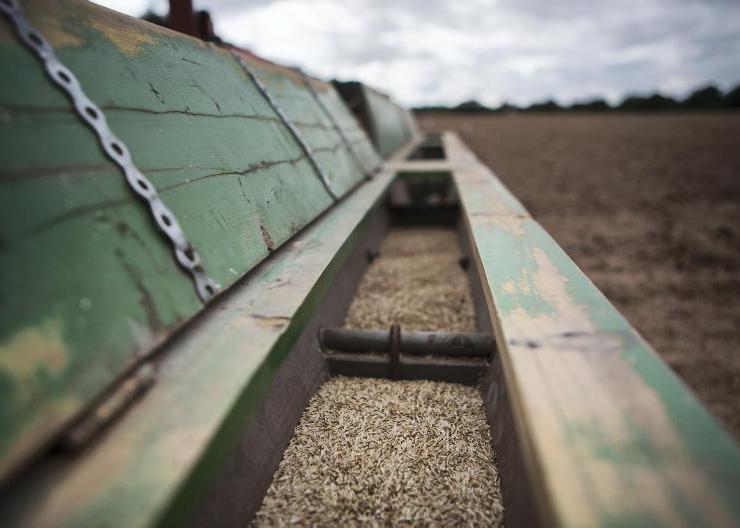
Results from the Teagasc on-farm monoculture grass variety trial have been released to the Irish Farmers Journal. The tetraploid variety Abergain has the highest average grass growth at 13.32t/ha each year on average over the three years 2013 to 2015.
The next-highest variety is the diploid Aberchoice, with an average grass growth of 13.15t/ha per year, followed by the tetraploid Kintyre at 13.01t/ha per year. In total, 11 varieties are being analysed on over 70 farms across the country. Each farm has a minimum of four varieties sown separately and on their own, but managed similarly.
The widely used diploid variety Tyrella is the control, being one of the varieties used on each of the farms. It recorded an average annual growth rate of 12.86t/ha and had the lowest annual fluctuation at 250kg dry matter per year. The range in Abergain’s total growth was between 13t/ha and 13.65t/ha.
The lowest-yielding variety was the diploid Majestic at 12.02t/ha per year. The next lowest-yielding variety was the tetraploid Dunluce at 12.27t/ha behind the diploid Glenveagh at 12.45t/ha.
Data on growth rates comes from the farmer’s own recording which is input into Pasturebase grass measuring software. Most of the farmers are based in Cork, Tipperary and Limerick, but there are farms in the study in Donegal, Laois, Wexford and Galway.
The purpose of the trial is to analyse a variety’s performance on-farm as opposed to just in a plot trial. Ground score and post-grazing height measurements are recorded periodically on the farms by the researchers at Moorepark. The data generated will be used in the pasture profit index.
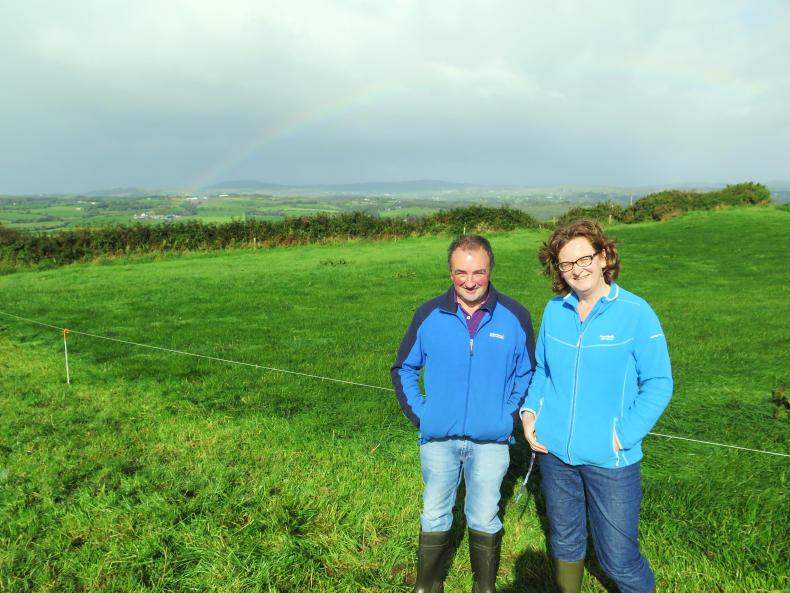
Eddie O’Donnell from Golden in Co Tipperary is one of the farmers involved in the study. He has Abergain sown and says that it averaged over 20t/ha over three years. He says the cows love grazing it, but you need to plan for a shorter rotation length where Abergain is sown. He says he grazes it every 12 to 14 days during the main grazing season, despite it being sown four years ago.
He says the cows also like Kintyre but are less impressed by Abermagic, and he finds it harder to get a good clean-out when they graze that particular variety.
Speaking at the Dairylink farm walk in Cavan last week, host farmer Charles Clarke said that he notices his cows lift in milk by up to two litres per day when they graze his Abergain and Aberchoice mixture sown in 2014.
Reseeding
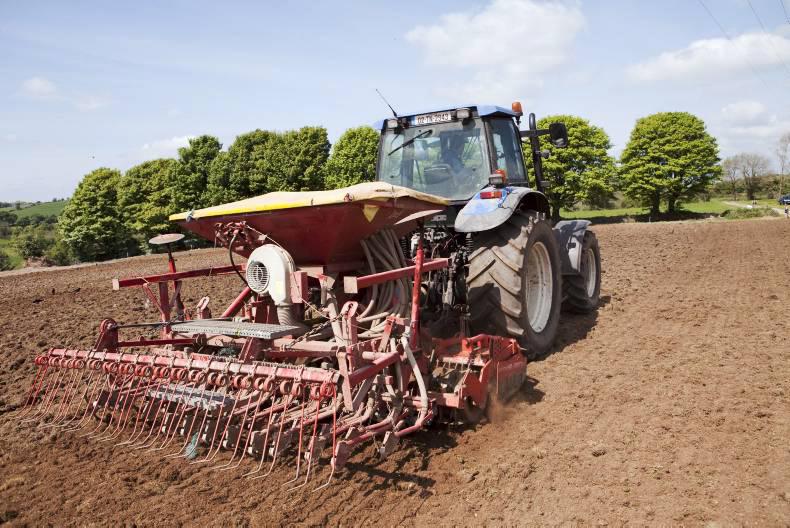
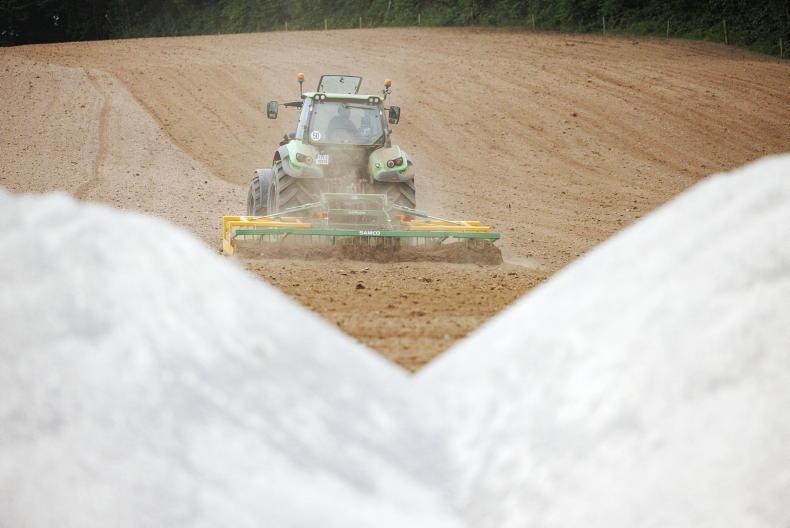
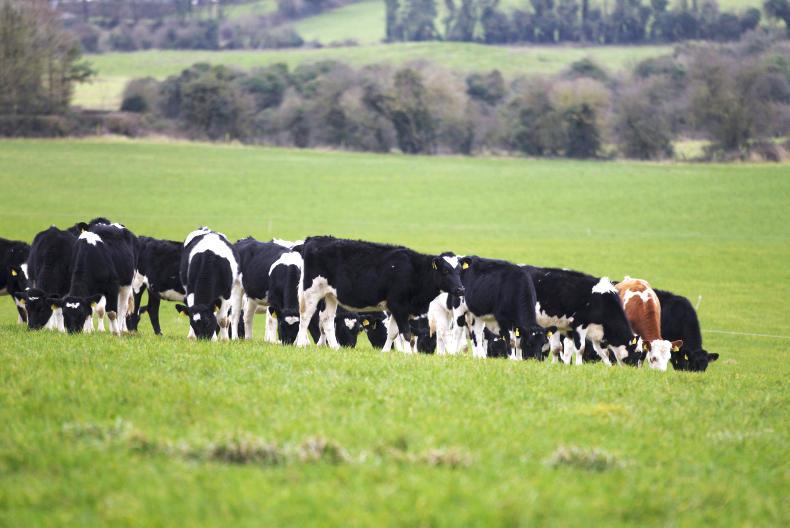
Now that growth rates have improved, attention is beginning to turn to reseeding. Some farmers will pull out a couple of paddocks for silage and take out a paddock or two for reseeding also. Reseeding at this time is definitely better than in autumn as there are more opportunities to graze it after sowing which improves weed control and tillering.
Spray off with Roundup and aim to graze in five to seven days’ time. Make sure you have sufficient stock numbers on hand to graze out the burned-off fields. Depending on how much area is being reseeded, and the cover of grass on the burned-off fields, the cows alone might not get through it all before it turns yellow. Some farmers will bring the maiden heifers home for AI and use them to graze the burned-off grass too.



SHARING OPTIONS