High cattle prices have sparked a lot of ploughs into action around the country in the last two weeks.
A good grazing year and good ground conditions have also sparked a flurry of activity when it comes to autumn reseeding.
Some farmers have used the opportunity to reseed as opposed to buy back in cattle in a high-priced market. Others have one eye on a 2025 tax bill that may be higher than other years, and so are taking the opportunity to improve the grassland swards on their farm.
In an ideal world, farmers should be reseeding 10% of their farms each year to make sure grassland swards are producing to the maximum and in turn stock are gaining weight to the maximum. Tight margins in recent years have meant there has been a lot less reseeding taking place on drystock farms, but this looks set to change in 2025.
Clover
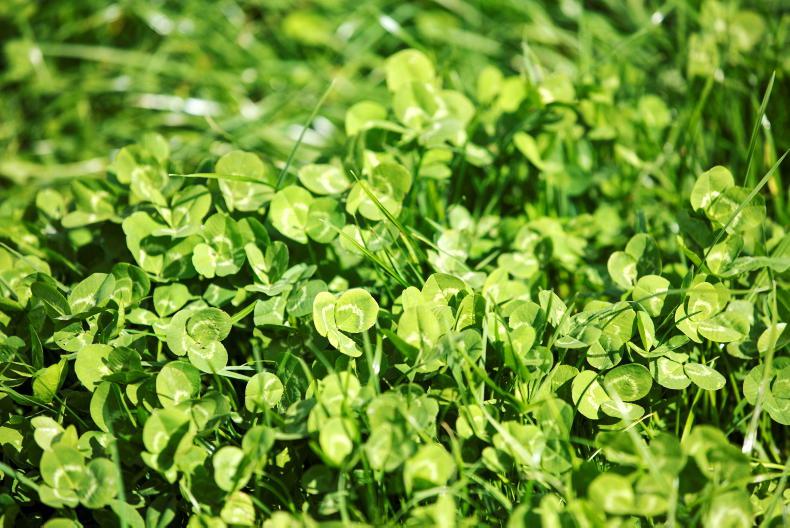
There has been a lot of talk in recent times about the role white clover can play in meeting our target reduction in agricultural emissions by 2030.
Teagasc research would suggest that, on many farms, white clover can deliver sufficient nitrogen to a grass plant to grow similar quantities of grass where nitrogen is applied. This is especially relevant for lower-stocked beef farms which could potentially reduce costs through reduced nitrogen application and rely on clover swards to fix the nitrogen from the atmosphere to feed the grass sward on the farm.
Aside from meeting any climate change objectives through reduced fertiliser usage, clover swards also have other advantages like higher digestibility, so in theory animals grazing clover swards should put on weight faster. There are also challenges with clover swards and they require a higher level of management at certain times of the year.
Soil fertility
I have seen many reseeding projects fail over the years with farmers blaming the contractor, the grass seed, the fertiliser and the weather, when in fact the problem was that soil fertility wasn’t correct.
For reseeding to be a success, soil fertility has to be right and in many cases you would be better to correct soil fertility and forget about reseeding until it is done.
Soil sampling is the only definitive way of analysing soil fertility levels and you are looking for phosphorus (P) and potassium (K) levels in the soil to be at index 3.
The pH of the soil also needs to be above 6.3 for a successful reseed. Where soil fertility is below where it needs to be, you will need to spread 2-3 bags/ac of 10-10-20 or other P and K-rich fertiliser to kick-start early growth and make sure the new seed becomes established.
Lime should also be applied pre-sowing to improve soil structure.
Seedbed preparation
With regard to the field that is being reseeded, farmers should be aiming for it to be out of production for 60-70 days maximum. If the old sward is being sprayed off, you can move in to plough or cultivate seven to 10 days after spraying. Some farmers will even move in quicker than this.
If you are using minimum cultivation methods, make sure that any remaining grass on the paddock/field has been topped or grazed off tight prior to stitching in the new grass.
Sowing
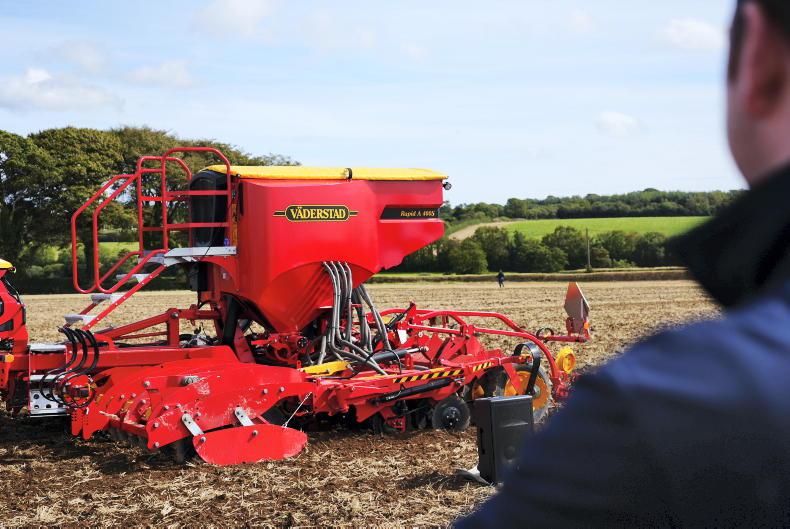
The general sequence of a plough, till and sow is ploughing, then power harrow to leave a fine, firm, level seedbed. Some fields may require two runs of a power harrow and some land levelling, depending on the topography of the field.
\ Donal O'Leary
It’s very important to get the seedbed right prior to sowing. If the seedbed is too fluffy and soft the seed may go too deep and run the risk of failing. In some instances, it may be required to roll the field prior to sowing and then roll again after seeding to make sure the seed makes good contact with the soil.
If direct drilling or stitching, some contractors recommend an additional run over the field in a diagonal direction making sure all the field is covered. Seed should be sown at the rate of 12-14kg/ac. Clover seed should be sown at the rate of 1-2kg/ac.
Grass seed selection
When it comes to selecting grass seed varieties, you should look at your system and what you want the grass to do for you, eg. is it silage or grazing or both? Then choose your grass seed mix.
Only use varieties on the Irish recommended grass seed list. Most grass seed mixtures contain a mix of diploid and tetraploid varieties. There are benefits to each type. Table 1 outlines some of the differences between diploids and tetraploids.
Heading dates are also important and a tight range (seven to 10 days) is advisable to aid in management of the new reseed. Early-heading grass varieties will head out in early May while intermediate varieties will head out in the second half of May.
Late-heading varieties will head out in the first half of June and are more suited to wetter soil types. Clover should also be included in grazing mixes at a recommended rate of 2kg/ac.
Include no more than three or four grass cultivars per mix. Keep the heading date range narrow for silage swards – no more than seven days. Heading date range is less of an issue for grazing swards.
Post-sowing management
Post-sowing management is almost as important at the reseeding process itself. Once the reseeding process is finished you should check in on the reseed at regular weekly intervals to monitor for germination and weeds.
A post-emergence spray should be applied six to eight weeks after reseeding to kill any broadleaved weeds that emerge in the new reseed.
Weeds are best controlled when the grass plant is at the three-leaf stage. Docks and chickweed are two of the most critical weeds to control in new reseeds; it is important to control these at the seedling stage, by applying the herbicide before the first grazing.
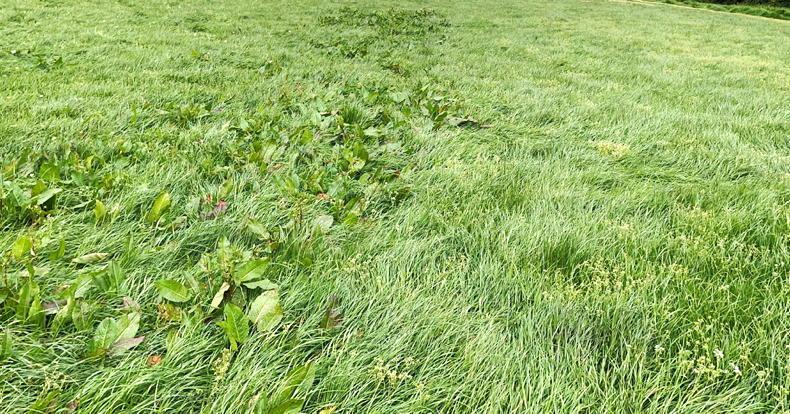
This picture, taken two years after reseeding, demonstrates how docks, if not controlled, can dominate a new pasture.
Clover-safe herbicide should be used. An application of nitrogen at this stage will also help feed the new grass. Aim to graze as soon as there is a light cover of grass on the field. Weanlings, dairy beef calves, store lambs or sheep are ideal stock to graze a reseed for the first time. Grazing two or three times before the winter period will help the tillering of grass plants and thicken the sward.
Avoid cutting in the first few months of growing as this could lead to a more open sward.
It’s also really important to feed the new sward with appropriate nutrients. You sometimes see farmers going to the trouble and expense of reseeding and then not feeding the reseed with nitrogen, phosphorus and potash.
This is very important to keep the new grasses persistent in the sward. Many modern-day ryegrasses are bred for high-nitrogen application so you need to plan in some fertiliser applications to keep them in the sward.
In short

Soil fertility is very important for a successful reseed.Choose grass varieties from the recommended list to suit your system.Diploid grasses will suit heavier soil types better.A post emergence spray should be applied six to eight weeks after the new grass seed emerges to control seedling docks and other weeds.Try to graze the sward with light weanling sheep for first grazing and avoid cutting in first few months.
High cattle prices have sparked a lot of ploughs into action around the country in the last two weeks.
A good grazing year and good ground conditions have also sparked a flurry of activity when it comes to autumn reseeding.
Some farmers have used the opportunity to reseed as opposed to buy back in cattle in a high-priced market. Others have one eye on a 2025 tax bill that may be higher than other years, and so are taking the opportunity to improve the grassland swards on their farm.
In an ideal world, farmers should be reseeding 10% of their farms each year to make sure grassland swards are producing to the maximum and in turn stock are gaining weight to the maximum. Tight margins in recent years have meant there has been a lot less reseeding taking place on drystock farms, but this looks set to change in 2025.
Clover
There has been a lot of talk in recent times about the role white clover can play in meeting our target reduction in agricultural emissions by 2030.
Teagasc research would suggest that, on many farms, white clover can deliver sufficient nitrogen to a grass plant to grow similar quantities of grass where nitrogen is applied. This is especially relevant for lower-stocked beef farms which could potentially reduce costs through reduced nitrogen application and rely on clover swards to fix the nitrogen from the atmosphere to feed the grass sward on the farm.
Aside from meeting any climate change objectives through reduced fertiliser usage, clover swards also have other advantages like higher digestibility, so in theory animals grazing clover swards should put on weight faster. There are also challenges with clover swards and they require a higher level of management at certain times of the year.
Soil fertility
I have seen many reseeding projects fail over the years with farmers blaming the contractor, the grass seed, the fertiliser and the weather, when in fact the problem was that soil fertility wasn’t correct.
For reseeding to be a success, soil fertility has to be right and in many cases you would be better to correct soil fertility and forget about reseeding until it is done.
Soil sampling is the only definitive way of analysing soil fertility levels and you are looking for phosphorus (P) and potassium (K) levels in the soil to be at index 3.
The pH of the soil also needs to be above 6.3 for a successful reseed. Where soil fertility is below where it needs to be, you will need to spread 2-3 bags/ac of 10-10-20 or other P and K-rich fertiliser to kick-start early growth and make sure the new seed becomes established.
Lime should also be applied pre-sowing to improve soil structure.
Seedbed preparation
With regard to the field that is being reseeded, farmers should be aiming for it to be out of production for 60-70 days maximum. If the old sward is being sprayed off, you can move in to plough or cultivate seven to 10 days after spraying. Some farmers will even move in quicker than this.
If you are using minimum cultivation methods, make sure that any remaining grass on the paddock/field has been topped or grazed off tight prior to stitching in the new grass.
Sowing
The general sequence of a plough, till and sow is ploughing, then power harrow to leave a fine, firm, level seedbed. Some fields may require two runs of a power harrow and some land levelling, depending on the topography of the field.

\ Donal O'Leary
It’s very important to get the seedbed right prior to sowing. If the seedbed is too fluffy and soft the seed may go too deep and run the risk of failing. In some instances, it may be required to roll the field prior to sowing and then roll again after seeding to make sure the seed makes good contact with the soil.
If direct drilling or stitching, some contractors recommend an additional run over the field in a diagonal direction making sure all the field is covered. Seed should be sown at the rate of 12-14kg/ac. Clover seed should be sown at the rate of 1-2kg/ac.
Grass seed selection
When it comes to selecting grass seed varieties, you should look at your system and what you want the grass to do for you, eg. is it silage or grazing or both? Then choose your grass seed mix.
Only use varieties on the Irish recommended grass seed list. Most grass seed mixtures contain a mix of diploid and tetraploid varieties. There are benefits to each type. Table 1 outlines some of the differences between diploids and tetraploids.
Heading dates are also important and a tight range (seven to 10 days) is advisable to aid in management of the new reseed. Early-heading grass varieties will head out in early May while intermediate varieties will head out in the second half of May.
Late-heading varieties will head out in the first half of June and are more suited to wetter soil types. Clover should also be included in grazing mixes at a recommended rate of 2kg/ac.
Include no more than three or four grass cultivars per mix. Keep the heading date range narrow for silage swards – no more than seven days. Heading date range is less of an issue for grazing swards.
Post-sowing management
Post-sowing management is almost as important at the reseeding process itself. Once the reseeding process is finished you should check in on the reseed at regular weekly intervals to monitor for germination and weeds.
A post-emergence spray should be applied six to eight weeks after reseeding to kill any broadleaved weeds that emerge in the new reseed.
Weeds are best controlled when the grass plant is at the three-leaf stage. Docks and chickweed are two of the most critical weeds to control in new reseeds; it is important to control these at the seedling stage, by applying the herbicide before the first grazing.

This picture, taken two years after reseeding, demonstrates how docks, if not controlled, can dominate a new pasture.
Clover-safe herbicide should be used. An application of nitrogen at this stage will also help feed the new grass. Aim to graze as soon as there is a light cover of grass on the field. Weanlings, dairy beef calves, store lambs or sheep are ideal stock to graze a reseed for the first time. Grazing two or three times before the winter period will help the tillering of grass plants and thicken the sward.
Avoid cutting in the first few months of growing as this could lead to a more open sward.
It’s also really important to feed the new sward with appropriate nutrients. You sometimes see farmers going to the trouble and expense of reseeding and then not feeding the reseed with nitrogen, phosphorus and potash.
This is very important to keep the new grasses persistent in the sward. Many modern-day ryegrasses are bred for high-nitrogen application so you need to plan in some fertiliser applications to keep them in the sward.
In short
Soil fertility is very important for a successful reseed.Choose grass varieties from the recommended list to suit your system.Diploid grasses will suit heavier soil types better.A post emergence spray should be applied six to eight weeks after the new grass seed emerges to control seedling docks and other weeds.Try to graze the sward with light weanling sheep for first grazing and avoid cutting in first few months.
SHARING OPTIONS