


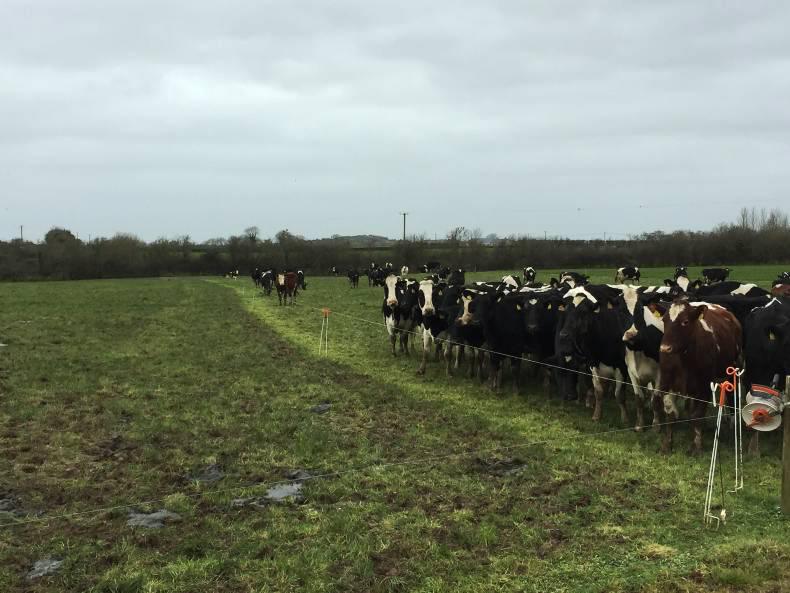
Most farmers are counting down the days to the start of the second round of grazing or have just started on it. With low grass covers, poor growth rates and very wet ground conditions, getting sufficient grass into cows is a major challenge at present.
Grass is nearly always tight at this time of year as we approach magic day, when grass growth equals herd demand. Herd demand is the stocking rate multiplied by the amount of grass each cow will eat, so demand is typically about 50kg/day.
Magic day isn’t a fixed date and nobody can say for definite when it will be this year.
Looking at the data on the farms recording grass growth rates for the Irish Farmers Journal Grass+ pages, average total grass growth from mid-February to the end of March was 448kg for this year, while it was 701kg for the same period last year.
While not a statistically representative sample, it shows that growth rates are indeed back this year relative to last year. But we need to remember that 2015 was an exceptionally good spring and management changed this year, as less nitrogen was spread in February than should have been.
Of course, the reason less nitrogen was spread was because of the rainfall, being more than double the national average for December, January and February. And while the two dry weeks in March offered respite, over 50mm in the last week across much of the country has resulted in land getting saturated once again. The short-term challenge of not having enough grass and wet land is only temporary.
We’re already observing increases in growth rates as soil temperatures creep up.
The speed of which land dries out depends on the soil structure. A dry 24 hours will do a lot for those on medium and lighter soils, but it will take considerably longer for heavier land to dry out. Getting over this period is the challenge, whether it lasts five days or two weeks.
We must keep current milk price in mind when making decisions around what and how much supplement to feed.
Plugging the gap entirely with meal will be a costly and very unrewarding exercise and should be avoided, as you cannot afford to do it. This is a year to keep cows fed as cheaply as possible.
Go on a fixed rotation length until such time as grass growth picks up. A round length of 25 days is my preference. This means you are grazing 1/25th of the farm per day or four acres per day of a 100-acre farm. Work out how much grass is in this area and decide what to do then.
Some people will make a conscious decision to make their cows work harder. This is where resilient, high-EBI and crossbred cows come into their own.
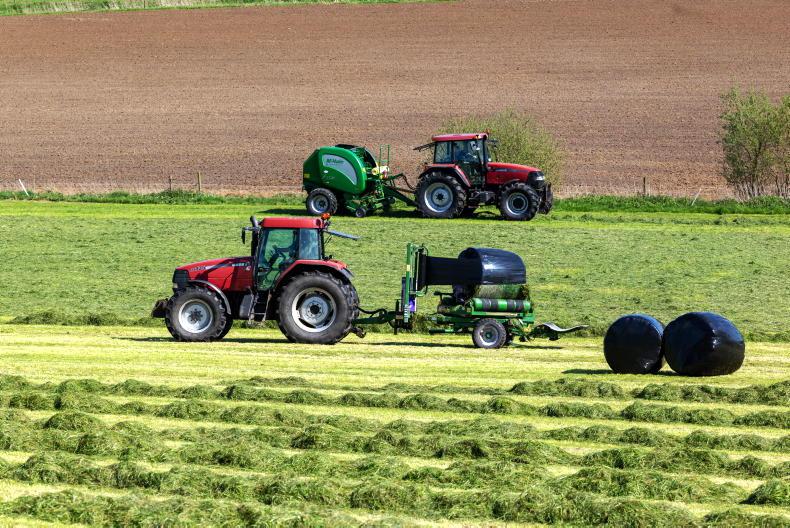
To fill the grass deficit, look inside the farm gate first. Good silage is first preference, whether it is pit or bales.
Lesser-quality silage is the next option. While not ideal, it will feed cows and keep them content.
On the meal front, feeding any more that 2kg or 3kg of compound nut is questionable. This is costing in excess of €260/t and is a luxury and overpriced feed, relative to the alternatives.
If some grass is part of the diet, then protein is not limiting, so you don’t need high-protein nuts. Depending on the proportion of grass in the diet, energy could be limiting, but it is limiting in nearly all diets post-calving, hence body condition score will drop after calving.
What the cow really needs is fibre. Silage will provide lots of fibre if fed, but where the grass deficit can be filled with just meal, then be very careful. Short second-round grass and lots of meal is a recipe for stomach problems such as acidosis and displaced abomasums.
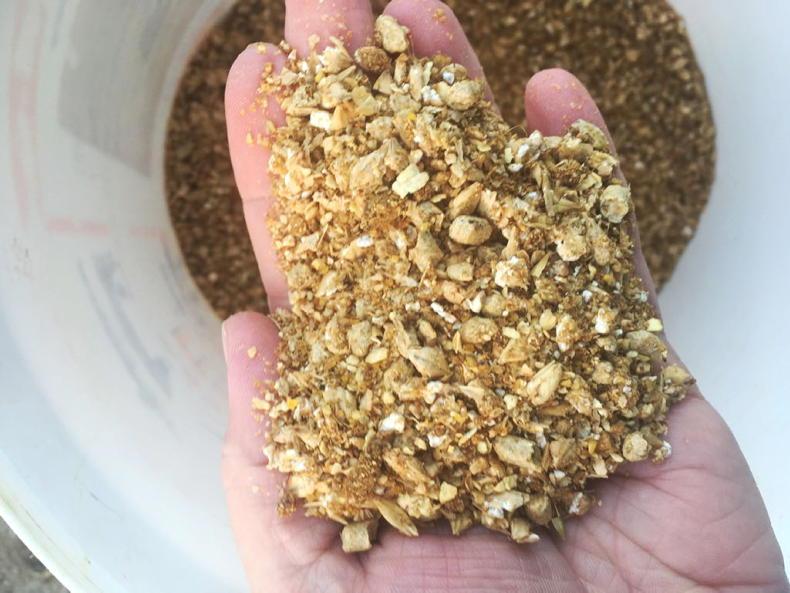
High-fibre feeds such as soya hulls and palm kernel are good alternatives to high-starch and low-fibre grain-based compound mixes. They are also a good source of energy and are about €100/t cheaper than a nut at about €160/t.



SHARING OPTIONS