


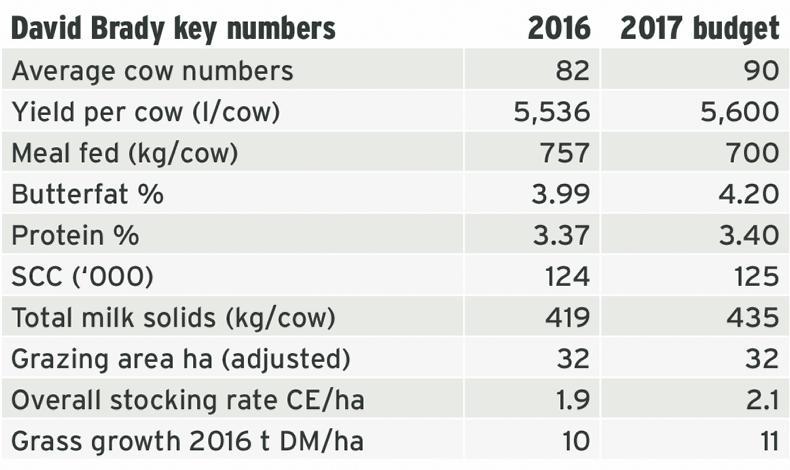
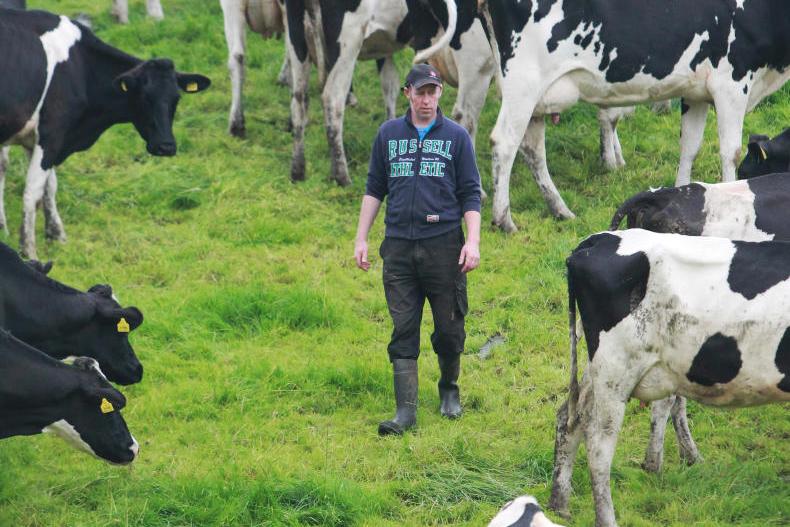
David Brady milks 82 spring-calving cows in Stradone, Co Cavan. Difficult grazing conditions on top of 2016 low milk prices made it a year David wants to forget.
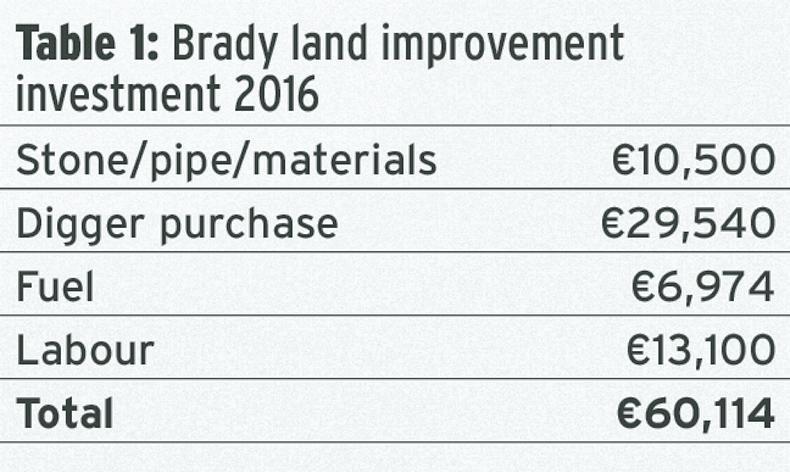
Despite these challenges, David managed to continue his investment in grazing infrastructure and drainage of the main grazing platform, which started in 2015. The total expenditure figures highlighted below include this cost/investment in land improvement, which has been broken down in Table 1.

Financing this capital investment from cash reserves in 2016 has had the impact of increasing the cost base for the dairy farm and adding 13.27c/l on to David’s cost base.
Analysis of the figures shows farm income, including milk sales and stock sales, came to €141,941. Stock sales for David are similar to the previous year and are still a very important part of this business, representing nearly 6c/l. However, milk revenue is down on 2015 due to a 3c/l drop in milk price, despite similar volumes produced and slightly lower milk protein in 2016.
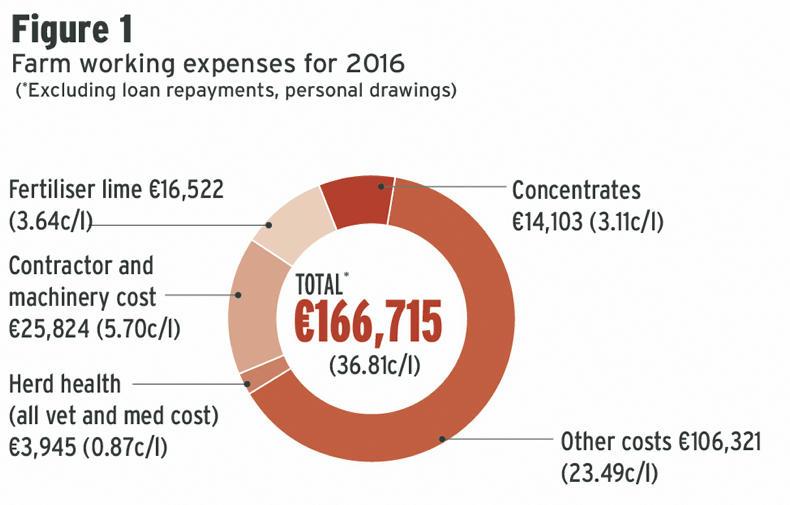
From a cost perspective, four big costs have been isolated in Figure 1. The fertiliser cost is significant on this farm due to purchased phosphorus (P) and potassium (K) to improve soil fertility. This cost also includes P and K for new grass seeds and all lime applied on the farm.
Unlike the Northern Ireland farmers in the project, purchased feed is actually lower than the fertiliser bill on this farm. David reduced this bill marginally in 2016 with 250kg/cow less fed, but still cows received 750kg/cow. Contract and machinery running cost includes the maintenance and fuel cost for the digger.
Total cash expenditure on the farm before loan repayments, personal drawings and taxation have been deducted totalled €166,715 or 36.81c/l. If we remove the land improvement investment detailed above and input a personal drawing of €40,000 for David, this moves to €146,601 or 32.37c/l before taxation. While this is still high, it includes higher than normal reseeding costs and the increased fertiliser purchases.

What next for David Brady?
Land improvement work over the past two years has significantly depleted cash reserves which had been built up over the years.
Yes, it may seem more sensible to borrow this money from the bank and spread the cost over a number of years, but we didn’t want to burden the farm with another loan.
The key objective for us moving forward is to capitalise on the land improvement work.
Pushing output
This means pushing output up, with a plan to increase output by 20% over the next two years.
This year, there are 85 to calve including heifers. We are considering purchasing cows this spring to bring numbers milking to 90.
This will bring the stocking rate to 2.8 cows/ha on the grazing platform.
While the grazing platform can now manage a stocking rate after the investment in drainage and infrastructure, I need to consider the cubicle space for the cows during the winter months.
At the moment, we could only manage 90 plus followers and there would be no space for culls.
Primary focus
Breeding is going to be the primary focus for 2016 on this farm, with more emphasis on improving fertility and milk quality.
I have 21 heifers due to calve into the herd next month with an average EBI of €140.
I also need to improve the milk components within the herd.
In 2016, the herd produced 1,060kg MS per hectare from the grazing platform, but the target for our herd is 1,200kg/ha.
A combination of increased stocking rate and higher milk solids should improve this.




SHARING OPTIONS