



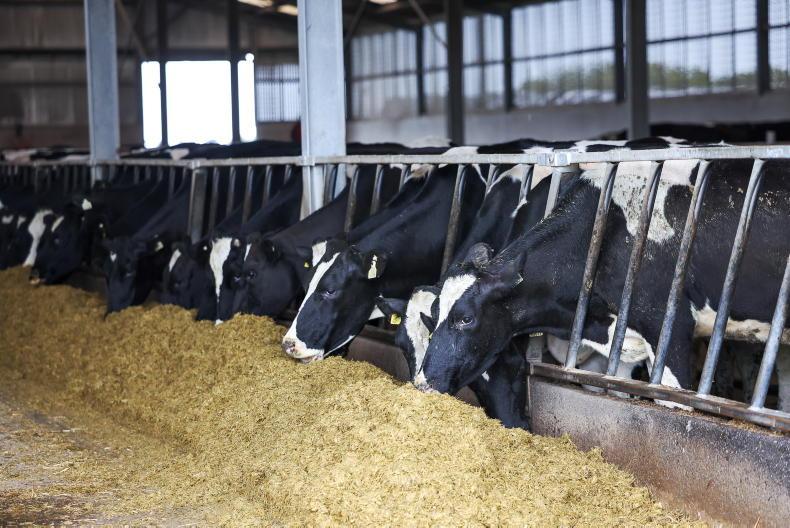
Concentrate crude protein (CP): What concentrate CP content does the herd require currently? The overall diet of spring-calving dairy cows should be maintained at 15% CP during mid-lactation to adequately meet animal requirements.
Ordinarily during summer, green leafy grass is more than adequate to meet these requirements and so a high-energy ration with a 10-12% CP content is perfectly adequate.
As the ongoing drought continues, the CP content of drought-stressed grass can fall to 10 to 12%. With more silage included in the diet due to lower pre-grazing covers, a higher CP content (16%) ration is required. Joe Patton from Teagasc also suggests that if the farm is completely out of grass and the herd is placed on silage full time, an 18% CP ration will be needed in the short term.
Winter feed levels: Given that many herds have grazed silage ground and will be feeding out silage for the next few weeks, now is an important time to assess winter feed levels. Begin by estimating how much silage is in the pits (with each cubic metre equivalent to 0.17t DM) and then count the number of bales in the yard (with each 1 bale equivalent to 0.22t DM) in addition to any other feeds available.
Around 1.2t DM/cow or in-calf heifer and 0.8t/yearling heifer will be required for the average winter of approximately 120 days. So what are the options if you are short of winter feed? Selling animals which are surplus to requirement is a good first option which will save grass from now on and reduce winter feed requirements.
It may also be possible to buy silage locally (depending on price and quality) or use forage stretchers instead of silage to maintain silage reserves for the winter period. It may also be possible to buy cereals off the combine for storage and feeding later in the year if on-farm facilities allow.
High-quality autumn crops sown in early August (such as redstart, rape, kale and stubble turnips) are good-quality feeds, which work well with straw or silage for dry cows or cattle during winter. While grass growth is currently low, these crops can grow considerable yields between now and when they will be used during late autumn, saving on silage requirements particularly on dry farms.
Youngstock: Early August is usually a good time to check in on replacement stock weights versus targets, especially as grass supplies are limited and youngstock can be overly restricted. Dairy calves should now be at 30% of mature weight (165 or 195kg for animals with mature weights of 550 or 650kg, respectively). In-calf heifers should be close to 70% of mature weight (380 and 455kg for the same mature weights). If youngstock are below target weights, it is worth separating lighter animals for extra grass or some ration in the current situation while grass is scarce. Breeding heifers should get treated for salmonella at the end of August and again in mid-September and should also be treated for flies to avoid mastitis.
While the good weather is usually a healthy time for youngstock, calves starting to cough or with dirty tails will require treatment, so don’t delay.


SHARING OPTIONS