



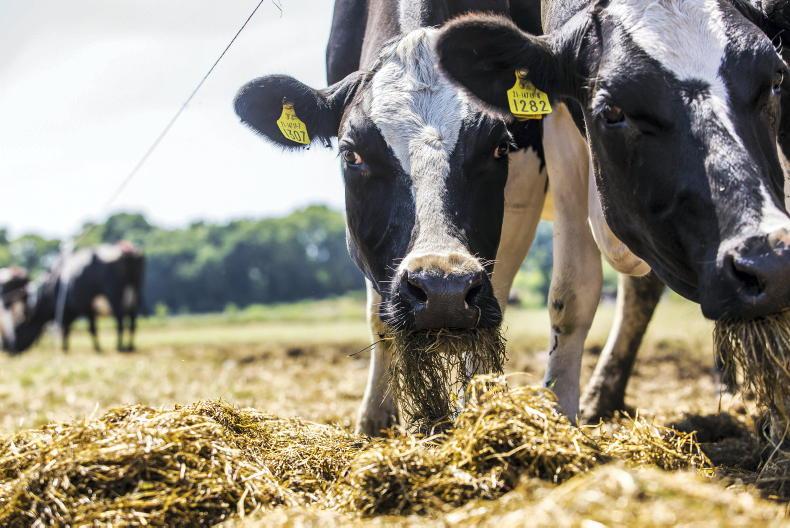
Feeding: While there is the prospect of some rain coming next week, I think most farmers are of the view that unless it happens on their farm they are not going to expect it.
The reality is that at this stage significant rainfall will be required for grass growth rates to recover so realistically, farmers in the east, south and most of the midlands are going to be short of grass for the next month or more.
This means that farmers will have to be strategic around feeding and indeed on what cows to feed, or not to feed. Because this is a low margin year, most farmers are rightly uncomfortable at the prospect of a huge feed bill at the end of this drought and a smaller milk cheque.
Is it now time to consider selling passenger cows? These are cows that won’t be milking next year because they are either lame, have high cell count or are empty. Selling 10% of the herd now increases the total amount of feed available to the remaining animals by 2kg/day. Or in other words, 2kg less meal or silage will have to be fed to the remaining animals provided grass remains constant.
Another option is to dry off cull cows or young cows and put them on a maintenance diet on an out farm until the drought is over.
Breeding: Most farmers that started breeding in late April or early May are coming close to the 12-week mark for the breeding season which means the bulls should be taken out or the AI guns put away for another year. Continuing to keep the bulls in or breed cows for longer means that calving will go on for longer next spring.
A cow served today is likely to not calve until 5 May, or longer if the bull has a long gestation length. I know some farmers hold the view that a cow is more valuable in-calf than not, but the reality is that’s only true if someone is willing to pay extra for a late calving cow.
Given the amount of silage that is being fed currently, it’s unlikely that winter feed will be too plentiful so every animal that is going to be carried over the winter needs to be questioned.
Fertiliser: With growth rates as low as they are in most locations, spreading of fertiliser should be stopped until the rain comes. There is growth but it’s at a low level and adding more fertiliser is not going to speed it up because moisture is the limiting factor. If moisture wasn’t limiting, then fertiliser would be but for now there is no benefit, only risk associated with spreading nitrogen.
Think back to 2018, at that stage many farmers continued to spread nitrogen for a long time after the drought began. This turned out to be the wrong thing to do as a lot of the nitrogen ended up being lost with high nitrate levels in rivers for years after.
Whenever it does rain we should expect a big burst of growth because there should be high levels of mineralisation of nitrogen from the soil. The other big risk is that the weather changes to thunderstorm like weather, the risk is that if nitrogen is lying on the ground, it could get washed away.


SHARING OPTIONS