



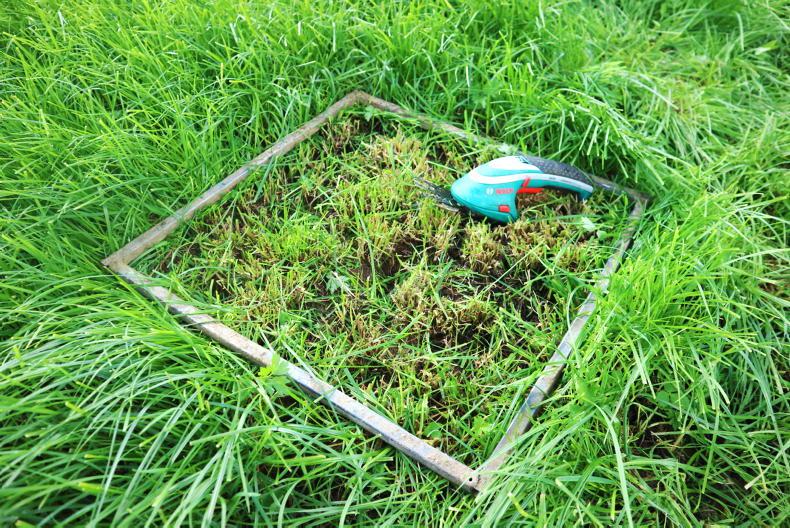
Almost three weeks after the first decent rainfall event in the south and east, grass growth rates are really starting to take off now.
Many farmers have reported growth rates approaching 100kg/ha/day over the last number of days, which are growth rates more akin to early May than early August.
It’s a sign of some compensatory growth after a dry spell in June and July in many parts of the east and south of the country.
Some of these regions had soil moisture deficits of greater than 70mm up to a few weeks ago, but most of these affected regions are now back to the mid- to high 30s in terms of soil moisture deficits.
At this level, grass growth rates are not impeded, but at the same time they will need to continue to get rain in order to keep grass growing well.
High grass growth rates are a call to action because they are a risk to milk production. If cows go into covers that are too strong, then milk production will drop.
Risk
I think this is a very real risk now over the coming weeks. For one thing, grass quality is not as good now as it was in May or June, so going into higher covers will have a worse impact now than then.
Secondly, it is not likely that grass growth rates will remain high for long, so dealing with a big grass surplus, where a lot of the farm can be cut for silage, is probably not going to be an option.
Therefore, farmers need to be careful to avoid a big grass surplus from developing in early August. The best way to do this is by increasing the demand as much as possible by reducing supplement to the bare minimum.
Measuring weekly
Measuring grass weekly is obviously essential in terms of having the information to hand and knowing when to take action and what action to take.
Skipping over paddocks for silage is a key step and it this time of year, it's important not to let paddocks sit there too long before cutting.
Even if covers are light and weather is mixed, I’d still be more inclined to cut paddocks out as soon as possible.
Finally, it’s always important to remember that things change, so in the same way that the low growth didn’t last forever, nor will the high growth rates. Being a good grassland farmer is about anticipating what is coming next.
For those on heavy soils, carrying too much grass into September is not a good idea, because there is no guarantee they’ll be able to graze it if things turn wet.



SHARING OPTIONS