



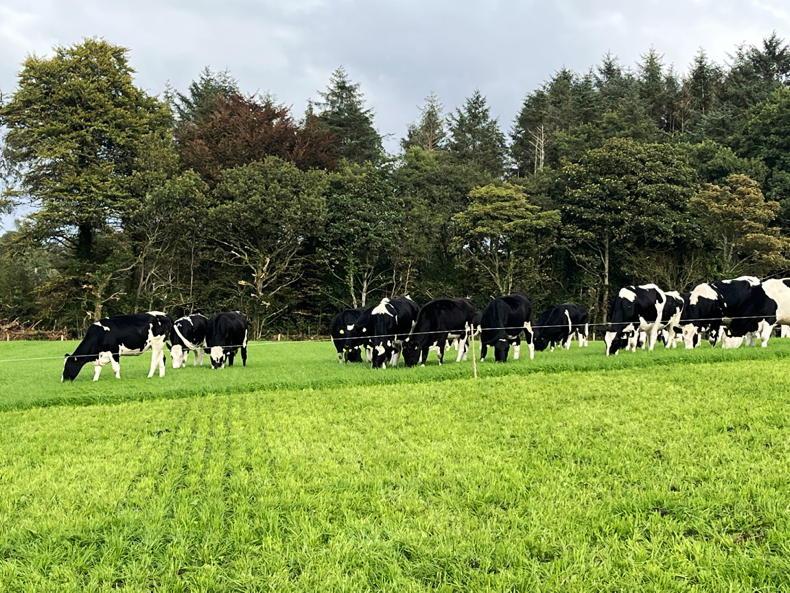
Any reseed done this early should be nearly ready for grazing at this point.
The grazing management of these reseeded swards can have the biggest impact on the long-term success of that sward above all else.
The key is to graze it early and graze it often to keep the cover down and let light into the base of the sward.
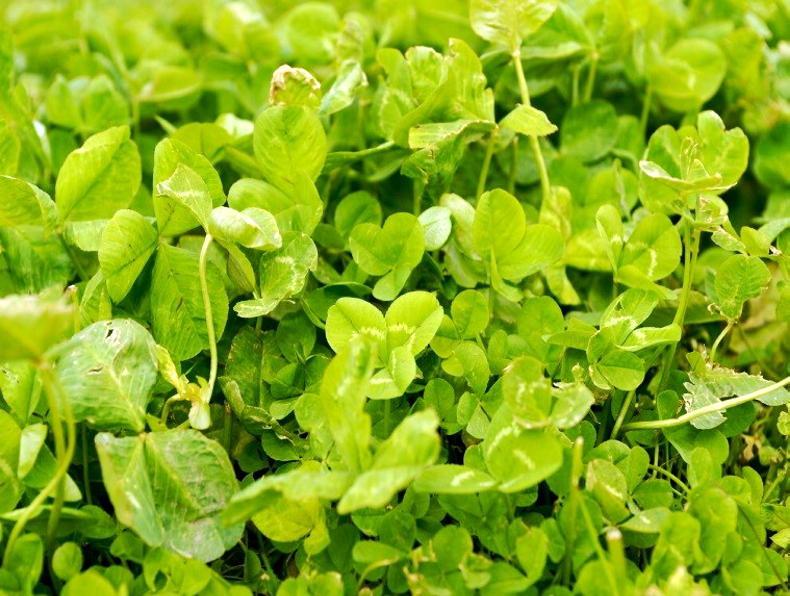
With clover now a feature in nearly all reseeds carried out, this early-and-often grazing approach is even more important.
The initial grazing of a reseeded paddock should be at a cover no greater than a 1,000kg DM/ha. The second grazing should be done around the same cover, but no higher than 1,200kg DM/ha.
When growing conditions are good as they are at the moment, a reseeded sward could be back to a cover of 1,200kg DM/ha in just over two weeks.
To get the reseed established, grazing at low covers is a non-negotiable. That means marking the paddock in the dairy on a whiteboard or wherever the grazing plan is kept for a grazing every 15 to 16 days after the first one. This needs to be continued into the autumn at least, to get the most from that sward.
When grazing a reseed, ensure cows are cleaning it down to 4cm and this too should be continued until closing the paddock in the winter.
Nitrogen
If clover is present in the reseed, care is needed with chemical nitrogen spreading. In the early stage of its development, the clover plant cannot fix nitrogen and it needs some level of chemical nitrogen to help it establish.
The reseed should have gotten nitrogen at sowing and another spread of nitrogen two to three weeks before grazing.
From now on, the reseed should be able to utilise the burst of nitrogen it has gotten up to now to sustain strong growth for the rest of the year.
If spreading nitrogen, 10 to 12 units of nitrogen/acre should suffice. Soiled water can also be beneficial.
Managing reseeds takes time and attention, but getting the first season right can be the difference between great success and an average performer, particularly where clover is concerned.



SHARING OPTIONS