



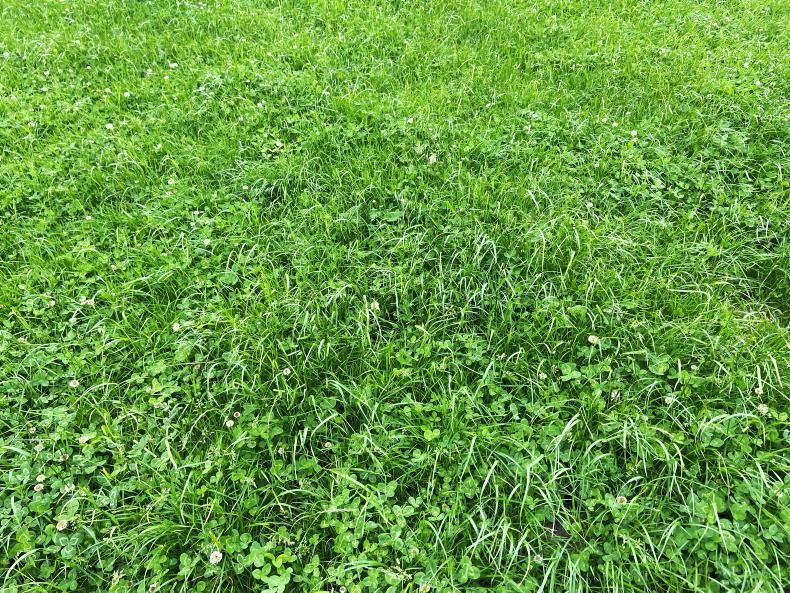
With continued and widespread heavy rain showers, but reasonably strong grass growth rates, particularly in free-draining land, grass dry matter percentage is low.
This is often a contributory factor to bloat, especially when clover content is high.
It is important to remember, though, that cows don’t have to be grazing high clover fields to get bloat and that it can occur even in grass-only swards.
Often times, the first signs of any issues with bloat is a dead animal, so it is something that can catch farmers by surprise.
Giving cows bloat oil in the water is a useful preventative measure, provided that cows are drinking water in sufficient quantities, but with low dry matter grass, water intakes will be low enough.
Break
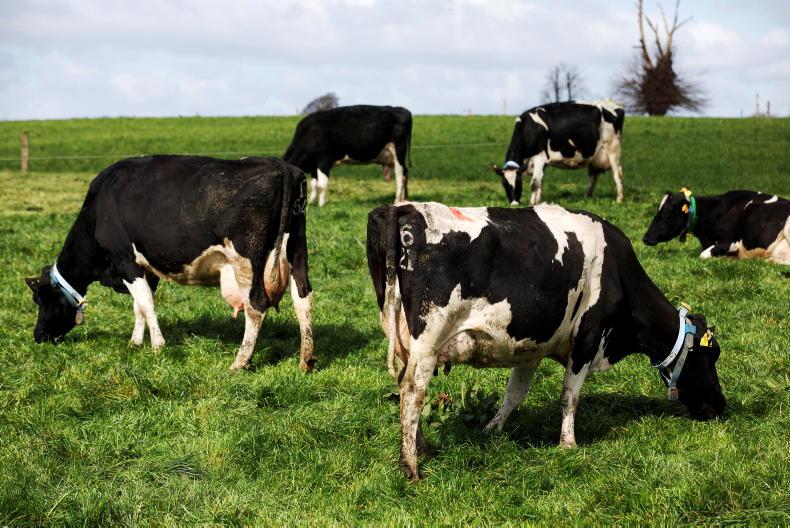
What some farmers are doing is offering cows a small break of the field first, before dropping the wire and giving them the rest of the field.
This means that the cows graze out the first section well, eating the leaf and the stem, which is high in fibre.
My concern is that because fibre content is generally fairly low everywhere, there may not be sufficient fibre in the grass to prevent bloat, particularly on farms where growth rates are high and cows are grazing covers of less than 1,400kg/ha.
In such cases where the risk of bloat is high, some farmers are feeding additional fibre at the feed face during milking time, such as straw or stemmy silage.
Even then, it will be necessary to monitor cows regularly and treat those showing any signs of bloat with bloat oil or paraffin oil down the neck.
If an affected cow is lying down and unresponsive, then using a trochar and cannula to release the built-up gases is the best treatment.
If bloat is observed in cows but they are not too bad, then moving them out of that paddock and into higher-fibre swards will be a help.



SHARING OPTIONS