


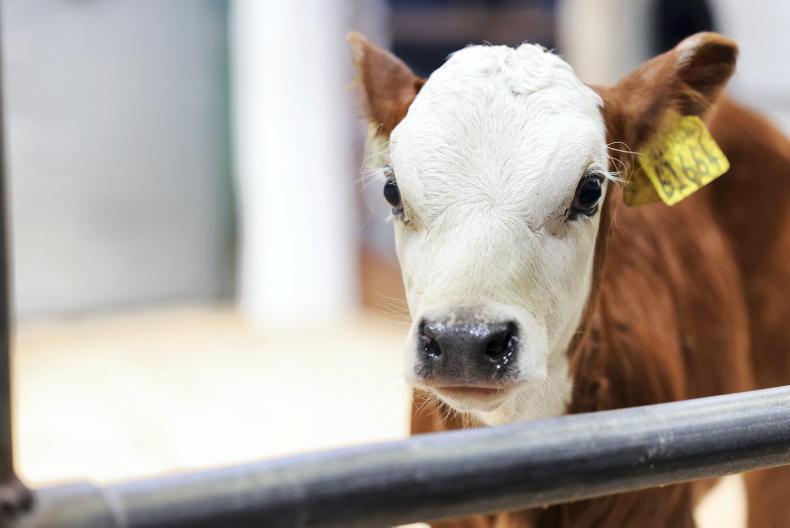
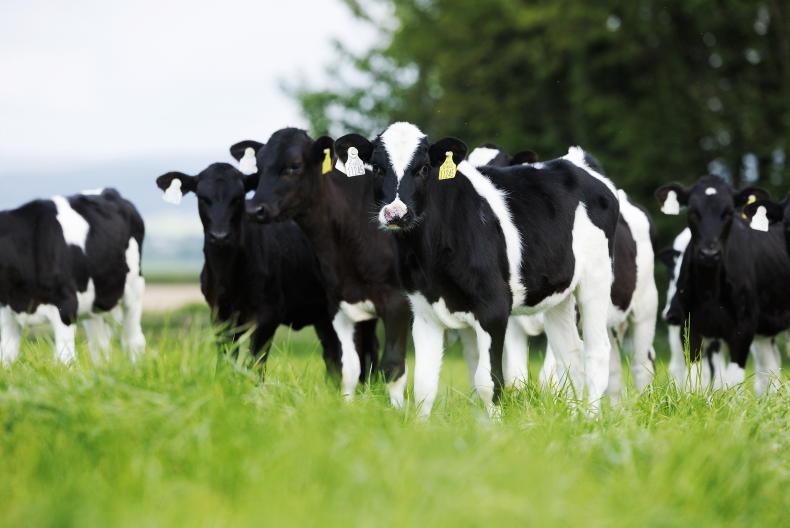
Calves: Calves born in the first week of February are now eight weeks old and will be coming up to weaning age shortly. Different farmers have different ways of rearing calves but the thing to remember is that there’s no reward for overdoing calves now. The more milk they are fed now, the faster they will grow but replacement heifers only need to be at target weight for mating. Being above or below the target is not good. Heavy heifers at mating have poorer fertility when they’re cows. Feeding high levels of milk to calves is expensive and they often go backwards after being weaned.
This is probably because they are not used to digesting hard feeds. So slowly wean them off milk, turn them out to grass and give them access to fresh meal and water daily. Fresh meal is meal that is not more than a day old. Keep weaned calves on ad-lib meal until they are 100kg liveweight and then wean them off meal if there is enough good-quality grass.
Feed: Have you worked out how many acres of first- and second-cut silage you will need to feed your animals next winter? A heavy crop of first-cut silage (that got slurry or three bags/acre of 0:7:30 and 100 units/ac of nitrogen) should yield around 5tDM/ha.
Second-cut silage will be lighter at around 3tDM/ha. So between first and second cut, 1ha will produce around 8tDM/ha, or enough to feed five cows for the winter at an 80% utilisation rate. There is still plenty of time to sow fodder crops like beet and maize. These will provide more feed per hectare compared to two cuts of silage and only need to be harvested once, but you can’t graze them at the shoulders and the fields are usually out of grass production for more than one year.
It’s better to buy in these feeds than grow them on specialised dairy farms. Maize at €50/t freshweight at 30% dry matter and 30% starch works out at about 18c/kgDM when you factor in harvesting costs. Beet, washed and delivered at €40/t, is costing around 20c/kgDM. The problem with these feeds is they are too good and too expensive for what most dairy farmers need in the winter – dry cow feed.
Clover: This week, we describe the best way to over-sow clover into existing swards. From now to the end of August is the best time to over-sow but the trick is not to do too much at once. If 20% of the farm was done this month and 20% in autumn, you’d be doing well.
The key to a good establishment is having the field well grazed before sowing, graze it well after sowing and don’t let the grass get too strong on it. The benefit is that you can spread 100kg N/ha less fertiliser, grow the same amount of pasture and you should see a lift in milk yield where clover is good. Persistency of clover in the Clonakilty trial has been poor, but it’s much better in Moorepark where less nitrogen (150kgN/ha/year) was spread. Clover is good for the farmer and it’s good for the environment.



SHARING OPTIONS