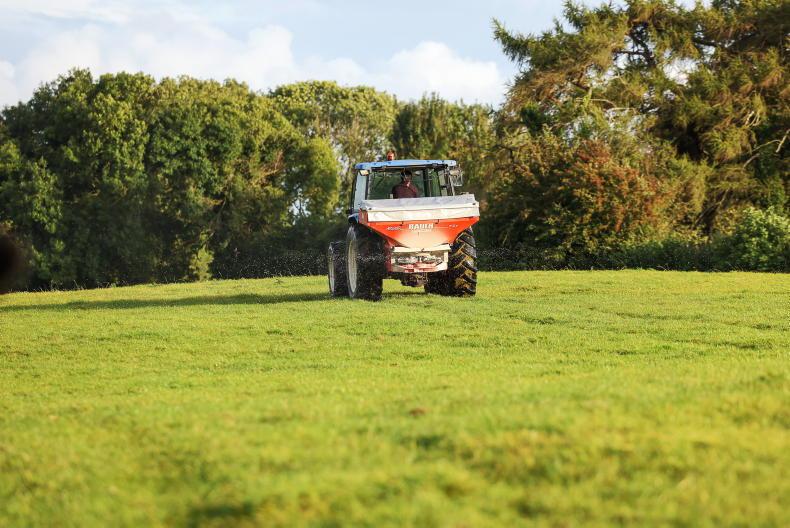
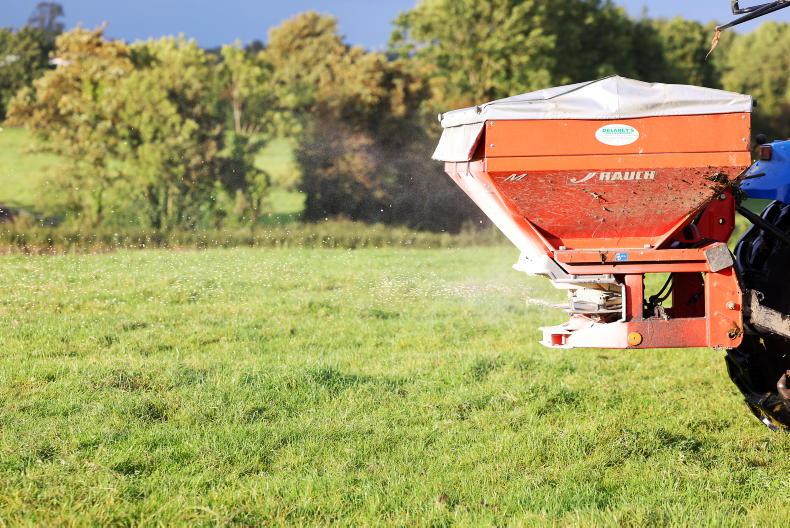
Fertiliser advice over the last few weeks has been to continue to spread after grazing. However, with soil moisture deficits now exceeding 60mm in most parts, and over 80mm on dry land along the east and south, there is no advantage to spreading fertiliser in these conditions.
If grass is green and growing then soil moisture deficits are likely to be less than 60mm, so fertiliser can continue to be spread as it will be taken up by the plant. But if there is no growth, there will be no uptake.
Nitrogen losses after spreading CAN on dry soils is minimal. So fertiliser that was spread at the last round hasn’t been utilised yet. Spreading more fertiliser on top of this won’t be utilised either. But it will be used after the drought ends, resulting in a huge uptake of nitrogen and a potential souring of the grass.
ADVERTISEMENT
Farmers should be recording when they spread fertiliser and how much is being spread. When rain is forecast they can then decide whether or not they think the fertiliser was used and if more is needed.
According to Met Éireann, there is a chance of rain showers in Munster during Sunday and Monday of next week, but it is not certain.

This content is available to digital subscribers and loyalty code users only. Sign in to your account, use the code or subscribe to get unlimited access.
The reader loyalty code gives you full access to the site from when you enter it until the following Wednesday at 9pm. Find your unique code on the back page of Irish Country Living every week.
CODE ACCEPTED
You have full access to the site until next Wednesday at 9pm.
CODE NOT VALID
Please try again or contact support.
Fertiliser advice over the last few weeks has been to continue to spread after grazing. However, with soil moisture deficits now exceeding 60mm in most parts, and over 80mm on dry land along the east and south, there is no advantage to spreading fertiliser in these conditions.
If grass is green and growing then soil moisture deficits are likely to be less than 60mm, so fertiliser can continue to be spread as it will be taken up by the plant. But if there is no growth, there will be no uptake.
Nitrogen losses after spreading CAN on dry soils is minimal. So fertiliser that was spread at the last round hasn’t been utilised yet. Spreading more fertiliser on top of this won’t be utilised either. But it will be used after the drought ends, resulting in a huge uptake of nitrogen and a potential souring of the grass.
Farmers should be recording when they spread fertiliser and how much is being spread. When rain is forecast they can then decide whether or not they think the fertiliser was used and if more is needed.
According to Met Éireann, there is a chance of rain showers in Munster during Sunday and Monday of next week, but it is not certain.
If you would like to speak to a member of our team, please call us on 01-4199525.
Link sent to your email address
We have sent an email to your address. Please click on the link in this email to reset your password. If you can't find it in your inbox, please check your spam folder. If you can't find the email, please call us on 01-4199525.
ENTER YOUR LOYALTY CODE:
The reader loyalty code gives you full access to the site from when you enter it until the following Wednesday at 9pm. Find your unique code on the back page of Irish Country Living every week.
SHARING OPTIONS