Being a low-cost, pasture-based dairy farmer is a lonely road to travel, according to New Zealand farmer Simon Lynskey. Speaking at Dairy Day in Limerick, Simon says that a lot of the farm performance metrics can be negative, compared to medium or higher-input farms:
“You’ve got to have a really thick skin, because if you look at the milk docket every day and all you see is negative numbers, everything is negative and when you talk to other farmers to discuss how the season is going or how the cows are milking, you often only have low yields to report – so it’s a long and slow journey.
“It’s not until you get the accounts back from the accountant that you can start benchmarking and seeing how profit is on the right trajectory, which proves that you’re doing the right thing, but it can be a long time without positive news,” he says.
Simon was joined on the panel by Limerick farmer Peter Cagney and Team Ag dairy consultant Ashley Primrose. The theme of the session was ways to cut costs in 2026, in light of falling milk prices.

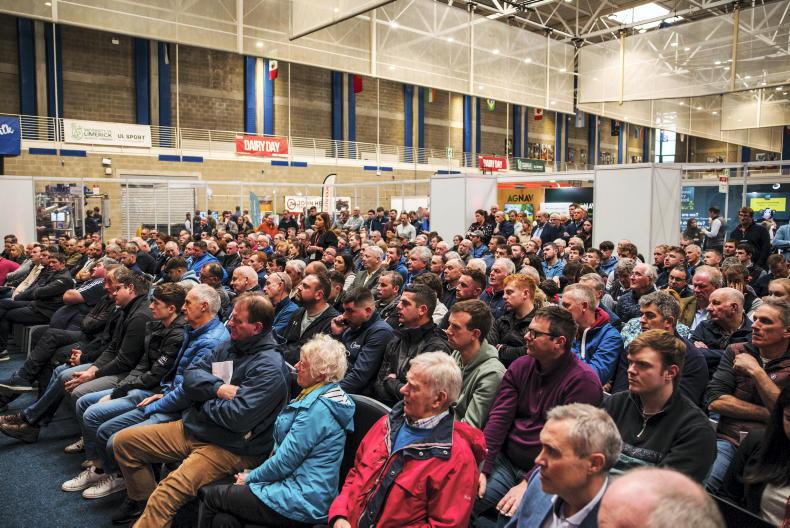
Conor Hogan, Teagasc, Tom O' Connell, Dairy farmer, Cork and Simon Lynskey, Dairy farmer, New Zealand speaking during the Irish Farmers Journal Dairy Day in the UL Sports Arena, Limerick. \ Donal O' Leary
Ashley started off by showing some of the differences in costs and profit among her discussion group members between 2020 and 2024. Based off Profit Monitor data, total costs have gone up by 62%, but profitability per litre has increased by 76%, which Ashley says is down to the fact that 2024 milk price was the third highest on record.
Within the cost increases, supplement cost increased by 86%, which is huge and Ashley says this now represents 20% of total costs. AI and breeding were the next two cost categories that increased the most since 2024, increasing by 90% and 85% respectively.
Simon’s farm working expenses, which includes own labour but excludes costs like depreciation, interest, capital repayments, land rent and tax are outlined in Table 1. Relative to the benchmark group of similar farms, his costs are much lower. I asked Simon if having low costs impacted on the farms ability to make high profits?
“Working off the Dairy NZ Dairybase figures, we are consistently in the top 1% for profit, and this is achieved through doing average production per cow, with 80% of our cows on once-a-day. Most of this profitability is achieved through our focus on grazing management.
“I don’t look at the milk docket, that doesn’t worry me. I have the firm view that what’s in the milk tank is the result of doing everything else correctly. What interests me when I’m out on the farm every day is what the pre- and post-grazing height is and what my round length is. If I have my stocking rate right and the team are hitting their residual targets, then what’s in the tank will be what’s in the tank,” he says.
Peter says he will feed about 750kg of meal per cow in 2025, but aims to get back under 500kg next year. He stressed the importance of making sure the meal feeders are calibrated correctly;
“You need to measure what’s coming out of the feeders, we do it every second load and you could be a half a kilo out on what you think you’re feeding and its normally half a kilo more, not less,” he says.
The stocking rate on the Cagney farm is three cows/ha, while the stocking rate on the Lynskey farm is a little higher at 3.2 cows/ha. However, Simon says that 10% of the cows are culled within six weeks after the end of breeding to reduce herd demand. He says it doesn’t matter what milk price is, cows are scanned and the empty cows are culled straight away;
“These are cows that are going to be culled anyway, so I don’t see the point in feeding them during a drought or to build up covers for the autumn,” Simon says.
On consumables, such as parlour detergents, gloves, pigtail posts and so on, Peter says he works out how much of everything he needs and then prices around for it before things get busy in January and then buys off the cheapest supplier.
He is not part of a purchasing group, but says he is always looking at ways to reduce the cost of inputs, but also how much inputs he uses.
“If the TBC is good on two or three tests, I’ll pull back on the rates of detergents going into the bulk tank. If the TBC increases then I’ll just increase the amount of detergent again,” he says.
Ashley says that it’s a lot easier to focus on reducing costs by a small amount over a large number of cost items than focussing on taking a lot of cost out of one item.
On electricity costs, Peter says he has a broker that checks the best rates and that last year he broke contract numerous times as the broker was able to get better deals.
Both farmers said they had little scope to cut breeding costs as they need to use sexed semen to breed more higher value beef calves from their crossbred herds.
Making a five-day week work
In an era of nine-to-five jobs working Monday to Friday, how can dairy farms compete with other industries for key employees?
That was one of the key messages from the ‘Making a five-day week work on dairy farms’ panel discussion at Dairy Day 2025.
The idea is to develop a five days on and two days off (5/2) roster for people working on a farm,
Conor Hogan from Teagasc stresses the importance of consistent working hours and the potential to implement the 5/2 roster.
“Dairy farms are competing with other industries when it comes to sourcing employees. We want dairy farms to be an employer of choice.
“An employer of choice will be one with clarity around set start and finish times, hours worked per week and competitive salaries. The 5/2 fits nicely into this.
“The difficulty comes in the spring when extra hours are a necessity. We’ve found however, that people out there will be happy to work extra hours and be flexible in the spring if that means consistency across the rest of the year. That’s just like any other job, there are busier times of the year regardless of the industry” he says.
Tom O’Connell a dairy farmer from Cork also spoke on the panel, highlighting how the 5/2 roster works with the farm manager Dan O’Mahony.
Dan is working Monday to Friday with Saturday and Sunday off except for six weeks at the start of calving. From the beginning of February to the middle of March, Dan works a 6/1 roster, Monday to Saturday with Sunday off.
Relief milkers cover most of the weekend milking. To prevent confusion or uncertainty all other jobs are completed during the week, with the only task to be done at the weekend being the milkings.
On farms that are not of big enough scale to employ anyone outside of the farm owner/operator themselves, a five-day week is more challenging but not impossible according to the panel.
The key to unlocking this starts with a mindset shift according to Tom.
“To improve at anything, you probably need to start by being weaker at it. When we started off farming we worked longer hours and weekends but as time evolved, we realised it was unsustainable.
“If you want to change you need to start small. It can be hard to hand over responsibility to someone else so ease into it. Maybe take a Saturday off and go and cut the grass if being idle is part of the problem for you” Tom said.
The panel of three was completed by Simon Lynskey a dairy farmer from New Zealand who is milking 1,530 cows in Taranaki. The majority of the cows are milked once-a-day and there are four full-time employees, with relief staff and students covering the calving period.
With so many moving parts, open communication is an important part of ensuring the operation runs smoothly.
“We use WhatsApp groups to keep in touch throughout the week and another important part of our communication is the Kanban board.
The Kanban board breaks down tasks in to what’s done, what is being done now and what needs to be done in the next week.
“It’s a really effective way of making sure everyone knows what’s going on, on the farm”.
WhatsApp videos documenting standard operating procedures for everyday tasks like the milking wash-up routine, was another one of the other simple solutions proposed by the panel.
These cheap and easy options can help clarify tasks for relief milkers or new people in the business and allow more freedom for the farm owner/ manager.
International outlook
At the session on international outlook, French dairy farmer Hermjan Darwinkel spoke about how the dairy company he supplies went from paying the lowest milk price in France in 2015 to the highest. He says that LSDH – one of France’s leading manufacturers of liquid food and vegetable products – was the first dairy company in France to offer consumers a fair or equitable choice.
The dairy company only processes fresh milk, with approx 350m litres sold annually. Over one third of the milk sold by the company is under the fair price scheme, where consumers pay more.
Hermjan says he has to do certain things in order to qualify, such as ensure cows have access to pasture, eat no GMO feed and that all feed is sourced in France. His current price is 54c/l (likely to remain in 2026).
Being a low-cost, pasture-based dairy farmer is a lonely road to travel, according to New Zealand farmer Simon Lynskey. Speaking at Dairy Day in Limerick, Simon says that a lot of the farm performance metrics can be negative, compared to medium or higher-input farms:
“You’ve got to have a really thick skin, because if you look at the milk docket every day and all you see is negative numbers, everything is negative and when you talk to other farmers to discuss how the season is going or how the cows are milking, you often only have low yields to report – so it’s a long and slow journey.
“It’s not until you get the accounts back from the accountant that you can start benchmarking and seeing how profit is on the right trajectory, which proves that you’re doing the right thing, but it can be a long time without positive news,” he says.
Simon was joined on the panel by Limerick farmer Peter Cagney and Team Ag dairy consultant Ashley Primrose. The theme of the session was ways to cut costs in 2026, in light of falling milk prices.
Conor Hogan, Teagasc, Tom O' Connell, Dairy farmer, Cork and Simon Lynskey, Dairy farmer, New Zealand speaking during the Irish Farmers Journal Dairy Day in the UL Sports Arena, Limerick. \ Donal O' Leary
Ashley started off by showing some of the differences in costs and profit among her discussion group members between 2020 and 2024. Based off Profit Monitor data, total costs have gone up by 62%, but profitability per litre has increased by 76%, which Ashley says is down to the fact that 2024 milk price was the third highest on record.
Within the cost increases, supplement cost increased by 86%, which is huge and Ashley says this now represents 20% of total costs. AI and breeding were the next two cost categories that increased the most since 2024, increasing by 90% and 85% respectively.
Simon’s farm working expenses, which includes own labour but excludes costs like depreciation, interest, capital repayments, land rent and tax are outlined in Table 1. Relative to the benchmark group of similar farms, his costs are much lower. I asked Simon if having low costs impacted on the farms ability to make high profits?
“Working off the Dairy NZ Dairybase figures, we are consistently in the top 1% for profit, and this is achieved through doing average production per cow, with 80% of our cows on once-a-day. Most of this profitability is achieved through our focus on grazing management.
“I don’t look at the milk docket, that doesn’t worry me. I have the firm view that what’s in the milk tank is the result of doing everything else correctly. What interests me when I’m out on the farm every day is what the pre- and post-grazing height is and what my round length is. If I have my stocking rate right and the team are hitting their residual targets, then what’s in the tank will be what’s in the tank,” he says.
Peter says he will feed about 750kg of meal per cow in 2025, but aims to get back under 500kg next year. He stressed the importance of making sure the meal feeders are calibrated correctly;
“You need to measure what’s coming out of the feeders, we do it every second load and you could be a half a kilo out on what you think you’re feeding and its normally half a kilo more, not less,” he says.
The stocking rate on the Cagney farm is three cows/ha, while the stocking rate on the Lynskey farm is a little higher at 3.2 cows/ha. However, Simon says that 10% of the cows are culled within six weeks after the end of breeding to reduce herd demand. He says it doesn’t matter what milk price is, cows are scanned and the empty cows are culled straight away;
“These are cows that are going to be culled anyway, so I don’t see the point in feeding them during a drought or to build up covers for the autumn,” Simon says.
On consumables, such as parlour detergents, gloves, pigtail posts and so on, Peter says he works out how much of everything he needs and then prices around for it before things get busy in January and then buys off the cheapest supplier.
He is not part of a purchasing group, but says he is always looking at ways to reduce the cost of inputs, but also how much inputs he uses.
“If the TBC is good on two or three tests, I’ll pull back on the rates of detergents going into the bulk tank. If the TBC increases then I’ll just increase the amount of detergent again,” he says.
Ashley says that it’s a lot easier to focus on reducing costs by a small amount over a large number of cost items than focussing on taking a lot of cost out of one item.
On electricity costs, Peter says he has a broker that checks the best rates and that last year he broke contract numerous times as the broker was able to get better deals.
Both farmers said they had little scope to cut breeding costs as they need to use sexed semen to breed more higher value beef calves from their crossbred herds.
Making a five-day week work
In an era of nine-to-five jobs working Monday to Friday, how can dairy farms compete with other industries for key employees?
That was one of the key messages from the ‘Making a five-day week work on dairy farms’ panel discussion at Dairy Day 2025.
The idea is to develop a five days on and two days off (5/2) roster for people working on a farm,
Conor Hogan from Teagasc stresses the importance of consistent working hours and the potential to implement the 5/2 roster.
“Dairy farms are competing with other industries when it comes to sourcing employees. We want dairy farms to be an employer of choice.
“An employer of choice will be one with clarity around set start and finish times, hours worked per week and competitive salaries. The 5/2 fits nicely into this.
“The difficulty comes in the spring when extra hours are a necessity. We’ve found however, that people out there will be happy to work extra hours and be flexible in the spring if that means consistency across the rest of the year. That’s just like any other job, there are busier times of the year regardless of the industry” he says.
Tom O’Connell a dairy farmer from Cork also spoke on the panel, highlighting how the 5/2 roster works with the farm manager Dan O’Mahony.
Dan is working Monday to Friday with Saturday and Sunday off except for six weeks at the start of calving. From the beginning of February to the middle of March, Dan works a 6/1 roster, Monday to Saturday with Sunday off.
Relief milkers cover most of the weekend milking. To prevent confusion or uncertainty all other jobs are completed during the week, with the only task to be done at the weekend being the milkings.
On farms that are not of big enough scale to employ anyone outside of the farm owner/operator themselves, a five-day week is more challenging but not impossible according to the panel.
The key to unlocking this starts with a mindset shift according to Tom.
“To improve at anything, you probably need to start by being weaker at it. When we started off farming we worked longer hours and weekends but as time evolved, we realised it was unsustainable.
“If you want to change you need to start small. It can be hard to hand over responsibility to someone else so ease into it. Maybe take a Saturday off and go and cut the grass if being idle is part of the problem for you” Tom said.
The panel of three was completed by Simon Lynskey a dairy farmer from New Zealand who is milking 1,530 cows in Taranaki. The majority of the cows are milked once-a-day and there are four full-time employees, with relief staff and students covering the calving period.
With so many moving parts, open communication is an important part of ensuring the operation runs smoothly.
“We use WhatsApp groups to keep in touch throughout the week and another important part of our communication is the Kanban board.
The Kanban board breaks down tasks in to what’s done, what is being done now and what needs to be done in the next week.
“It’s a really effective way of making sure everyone knows what’s going on, on the farm”.
WhatsApp videos documenting standard operating procedures for everyday tasks like the milking wash-up routine, was another one of the other simple solutions proposed by the panel.
These cheap and easy options can help clarify tasks for relief milkers or new people in the business and allow more freedom for the farm owner/ manager.
International outlook
At the session on international outlook, French dairy farmer Hermjan Darwinkel spoke about how the dairy company he supplies went from paying the lowest milk price in France in 2015 to the highest. He says that LSDH – one of France’s leading manufacturers of liquid food and vegetable products – was the first dairy company in France to offer consumers a fair or equitable choice.
The dairy company only processes fresh milk, with approx 350m litres sold annually. Over one third of the milk sold by the company is under the fair price scheme, where consumers pay more.
Hermjan says he has to do certain things in order to qualify, such as ensure cows have access to pasture, eat no GMO feed and that all feed is sourced in France. His current price is 54c/l (likely to remain in 2026).






SHARING OPTIONS