



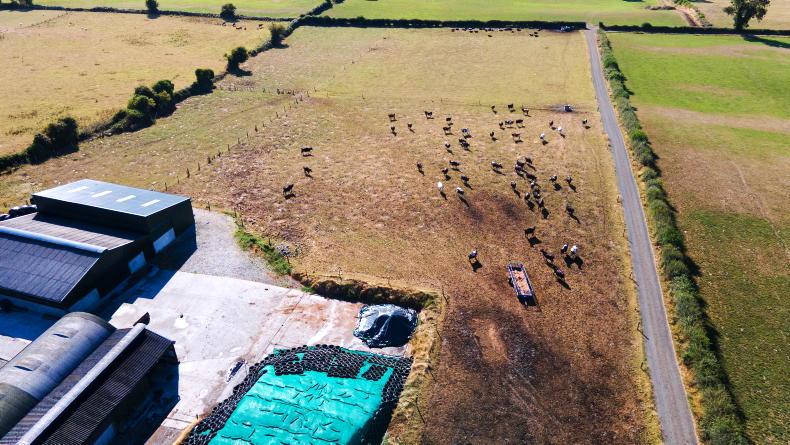
In the heart of north Kerry’s prime dairy country, the Egan family are milking 120 spring-calving cows on the outskirts of the town of Abbeydorney.
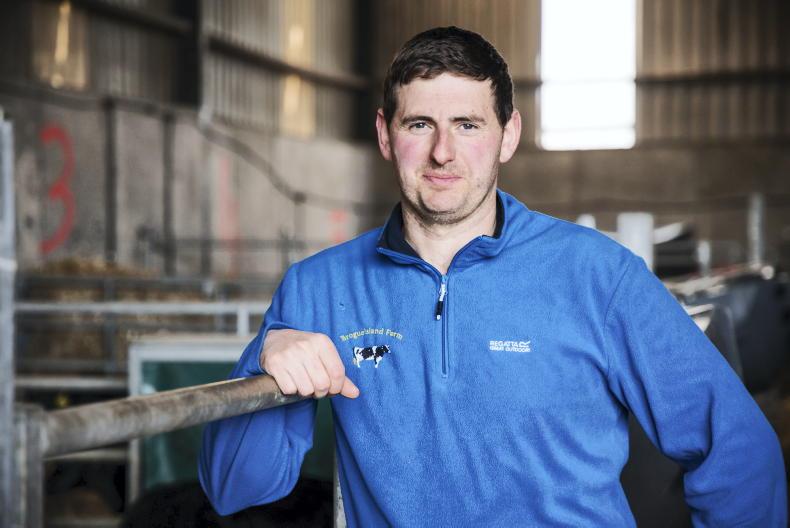
The farm is run as a three-way partnership between Eoin and his parents, Mary and Frank.
The farm, for the most part – is relatively free-draining with some smaller sections of heavier ground and it’s more than capable of growing over 13.5t DM/ha in normal years according to Eoin
The herd is made up of Holstein-Friesian genetics with the average cow size just over the 600kg mark.
Farm facts
Spring 2026
Calving started on 27 January and to date, 95 of the 120 cows have calved. Calving has been going well so far, with no major health issues in either the cows or calves.
Weather has proven to be the biggest challenge for the Egans this year.
Typically, they would plan to start on/off grazing in early to mid-February but were significantly delayed this spring.
The cows first went to grass on the last day of February and have had just four grazings since.
Grass supply is not an issue on the farm with the average farm cover measured at 977kg DM/ha on 13 February and plenty of growth since.
The problem – similar to that of rest of the country – has been the continuous rain experienced over the last two months, with little to no window of opportunity for drying.
Soils were saturated and the Egans felt it would do more harm than good to send cows out regardless of the potential benefits and the effect not grazing was having on the spring rotation planner.
Now that they have finally started to get out, it will be a matter of keeping demand as high as possible to get through area and re-assessing the situation as they go.
At the time of the visit, the cows were out for a three-hour grazing on a cover of 950kg DM/ha, with an allocation of 7kg of grass per cow.
They were getting 4.5kg of meal in the parlour and access to silage ad-lib after grazings. Eoin’s plan is to reduce down the meal feeding to around 3.5kg when they are getting to grass more consistently for both a day and night grazing.
The cows weren’t doing any significant damage but there was some evidence of marking on previously grazed paddocks.
The Egans had selected paddocks that were identified for reseeding in late spring for grazing first and therefore a small bit of poaching was not the end of the world for them.
Fertiliser
With the challenging weather, fertiliser spreading has been impossible on the farm. Some slurry has gone out with 20% of the farm area covered in early February using the umbilical system. No more has gone out since.
The target for the farm is to get 60 units of nitrogen (N) per acre spread by the start of April. Usually, this would go out as a mix of fertiliser and slurry and would be divided up into three different spreads.
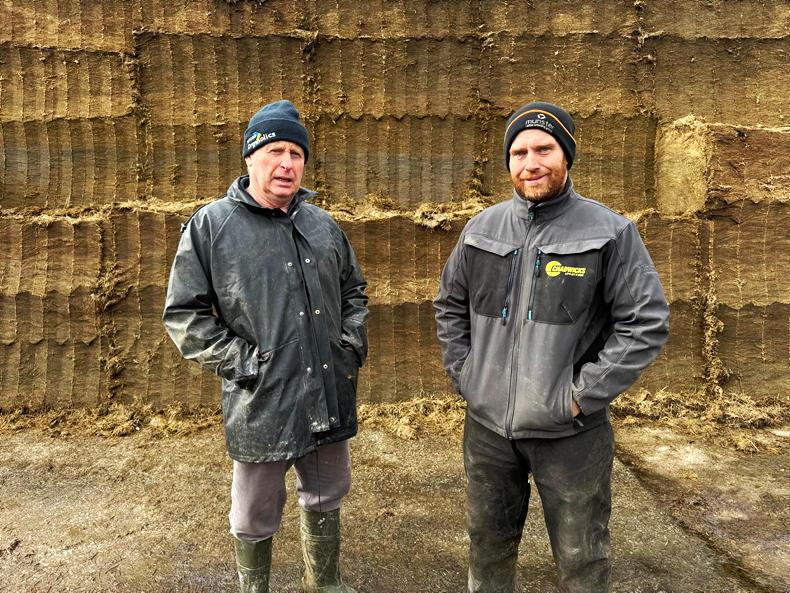
The way this year has fallen has seen a change to the plan. Eoin is now going to go out this week with close to 30 units/acre of protected urea using a squad spreader.
Cows will be followed with 2,000 gallons/acre of slurry on any fields that haven’t already gotten slurry, when a dry spell does eventually come.
Depending on ground conditions and how much slurry has gone out by that stage, he will look to go out with another big spread of nitrogen prior to start of April to make up the 60 units.
There is some clover on the farm but not enough to cutback nitrogen spreading significantly during the summer months. From April on, Eoin will be following the cows with around 20 units of N after each round.
Calves
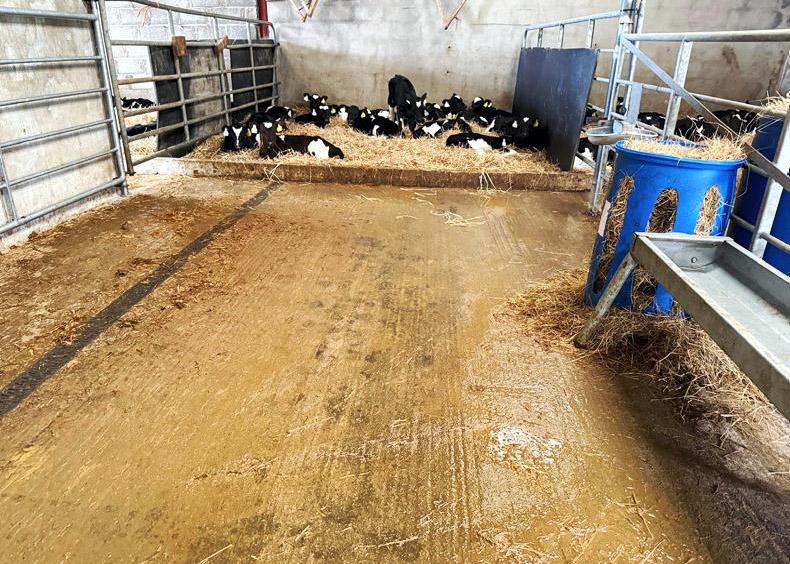
The Egans’ attention to detail around calf-rearing was one of the standout features of the visit. This spring there are 33 dairy heifers bred using sexed semen. Of the 33, the Egans plan to keep the top 23.
Eoin and Frank do all of their own artificial insemination (AI) which helps to have flexibility, something that’s very important when it comes to the stricter timings of AI with sexed semen. Last year, there was a conception rate of 80% to first service on the cows bred using sexed straws.
The rest of the cows are bred to Angus AI for nine weeks from the start of breeding, followed by three weeks of an Angus stock bull.
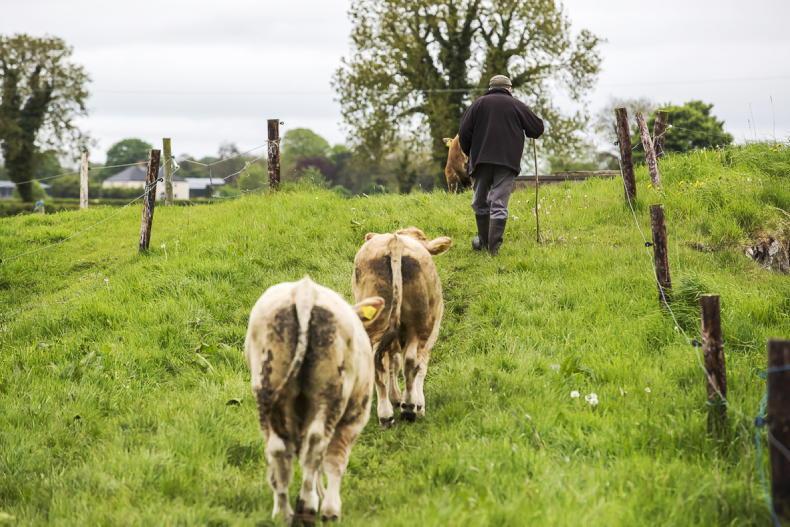
There are repeat customers for the beef calves and never any issue in getting them sold by three weeks of age.
All calves are fed whole-milk until weaning at a rate of six litres per day. They are offered water, concentrates and straw from a few days old.
According to Frank, the calves have a fairly well-developed rumen by the time they go to grass and this has helped prevent setbacks in growth rates.
The heifers move to a once-a-day feeding programme from seven weeks to help encourage more meal intake.
The whole milk feeding is something both Eoin and Frank believe has been beneficial for them over the years.
“It’s just the way we’ve always done it. The calves seem to thrive on the whole milk better than they do on milk replacer. They definitely have more of a shine to them and we think they grow that bit better.”
All heifers are vaccinated for pneumonia intranasally at nine days, followed by another shot six weeks later. All cows are vaccinated for scour in advance of calving to prevent any rotavirus in calves.
The sheds are thoroughly disinfected with Kenocox before calving to kill off any crypto or coccidiosis that might be present in sheds.
Both the calving pens and calf sheds are well setup to allow for regular cleaning during spring months. Animal health and hygiene are clearly a big focus for the Egans.
Investment
The Egans have invested wisely over the last number of years to make the system simpler and more cost-effective. The real dividends from the investments are earned in busier times of the year.
In 2018, the parlour was extended from eight up to 14 units.
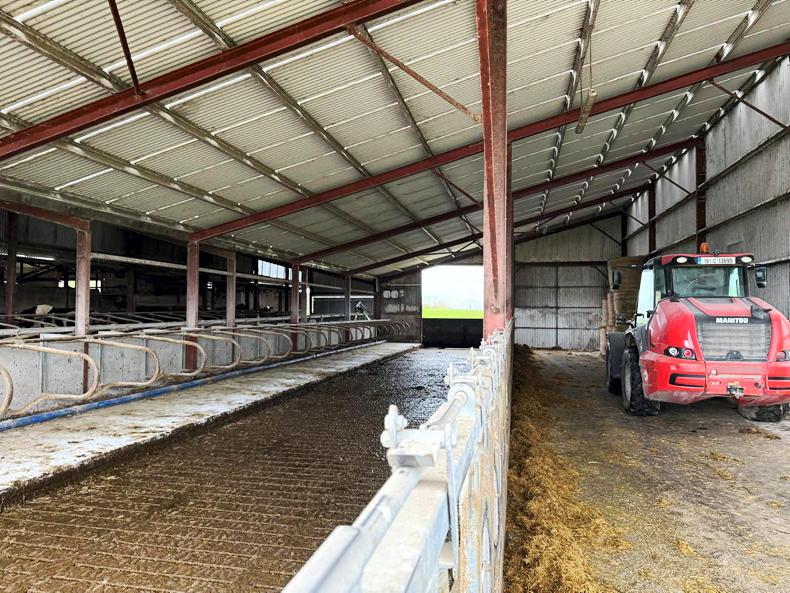
The following year 23 extra cubicles were added onto the existing cubicle shed with feed space for another 40 cows.
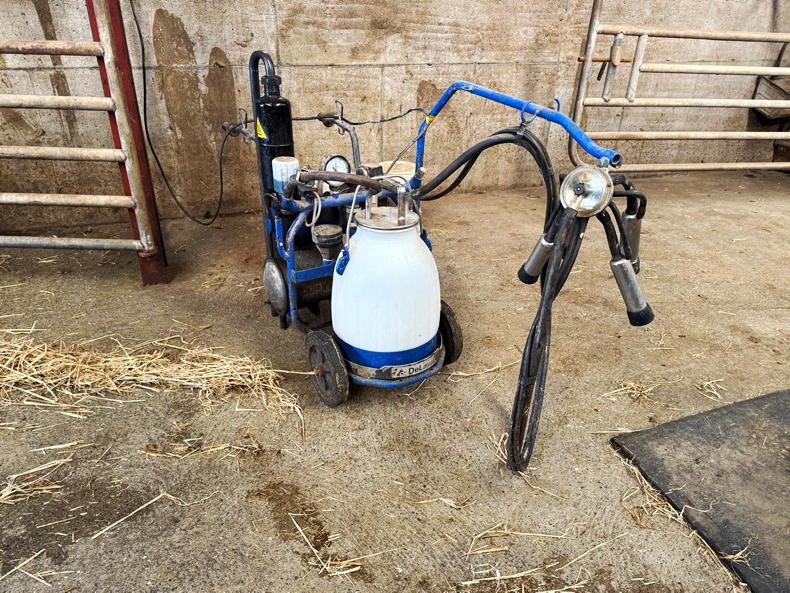
In 2021, an extra calving area was added as well as a small calf-rearing space for new born calves. Around the same time, a portable milking machine was purchased to allow cows to be milked in the calving area instead of having to move cows to the parlour individually after each calving.
In 2022, four solar panels were purchased and have been a major saving on energy costs for the farm.

Heat detection boluses were acquired in April of last year to reduce labour at breeding time.
A drafting gate has been installed this year in the hope it too will help serve to reduce the workload in spring of drafting cows manually from the parlour.
A cubicle bedder purchased recently has saved the Egans serious time over the winter months.
It now takes just 10 minutes to do all 120 cubicles on the farm.
The investments made over the years have made the farm a much easier place to manage, according to both Eoin and Frank.


SHARING OPTIONS