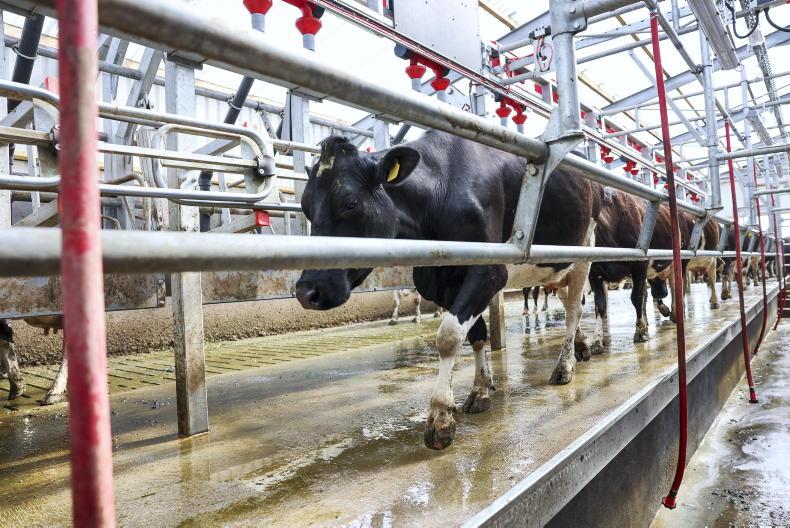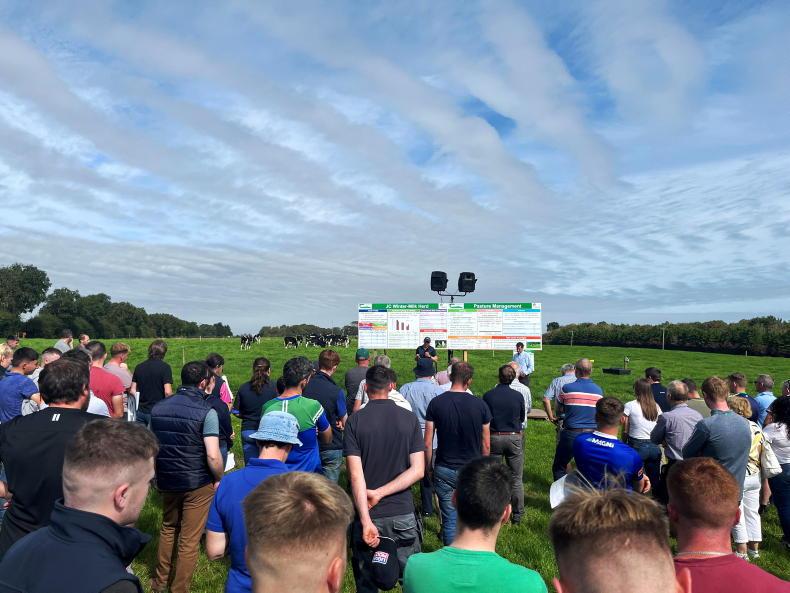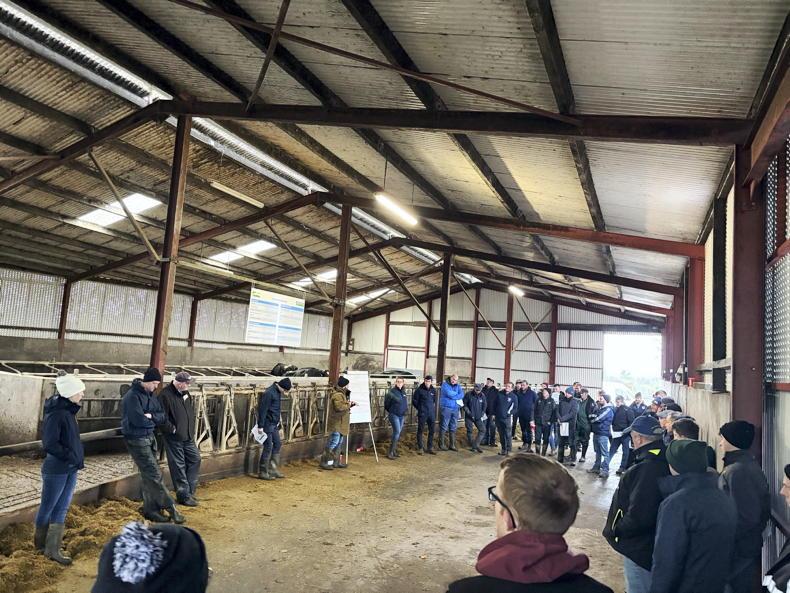
Lakeland Dairies and Teagasc held a winter milk on-farm event on the farm of Neville and Lee Irwin in Feragh, Co Monaghan on 18 November.
The walk is the latest event in the joint development programme, which is focused on supporting sustainable and profitable farm development across the Lakeland Dairies milk supply base.
Neville and Lee are currently milking a split-calving herd of 150 cows out of two yards, with approximately 50 cows calving in autumn.
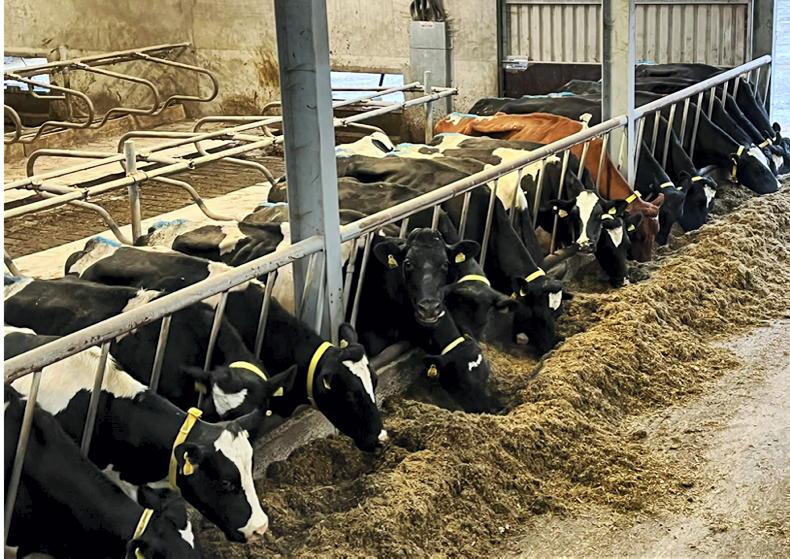
Visitors to the event heard about the importance of compact calving, improved genetics and feed management for winter milk systems. James Dunne, Teagasc Dairy Specialist, highlighted the alarming increase in costs of production within winter milk systems in recent years and explained how feed management was a critical part of managing costs within such systems.
Like spring milk producers, winter milk producers have experienced significant inflation in the costs of production since 2021. The cost of carrying a winter milk cow has increased by €622 (32%) between 2021 and 2025. Unsurprisingly, feed and fertiliser costs contributed the lion’s share of the overall increase. James anticipates that these costs will increase by a further 10% during 2026 to €2,818/cow due to increased feed, fertiliser and contractor charges.
Focusing on the factors driving increased profitability in winter milk systems, James suggests that they are similar to spring calving herds.
“Across the winter herds that we look at in profit monitor benchmarking, increased pasture utilisation and milk solids production and effective cost management are leading to improved financial outcomes on the most profitable winter milk farms," he said.
From an animal breeding perspective, recent data analysis also shows that higher Economic Breeding Index (EBI) animals are delivering extra profitability within winter milk systems. James says that “while winter herds traditionally selected for higher milk PTAs, a higher milk sub-index is delivering increased milk solids for winter herds in addition to higher milk prices over the entire lactation”.
This joint programme includes three key strands, including six demonstration farms who will showcase best practice in key areas including grassland management, breeding and genetics, data-driven decision-making and environmental performance.
In addition, a dedicated advisory service for new entrants and existing suppliers will support generational change, while a targeted farm development service will support improved breeding and herd performance, grassland management and financial planning while also helping farmers improve environmental outcomes.
The programme operates through a team of dairy specialists who work closely with Lakeland Dairies suppliers in an advisory capacity.