


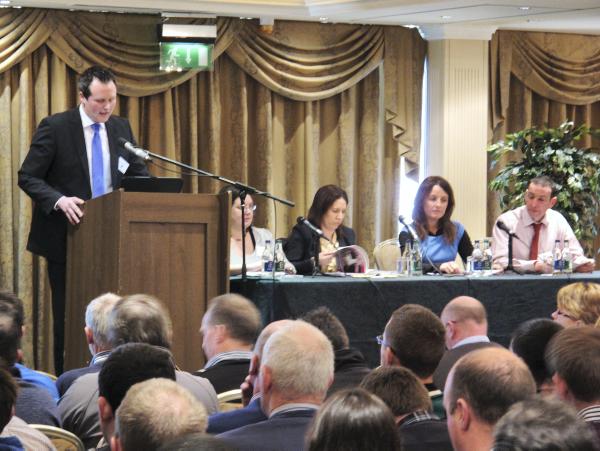
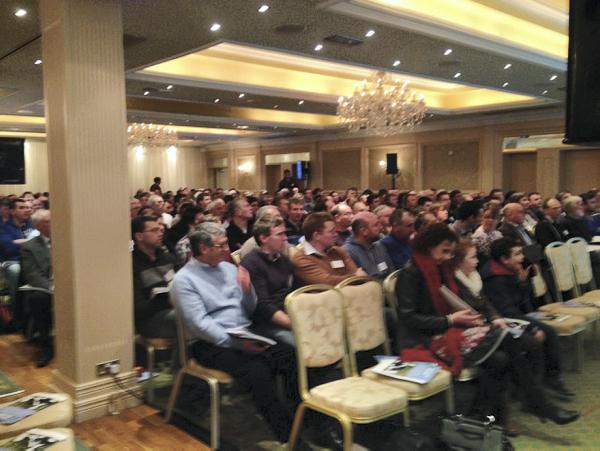
Four speakers, two commercial farmers and two researchers discussed the merits and changes they want to see and changes that are coming in future years. Shane Chambers is farming almost 80 hectares and milking 166 cows. Ten years ago he changed his production system because fertility had declined to almost 28% not in calf over a 13 week breeding season. He decided to use Jersey AI sires and today he is milking 120 Jersey crossbreds from 166 total cows and he had 7% not in calf over 13 weeks in 2013.
Jim Delahunty is farming near Carrig in North Tipperary. He is farming 59 hectares in total and is milking 110 cows on a 30 hectare milking platform. Jim has stayed with the black and white breed and feels he is getting equally good performance using the high EBI black and white sires that are selected on good fertility. In 2013 Jim produced almost 460kg of milk solids per cow (1622kg MS/ha) and had 16% empty in 13 weeks.
Francis Kearney from the ICBF explained that having the right cow for the system is very important, as is very good management. A top cow can come in many shapes, sizes and colours – no ‘one size fits all’. He said, “EBI is taking us towards a more fertile, robust, healthier cows that are genetically capable of producing increased milk solids. As more economically important traits becomes available they will be added to EBI.”
Frank Buckley from Teagasc Moorepark said, “continue to build on genetic improvement. Strive for €140 Fertility SI in the EBI and maximise the impact of superior genetics. Consider crossbreeding and a fast track to improved fertility and it can add €100 per cow per lactation extra profit.”
Session 2: Key aspects of efficiency to put in place for 2015
The second morning session at the IGA focused on the measures that will drive profit in a no quota scenario.
Paidi Kelly, Teagasc emphasised that profit per hectare from all hectares farmed will be the best barometer when milk quotas go. Pat Dillon, Teagasc said there is an onus on Irish dairy farmers to exploit the comparative advantage we have in Ireland and that is to grow and graze grass. Not many other countries in the world can do it and we need to get this right before expanding by further capitalising on small land blocks. He stressed farmers need to get soil fertility, grass varieties and grass measurement right before spending money on anything else.
Key quotes from speakers
Paidi Kelly, Teagasc: “At high milk prices all types of stocking rates can work and survive. However at lower milk prices to get high profit per litre or per hectare efficient farms will need to keep costs down, grow and feed more grass. When we researched higher stocking rates all the value associated with the extra output was going out of farmers control with over 50% out as extra feed and then the rest a mix of a number of higher associated costs.”
Pat Dillon: “Efficiency must come before expansion. The average Irish farmer has no additional cash for expansion. Successful expansion will require financial planning and budgeting. The industry will need highly trained people that can deliver a good lifestyle for workers. We need to make dairy farming an attractive career choice. The new challenges are building partnerships that work eg Share farming, equity partnerships etc if we want to exploit expansion in dairying in Ireland. Above all else farmers need to choose a production system that delivers at volatile milk prices.”
Session 1: "Getting the balance right between grass quantity and quality"
Striking the balance between grass quality and quantity was the theme of the first session at the IGA conference.
The message from all three speakers was farmers need to let cows into covers of 1,500kg rather than much lower covers of 1,100 to 1,200kg DM/ha. Continuously grazing very low covers will reduce tonnage grown on the farm. If grass covers are too high then you end up growing more stem rather than leaf and quality is reduced.
Key quotes from speakers
Eva Lewis: “Getting grass quality and quantity right is a balancing act but recent research studies suggest farmers need to allow milking cows into grass covers of 1200 to 1500kg. If covers are much lower you can reduce the amount of grass grown on the farm and if covers are much higher you can get a lot of dead material and more stem in the diet which is lower quality.”
Abigail Ryan: “Soil fertility is one of the key issues with growing more grass – none of Greenfield farms or Grass Roots that I have worked with, have enough nitrogen, phosphorus, or potassium to grow the maximum amount of grass. In the spring on high stocked farms as growth rates are normally lower you need to get at least 50% of the annual nitrogen application out by April 1.”
John Curtis, Wexford: “For me palatability is a very important trait in grassland management – if they don’t eat it then it’s no good to me. I hope in future research it will play a big part. My aim is to grow 16 tonnes of grass per year and this will allow me feed 100 cows on my farm post 2015 mostly on grazed grass.”
Increase in production
Earlier, former IFA President and Meath farmer Tom Clinton told the conference he expects Ireland to increase milk production by 50% in the next five or six years.
He added that he expects an increase in production of 100% by 2030.
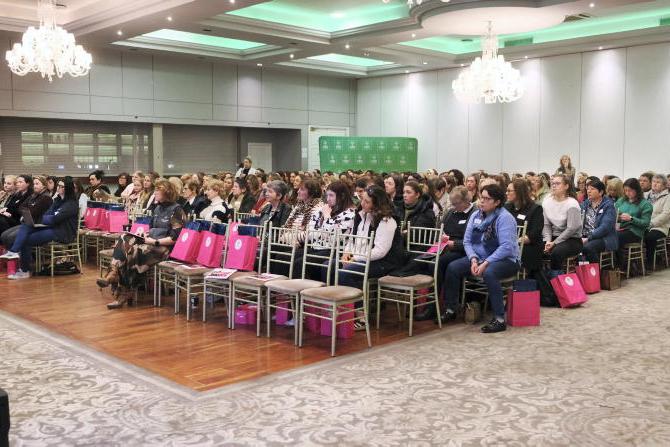
The title of today’s conference is “Getting things right pre 2015” and is focusing on how dairy farm businesses can take best advantage of the opportunities that will be available.
Dairy Editor Jack Kennedy will have coverage of the conference in this week’s Farmers Journal.


SHARING OPTIONS