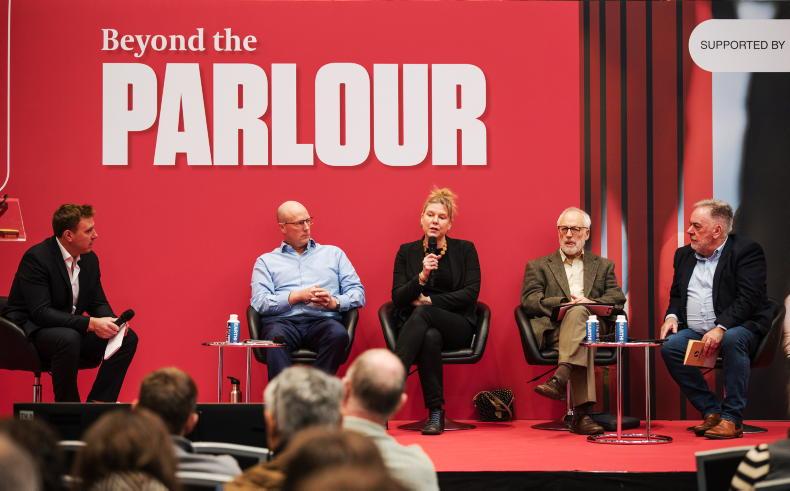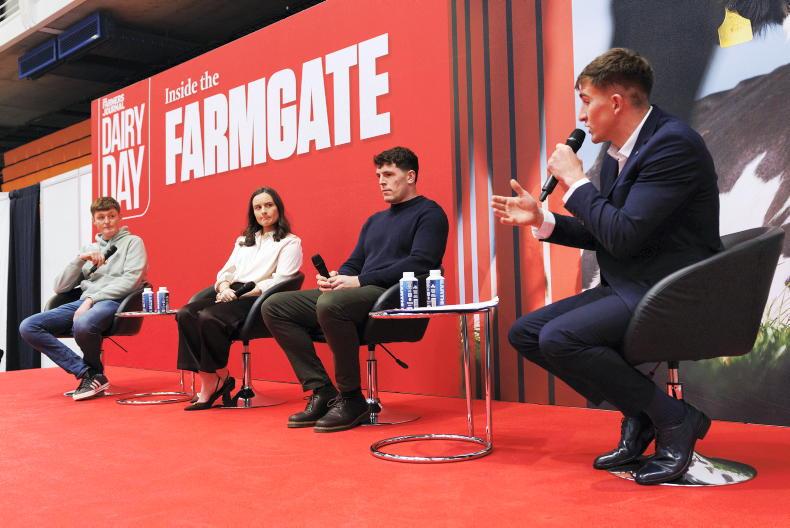

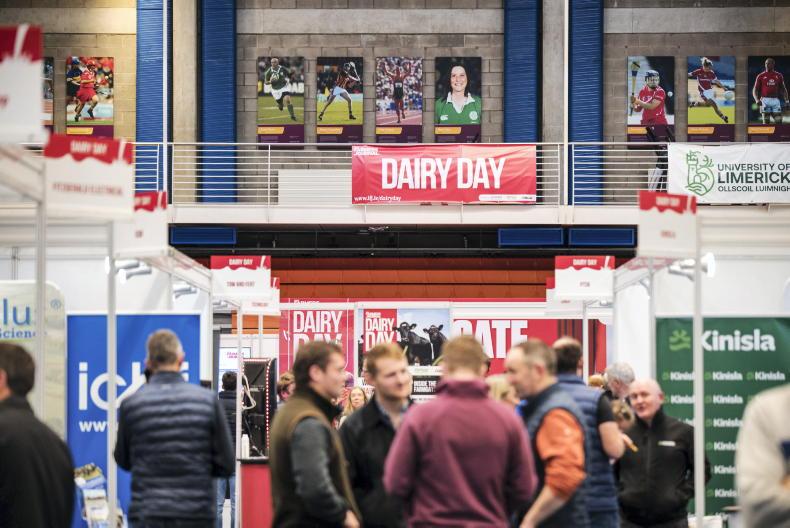
Driving home from Dairy Day last Saturday, the overwhelming feeling from being at the event was the sense that there is an appetite for change among dairy farmers.
The panel discussions on the Inside the Farm Gate and the Beyond the Parlour stages generated some great debates, with farmers eager to give their views on the specific challenges that the Irish dairy industry faces in the years ahead. Brendan Horan, Daire Cregg and Aidan Brennan, along with our news team, have all the highlights on p22-25 and this week’s dairy pages on p34-35.
US-based consultant Mike McCully delivered the shock and awe that only Americans can. Detailing the huge expansion of the US dairy industry – the $13bn investment in over 40 new dairy plants and the more than doubling of milk supply in states like South Dakota and 69% increase in Texas over the last 10 years – left the audience reeling.
The fact that expansion is continuing despite margins from dairy farming being close to nil is the scariest part. In the past, margin from dairying determined the direction of supply in the US and across Europe.
When margin was high, farmers fed more grain and kept more heifers. When margin was low, they culled harder and kept less heifers and fed a bit less grain.
Now the money on dairy farms is coming from other sources. Beef calves from the dairy herd hit as high as $1,800/calf (€1,638/calf) in 2026 before dropping back to $1,300/calf (€1,183/calf).
Bottom line
High beef prices also mean cull cow sales are a major contributor to the bottom line. with cattle slurry going into anaerobic digestion plants also a very important income stream for American dairy farmers. His line was that milk is a by-product of beef production, turning the economics on their head.
In the same vein, cheese is a by-product of whey production, and he said the US will continue to pump out cheese at huge scale in order to keep making whey.
Where does this leave Ireland, a country with a relatively small dairy output and almost entirely reliant on exports? How can a small co-op in Ireland ever hope to compete on the international market when up against the huge, low-cost producers from the US and elsewhere?
This brought the discussion to the scale and cost-base of Irish co-ops. Across the island, we have nine dairy companies, each with their own milk collection, milk processing, management and marketing teams. The duplication of resources is enormous, estimated to cost the sector between 1c/l and 3c/l in additional costs.
I’m not saying we only need one co-op in Ireland and, as Jason Hawkins rightly pointed out, even if we had one co-op we’d still be small. But I do think we need a national conversation on how we can reduce costs at processing level. This may mean looking at options outside of amalgamations or takeovers, where co-ops maintain their identity but stand to gain from increased synergy between them.
Add value
In tandem, we need to add value to what we produce because, as Mike McCully says, being small players means we can be niche and nimble and more responsive to the needs of our customers.
That requires investment in research and development and an innovation culture, both of which are sometimes lacking in co-ops today.
The growth in the industry over the last decade came from increased cow numbers and increased volumes of milk. Adding more value to that milk should be the focus now.
If the dairy sector is to continue to thrive in the years ahead, we have no choice but to do things differently. There is a growing appetite for change and it is up to the co-op leaders to harness that and continue the legacy left by the people who went before them.