On New Year’s Eve 1904, the last edition of the year of the Southern Star carried a report of the first hurling game to take place in the southwest Cork region for quite a while.
Bandon hosted neighbours Kilbrittain, playing their first game and beginning life with a victory.
“The Kilbrittain lads continued their activity until at call of full-time, when the whistle sounded, they were declared the victors, the score then being Kilbrittain 5 points, Bandon 1 point,” the report concluded. Just over 121 years later, the scoring rate might have been higher but, again, the Kilbrittain lads ‘continued their activity’ and were declared winners at full-time.
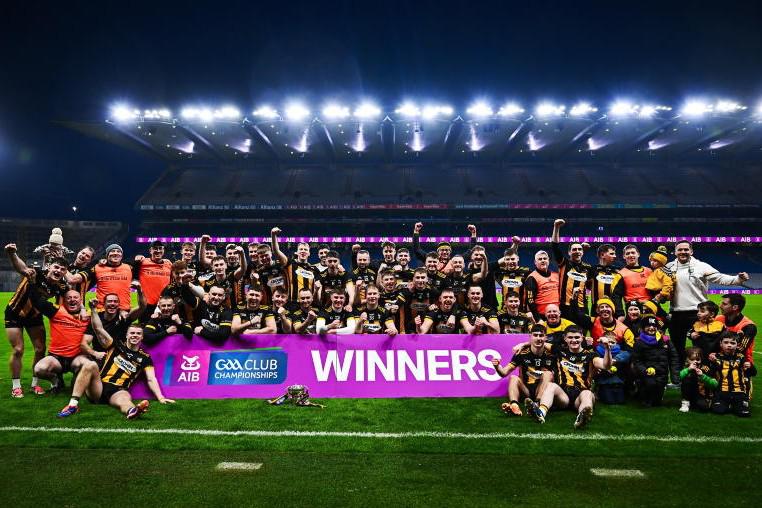
The rest of what you read will be somewhat self-indulgent but, before we celebrate Kilbrittain’s achievement in winning the AIB All-Ireland Club JHC, we must praise Easkey of Sligo. When a game finishes with a point between the teams, Kilbrittain triumphing by 0-19 to 0-18, one will look back on a number of moments that could have gone differently – Easkey had a major bone of contention with the red card for their main man, Sligo star Andrew Kilcullen.
It’s easy to sound platitudinous when complimenting a side beaten by the one that you support but the words of Kilbrittain manager Joe Ryan and captain Philip Wall after the game conveyed a deep respect for the Sligo side. The reason that the game had resulted in Kilbrittain’s poorest performance of the season was because Easkey had been such difficult opponents, even with the numerical advantage. Still, though, Kilbrittain found a way to get over the line. The final whistle brought delirium and the images of Philip Wall rushing to celebrate with his brother Jamie, who was analysing for TG4 – have gone around the world and back again since.
Down in the lower Hogan Stand, the supporters – my family included – were a sea of elation. Me? I was hunched over my laptop, making sure I had the details correct so that I could get my report for The Echo online.
Family ties
This was the fourth straight January where I had been in Croke Park for the junior and intermediate hurling final double-bill. The fact that my native club were involved, with my brother James at full-back while the manager Joe is married to my sister Lorna, meant I could probably have asked for an evening off but I didn’t.
The logical, rational side of that decision was that being in work mode for such a game helps me to stay calmer; the superstitious side is that I’d be afraid of jinxing the outcome by swapping my reporter’s hat for the black-and-amber jester headwear that my sister Susan wore.
Thankfully, it all worked out in the end and the banquet at the Crowne Plaza Hotel was a celebration of a magnificent season.
As MC for the banquet, my first act was one of territorial claim. With 540 Kilbrittain people present, I reckoned that, for the night at least, that pocket of north Dublin could be counted as an exclave.
Not since the Horse Rock Inn had burned down in 1973 had Kilbrittain had a hotel.
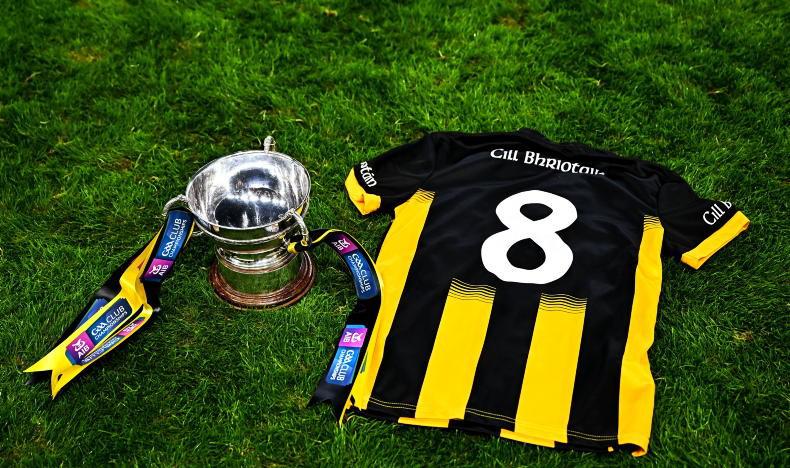
The jersey of Kilbrittain player Oisín Gillain, who passed away in 2025, placed alongside the cup during the celebrations after the AIB GAA Hurling All-Ireland Junior Club Championship final over Easkey of Sligo in Croke Park in Dublin. / Piaras Ó Mídheach/Sportsfile
A few years later, just up the road from the site of the Horse Rock, Bill Wafer from Wexford and his wife Betty, from nearby Ballinadee, opened the Pink Elephant bar and restaurant.
On Saturday evening, their grandson, Ronan Crowley, was the man of the match, scoring four points from play. Such are the strands that create a community.
Communities celebrate together and they grieve together. Throughout the successful campaign, the number 8 jersey was absent from the pitches Kilbrittain graces; it was retired for the year in honour of Oisín Gillain, who died suddenly in March from sudden adult death syndrome.
The number 8 shirt was hung in the dressing room for every game, including at Páirc Uí Chaoimh, for the county final against Glen Rovers on 17 October, which would have been Oisín’s 19th birthday.
Speaking at the banquet, Philip Wall noted how Oisín and Anne Enright, another teenager who had died tragically, would now be immortalised thanks to an eternal association with the never-to-be-forgotten victory.
Bruce Springsteen has a song called My City in Ruins, about loved ones who have passed, and when he introduces it, he says that we all have people who have departed but are with us in our hearts.
“If we’re here, they’re here,” he says, and it was like that on Saturday as all of the Kilbrittain people carried those who had gone before them, never dreaming that the club might grace the sacred sod. There may have been empty seats, but Croke Park was full with support.
And Kilbrittain people is a wide umbrella: it’s those who have always lived there and will die there; those who moved there, like my parents; those from there who have moved away, like me; and those who may never live there – like my wife Jessica and sons Johnny, Aaron and AJ – but are still steeped in it all. Saturday was the ultimate manifestation of a community as one.
On Monday, back to reality doing playschool collections, a schoolmate passed on his congratulation to ‘young James’. Youth is relative – my baby brother is a decade younger than me but, at 31, he was the oldest outfield starter.
Under the Cusack Stand on Saturday, having conducted all my interviews, I had asked Joe if he could send James out.
All of the other media had dispersed and it was just the two of us in the tunnel – we couldn’t say much as we hugged, but we didn’t need to.
On New Year’s Eve 1904, the last edition of the year of the Southern Star carried a report of the first hurling game to take place in the southwest Cork region for quite a while.
Bandon hosted neighbours Kilbrittain, playing their first game and beginning life with a victory.
“The Kilbrittain lads continued their activity until at call of full-time, when the whistle sounded, they were declared the victors, the score then being Kilbrittain 5 points, Bandon 1 point,” the report concluded. Just over 121 years later, the scoring rate might have been higher but, again, the Kilbrittain lads ‘continued their activity’ and were declared winners at full-time.
The rest of what you read will be somewhat self-indulgent but, before we celebrate Kilbrittain’s achievement in winning the AIB All-Ireland Club JHC, we must praise Easkey of Sligo. When a game finishes with a point between the teams, Kilbrittain triumphing by 0-19 to 0-18, one will look back on a number of moments that could have gone differently – Easkey had a major bone of contention with the red card for their main man, Sligo star Andrew Kilcullen.
It’s easy to sound platitudinous when complimenting a side beaten by the one that you support but the words of Kilbrittain manager Joe Ryan and captain Philip Wall after the game conveyed a deep respect for the Sligo side. The reason that the game had resulted in Kilbrittain’s poorest performance of the season was because Easkey had been such difficult opponents, even with the numerical advantage. Still, though, Kilbrittain found a way to get over the line. The final whistle brought delirium and the images of Philip Wall rushing to celebrate with his brother Jamie, who was analysing for TG4 – have gone around the world and back again since.
Down in the lower Hogan Stand, the supporters – my family included – were a sea of elation. Me? I was hunched over my laptop, making sure I had the details correct so that I could get my report for The Echo online.
Family ties
This was the fourth straight January where I had been in Croke Park for the junior and intermediate hurling final double-bill. The fact that my native club were involved, with my brother James at full-back while the manager Joe is married to my sister Lorna, meant I could probably have asked for an evening off but I didn’t.
The logical, rational side of that decision was that being in work mode for such a game helps me to stay calmer; the superstitious side is that I’d be afraid of jinxing the outcome by swapping my reporter’s hat for the black-and-amber jester headwear that my sister Susan wore.
Thankfully, it all worked out in the end and the banquet at the Crowne Plaza Hotel was a celebration of a magnificent season.
As MC for the banquet, my first act was one of territorial claim. With 540 Kilbrittain people present, I reckoned that, for the night at least, that pocket of north Dublin could be counted as an exclave.
Not since the Horse Rock Inn had burned down in 1973 had Kilbrittain had a hotel.

The jersey of Kilbrittain player Oisín Gillain, who passed away in 2025, placed alongside the cup during the celebrations after the AIB GAA Hurling All-Ireland Junior Club Championship final over Easkey of Sligo in Croke Park in Dublin. / Piaras Ó Mídheach/Sportsfile
A few years later, just up the road from the site of the Horse Rock, Bill Wafer from Wexford and his wife Betty, from nearby Ballinadee, opened the Pink Elephant bar and restaurant.
On Saturday evening, their grandson, Ronan Crowley, was the man of the match, scoring four points from play. Such are the strands that create a community.
Communities celebrate together and they grieve together. Throughout the successful campaign, the number 8 jersey was absent from the pitches Kilbrittain graces; it was retired for the year in honour of Oisín Gillain, who died suddenly in March from sudden adult death syndrome.
The number 8 shirt was hung in the dressing room for every game, including at Páirc Uí Chaoimh, for the county final against Glen Rovers on 17 October, which would have been Oisín’s 19th birthday.
Speaking at the banquet, Philip Wall noted how Oisín and Anne Enright, another teenager who had died tragically, would now be immortalised thanks to an eternal association with the never-to-be-forgotten victory.
Bruce Springsteen has a song called My City in Ruins, about loved ones who have passed, and when he introduces it, he says that we all have people who have departed but are with us in our hearts.
“If we’re here, they’re here,” he says, and it was like that on Saturday as all of the Kilbrittain people carried those who had gone before them, never dreaming that the club might grace the sacred sod. There may have been empty seats, but Croke Park was full with support.
And Kilbrittain people is a wide umbrella: it’s those who have always lived there and will die there; those who moved there, like my parents; those from there who have moved away, like me; and those who may never live there – like my wife Jessica and sons Johnny, Aaron and AJ – but are still steeped in it all. Saturday was the ultimate manifestation of a community as one.
On Monday, back to reality doing playschool collections, a schoolmate passed on his congratulation to ‘young James’. Youth is relative – my baby brother is a decade younger than me but, at 31, he was the oldest outfield starter.
Under the Cusack Stand on Saturday, having conducted all my interviews, I had asked Joe if he could send James out.
All of the other media had dispersed and it was just the two of us in the tunnel – we couldn’t say much as we hugged, but we didn’t need to.
SHARING OPTIONS