



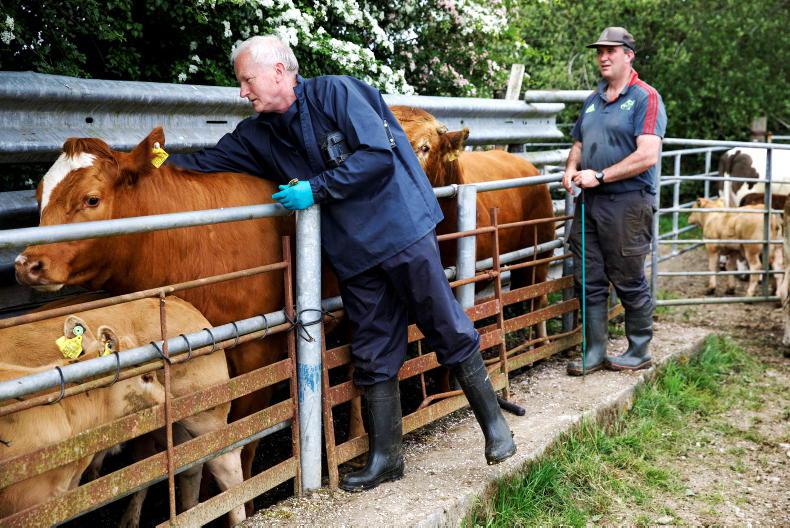
The Public Accounts Committee (PAC) appraisal of the TB eradication programme has failed to identify the biggest losers, which are farmers, according to IFA animal health chair TJ Maher.
Maher said the PAC report not only grossly underestimates farmers’ contributions to the programme, but also fails to recognise the impact the programme and associated controls have on farmers, their incomes and their ability to farm when restricted.
“Despite the Minister for Agriculture Charlie McConalogue providing additional funding for the Wildlife Control Programme in Budget 2023, it remains severely understaffed in some of the worst areas for TB," he said.
This, Maher added, is unacceptable and until the issue is resolved with sufficient operatives on the ground, disease levels will not be reduced.
Contributions
Maher also called out the under representation of farmers’ contributions to the implementation of the TB programme on the ground.
“The report only recognises the direct contribution of farmers in disease levies and annual herd test payments of almost €40m a year, but fails to acknowledge the enormous labour contribution of farmers in facilitating almost 9m tests on animals each year.
"We estimate conservatively the minimum value of farmer labour contribution to be €20m," he argued.
Maher said he believes the only stakeholder that seems to be motivated to reduce the levels of TB are farmers.
Burden
"We are the ones carrying the heaviest burden of this programme and yet have been continually frustrated in the TB Forum process by the Department of Agriculture’s failure to provide an effective and efficient Wildlife Control Programme throughout the country.
“If we are to reduce the levels of TB in the country, we must implement the measures that are proven to be effective and this must start with honouring commitments on the resources for the Wildlife Control Programme,” he said.
At this week’s TB implementation group meeting, Maher said that IFA sought a detailed breakdown of the staff resources available to the Wildlife Control Programme in each county.
"IFA has sought a doubling of the numbers of boots on the ground implementing the programme.
"Despite over two years of discussions in the TB Forum, the programme is still grossly under-resourced," he said.
Regular updates
Maher added that the PAC is correct to seek regular updates on progress in the programme but there are a lot more metrics they should consider, including the full extent of farmers contributions to the programme and DAFM’s staff resources for the Wildlife Control Programme in determining if progress is being made or not.




SHARING OPTIONS