
Roscommon-based artist Rita Oates was in complete shock after realising she had been scammed. After 40 years in business, managing accounts and banking, she never imagined falling victim to fraud.
“I put out the video on social media [to warn others] because I was so shocked and embarrassed that I got caught. How did I do this? I just couldn’t understand; maybe I was complacent,” muses Rita, who sells her cards, framed prints and designer scarves (as seen recently on President Catherine Connolly) on ritaoatesartist.ie.
Perhaps how professional and plausible the text appeared played a part, she is not sure. What Rita thinks really caught her is that they were not looking for money. The message purported to come from government.ie and asked her to update some of her details.
“It never dawned on me that it was a scam. It had so much correct information – my name, address and credit card number – the first six numbers were correct.”
However, as soon as the button was hit, she knew this “moment of carelessness” was going to have consequences.
“The minute I submitted it, I thought, ‘Rita, this is a scam.’ “I got such a fright. I contacted the bank, who were very helpful, and cancelled my cards. They advised me to go to a phone shop to check if there was a virus on my phone. There wasn’t. I also contacted government.ie.
Ahead of Black Friday and the busy Christmas season, consumers are being urged to be vigilant in relation to online shopping sites and scams
“They didn’t get my money; I was lucky that they weren’t as fast as I was [cancelling cards]. But she admits it did knock her confidence and Rita just wants others to be careful.
“One should pause and question every text. My reaction was it’s from government.ie. I must fill that out.
“My artwork is about positivity and kindness. Even with the idea of putting up the video, I hesitated, but if it makes one person stop and think, it’s worth it.”
Fraudulent text
The language used in fraudulent text messages is often designed to create real urgency. Terms like ‘your account is on hold’ and ‘payment stopped’ and words like ‘urgent’ or ‘act now’ mean consumers can be thrust into a state of fear of the consequences and do something they wouldn’t ordinarily do. Put tiredness, a busy family life or a lack of knowledge about scams into the mix, and it’s easy to see how a person can be pressurised into hitting a link or taking a suspicious call.

It comes as AIB are reporting a 55% rise in cases of payment fraud in the first nine months of this year .
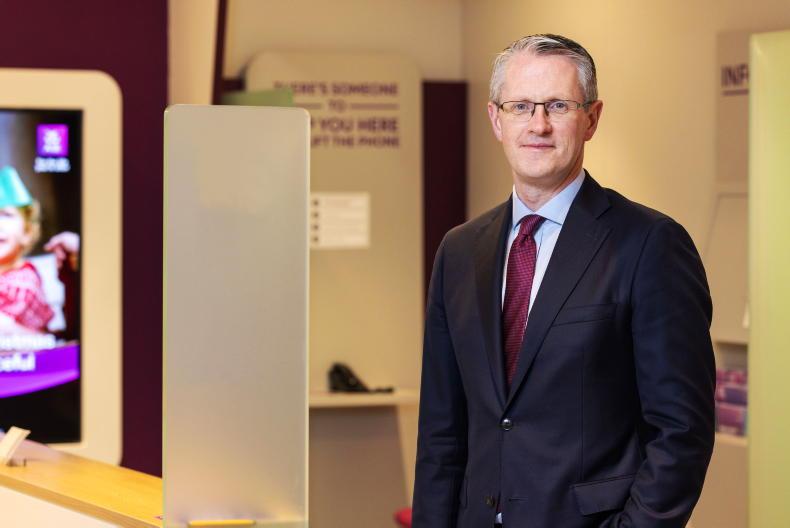
“The main driver is the volume of fraudulent SMS messages in circulation that are followed up with criminals impersonating banks on follow-up calls,” according to Adrian Moynihan, head of consumer banking at AIB. “Criminals are becoming more sophisticated, and their methods and messages are becoming increasingly convincing.
“We only need to look at our phones to see they are sending higher volumes of text messages, calling us more and placing high volumes of false investment ads on social media.”
Payment fraud
Payment fraud or bank impersonation fraud generally involves a text message purporting to be from a bank which claims a transaction is on hold and requests that the customer call a number.
“Customers may be asked for security details or one-time passcodes or told to move their money to a so-called ‘safe account’,” Adrian adds. AIB will never ask customers to do this. We’ll always advise you to wait a second and double-check. It’s worth asking yourself, why would a stranger call looking for your details? And you can always contact our fraud support line 24/7 on 1800 242227.”
AIB recently detailed a case of one customer, James, who received a text message from a criminal purporting to be from the bank which read, “AIB – A transaction of €413.99 to Ikea.com is on hold. If you made this, reply Y. If not, call us at +35312679142.”
He contacted the number contained in the message. During the call, the customer spoke with an individual who claimed to be Fiona from AIB Card Services.
The customer queried whether his Internet Business Banking (IBB) account was also at risk. He said the fake agent appeared particularly interested once he mentioned the business account and advised she would check it but required his user ID, passcode, and one-time code. The customer provided these credentials.
He became suspicious after approximately two hours and contacted AIB Card Services while still connected to the fraudster.
AIB immediately identified the other call as fraudulent and instructed him to end the call. Luckily, James successfully recouped his funds.
The bank’s advice is if something doesn’t feel right, stop and check independently with your bank using a trusted contact method.
Ahead of Black Friday and the busy Christmas season, consumers are being urged to be vigilant in relation to online shopping sites and scams. Anyone wondering about a website or link, can check that it’s legitimate on fraudsmart.scamchecker.
Other information and advice is available from fraudsmart.ie or ccpc.ie