



Recent findings from the REA Average House Price Survey indicate a slowdown in buyers purchasing homes that require renovation. Rising labour and material costs, along with difficulties securing tradespeople, have made fixer-uppers a less attractive route onto the property ladder.
However, Government grants can make renovation projects a more affordable route to home ownership, while also helping to bring vacant properties back into use.
First introduced in 2022, the primary aim of the VPRG is to increase housing supply by bringing long-term vacant and derelict buildings back into residential use. One of the key eligibility requirements is that the property has been vacant for a specified period of time.
A grant of up to €50,000 is available for structural, internal and external renovation works, subject to local authority assessment.
A further €20,000 top-up may be available for properties confirmed as derelict. Payment is released once approved works are completed and verified.
Vacant Property Refurbishment Grant (VPRG)
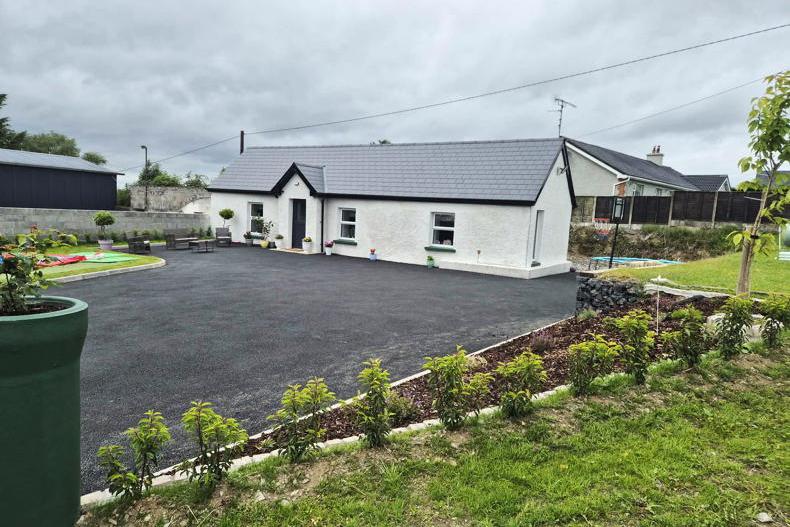
Mother-of-two Danielle Tormey applied for the VPRG when she decided to renovate her grandparents’ old house, an early 1900s two-bedroom bungalow in Co Cavan that had lain vacant for 12 years.
“I applied for the grant and I was approved, and that’s where it all started,”she says.
Given the condition of the house, Danielle was approved for the VPRG and derelict property top-up, to a total of €70,000.
One of the conditions of the VPRG is that the work must be completed within 13 months of approval, so Danielle hired a contractor who managed the entire renovation efficiently. After seeing her grant approval letter, he agreed to wait for the €70,000 payment, sparing her the need to cover the grant amount upfront.
Danielle’s renovation retained the original floorplan but included rewiring, replumbing, new windows and a new roof. The project was relatively straightforward, with no major obstacles, and Danielle moved into the house with her two daughters in November 2025.
“My grandparents always had a little Christmas tree in the window, so I kept the tradition,” she says.
In addition to being delighted with her new home, Danielle is proud to continue her family’s connection to the house, ensuring it will be lived in and cared for by future generations.
“I wouldn’t have been in a position to buy anything, so in that sense, the grant was brilliant. To think this house would have been left to rot only for the grant. It’s great to think that five generations have been able to live in it.”

SEAI energy upgrades
SEAI provides Government-backed grants for energy upgrades, including insulation, heating controls, heat pumps and solar systems. Homeowners can either manage individual upgrades themselves using registered contractors or use a One Stop Shop provider to oversee a complete retrofit.
Individual upgrades must be paid upfront before claiming the grant, while One Stop Shop projects deduct the grant from the invoice and may qualify for the Home Energy Upgrade Loan Scheme, which is a Government-backed, low-cost financing option allowing eligible parties to borrow up to €75,000 over a term of up to 10 years to cover the work.
For larger renovation projects, the VPRG and SEAI grants can be used together to maximise available funding.
Vernacular and heritage homes
For those undertaking work on older houses, the process can be more complicated due to older construction methods, materials and building standards. Upgrades need to be carefully planned to improve energy efficiency without damaging the building.
Government heritage schemes help owners of traditional and protected buildings carry out appropriate repairs, conservation works and upgrades while preserving their character.
These schemes are administered by local authorities, with eligibility and application windows varying each year.
The Conservation Advice Grant Scheme
This grant covers up to 67% of the cost of having a conservation expert with proven expertise conduct a survey and provide tailored conservation advice, to a maximum grant of €5,000. This expert will provide a report outlining the building condition and potential conservation improvements which would restore it to use and enhance energy efficiency while maintaining its character and integrity.
The Built Heritage Investment Scheme (BHIS)
BHIS provides funding up to €50,000 for the repair and conservation of structures protected under the Planning and Development Acts.
The scheme also provides support for vernacular buildings, historic shopfronts and smaller repair projects, such as routine maintenance and minor repairs.
The Historic Structures Fund (HSF)
The HSF is available to help with the cost of large-scale conservation works on historic structures that are on the Record of Protected Structures or proposed for inclusion, within Architectural Conservation Areas (ACA), or are within the amenity of a National Monument.
HSF is a match-funding scheme, meaning applicants must be able to provide 20% to 50% of the funding to cover the cost of the project. There are three streams of funding available under HSF.
The Traditional Thatch Scheme
This scheme is aimed at protecting the heritage value of thatched roof buildings across Ireland by supporting owners in retaining thatched roof coverings. The scheme provides funding of up to €20,000, depending on the building and the nature of the applicant. It should be noted that grants do not remove the need for upfront funding, and approval should always be secured before starting any work.




SHARING OPTIONS