



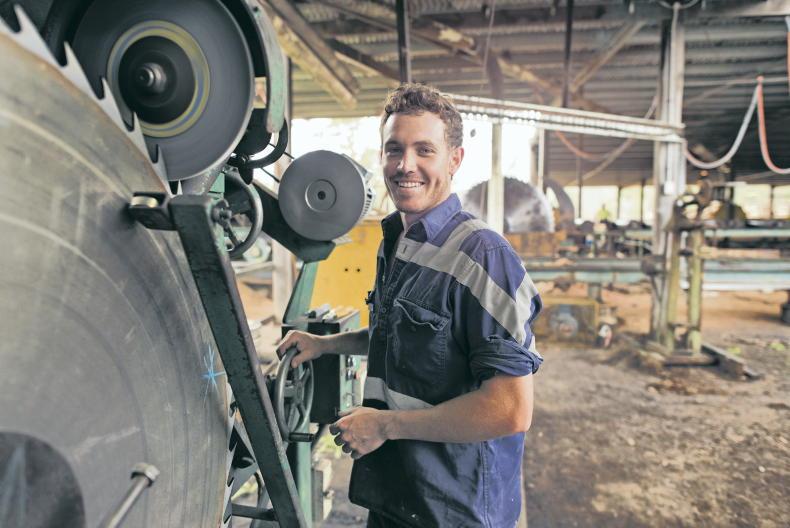
I finished up at university last summer with a business degree. My parents have a farm equipment production business and for the past few years, they have told me that they want me to take over running it someday.
The issue is that I am working in the business and I can see areas that I feel need improvement. We have poorly kept accounts, no idea of stock and no HR to speak of.
My parents are resisting taking my advice to have Key Performance Indicators (KPIs), regular stocktakes and to do management accounts. I know I’m young and that the business is making a profit, but I feel like there is so much potential to do more if they’d give me a chance. Can you please give some advice on this?
Answer: Family businesses across rural Ireland face a familiar situation. A son or daughter returns from college, joins the family operation, and quickly spots areas that could be improved. Better accounts, clearer stock control, proper HR systems, and more structured decision-making all seem obvious.
At the same time, the parents who built the business are thinking something very different: “We’ve been profitable for years. The wheels haven’t fallen off. Why fix what isn’t broken?”
Both sides are right and that’s where the challenge lies.
Respect
You have quite rightly pointed out that your parents have a successful business, and it has been making profits for many years.
Profitability over many years is not accidental. It comes from knowing customers, understanding products, managing cash instinctively, and working long hours when needed. Those strengths should not be dismissed.
That said, the environment has changed. Businesses are larger, more complex, and under more pressure than they were even 10 or 15 years ago.
Poorly kept accounts, unknown stock levels, and informal people management may not stop a business trading, but they limit how far it can go and increase risk in ways that are not always obvious day to day.
Common hidden issues include:
What is the real issue?
From the parents’ point of view, requests for KPIs, stocktakes, and management accounts can sound like:
But these tools are not about criticism. They are about control and confidence, especially as ownership and responsibility gradually transitions.
Well-structured information allows decisions to be made calmly, not reactively. It would also make it easier for your parents to step back over time without losing visibility.
Remember to start small – one of the biggest mistakes younger family members make is trying to change too much at once. That usually then leads to resistance.
A balanced approach is to:
The lack of stocktakes and wastage is a good example. Take on the responsibility to conduct a stocktake. Report the results back to your parents and then conduct periodic stock checks over the coming months.
If there are stock issues, you’ll be able to highlight these to your parents and make decisions together on how to address them.
Something that should not cost the business and poses no risk looking at is accounting processes and ensuring that the accounts are being maintained.Once your parents begin to see positive changes in terms of reports and information, they’ll see the value in this.
Future-proofing
For your parents, letting go of some control does not mean losing the business, it means future-proofing it. It does not mean that they have run the business poorly; it just means that the expertise of others can only add to the future success and make it more efficient.

Andrew Brolly is fractional cfo with ifac, which is the professional services firm for farming, food and agribusiness.







SHARING OPTIONS