Farm manager Steven Fitzgerald was regularly treating high cell count cows for clinical and sub-clinical mastitis in an effort to keep it under control. Sub-clinical mastitis is a high cell count without any clots.
In 2014 alone, there were 64 incidences of mastitis (clinical and sub-clinical) with 30 cows treated. With 140 cows in the herd, this means that over 21% of the herd was treated – a high figure. However, the results for this year look a lot better with SCC running at between 50 and 80,000 all year. There have been 23 incidences of mastitis with 15 cows treated. I asked Steven what was done differently this year.
“The first thing we did was close up some of the space sheeting in the roof of the cubicle shed. When it rained, water was getting in and the beds would get wet and turn soupy. I think this was an ideal environment for bugs to grow because unlike open-top cubicles, the shed was warm and damp. We only sealed the spaces over the cubicles. There’s still space sheeting over the passages, so ventilation hasn’t suffered that much,” Steven said.
Other things that have changed since last year include:
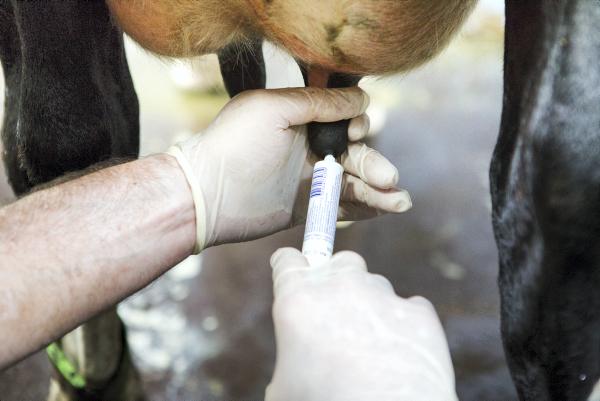
A new milking parlour was installed. The existing 14-unit was replaced with an 18-unit parlour. Cubicles were bedded with 10% hydrated lime six days a week, while Actisan was used one day per week. Heifers were teat-sprayed twice a week for one month before calving. Any cow that had a reading above 400,000 SCC before drying off was treated with a milking cow antibiotic and a long-acting dry cow tube. All cows were given a long-acting dry cow tube and teat sealer, as usual. Eight of the highest SCC cows from 2014 were culled (6% of the herd). Before any freshly calved cow or a cow finished treatment was let into the tank, a California Milk Test (CMT) was done on that cow. Milk liners are being replaced every 1,800 milkings.Steven said that in springtime, when there are two people in the parlour, they pre-spray, dry wipe and strip each cow prior to milking, but from May on they only use teat spray after milking and rarely strip out the cows.
Read more from our special focus supplement on Dairy Equipment here.
Farm manager Steven Fitzgerald was regularly treating high cell count cows for clinical and sub-clinical mastitis in an effort to keep it under control. Sub-clinical mastitis is a high cell count without any clots.
In 2014 alone, there were 64 incidences of mastitis (clinical and sub-clinical) with 30 cows treated. With 140 cows in the herd, this means that over 21% of the herd was treated – a high figure. However, the results for this year look a lot better with SCC running at between 50 and 80,000 all year. There have been 23 incidences of mastitis with 15 cows treated. I asked Steven what was done differently this year.
“The first thing we did was close up some of the space sheeting in the roof of the cubicle shed. When it rained, water was getting in and the beds would get wet and turn soupy. I think this was an ideal environment for bugs to grow because unlike open-top cubicles, the shed was warm and damp. We only sealed the spaces over the cubicles. There’s still space sheeting over the passages, so ventilation hasn’t suffered that much,” Steven said.
Other things that have changed since last year include:
A new milking parlour was installed. The existing 14-unit was replaced with an 18-unit parlour. Cubicles were bedded with 10% hydrated lime six days a week, while Actisan was used one day per week. Heifers were teat-sprayed twice a week for one month before calving. Any cow that had a reading above 400,000 SCC before drying off was treated with a milking cow antibiotic and a long-acting dry cow tube. All cows were given a long-acting dry cow tube and teat sealer, as usual. Eight of the highest SCC cows from 2014 were culled (6% of the herd). Before any freshly calved cow or a cow finished treatment was let into the tank, a California Milk Test (CMT) was done on that cow. Milk liners are being replaced every 1,800 milkings.Steven said that in springtime, when there are two people in the parlour, they pre-spray, dry wipe and strip each cow prior to milking, but from May on they only use teat spray after milking and rarely strip out the cows.
Read more from our special focus supplement on Dairy Equipment here.









SHARING OPTIONS