



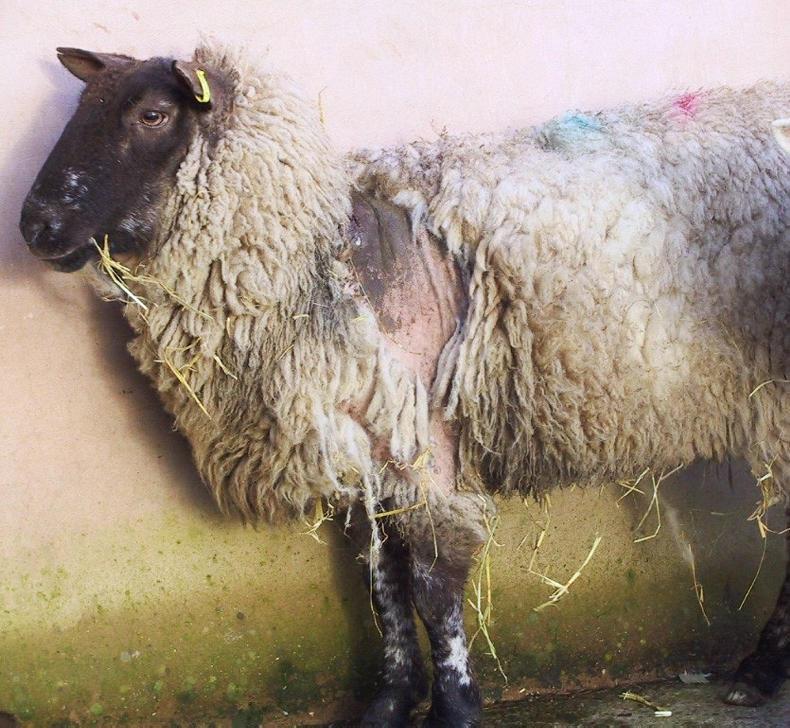
It is a winter disease with most cases occurring between September and April, it can lead to wool loss, skin disease and ill-thrift.
Cause
Sheep scab is caused by the sucking mite psoroptes ovis which causes small vesicles on the skin that fill up with serum and burst, leading to the formation of small yellow scabs. Later stages of infestation are characterised by a rapid increase in mite numbers and lesion spread. The lesion gradually spreads outwards as the mite population increases.
Symptoms
Sheep with early infestations may show no signs or be restless, rubbing against fence posts, etc, exhibit soiled and stained areas of wool and head tossing. Rubbing and head tossing become more excessive and areas of wool loss may appear, together with open, bleeding wounds. Sheep rapidly lose condition and can even occasionally show signs of fitting.

While lesions are initially confined to the top of the back, all areas of the body can become affected in severe untreated cases. The mite population will eventually decline, with a natural recovery occurring in affected animals.
Sheep with subclinical scab can look perfectly normal and can unknowingly be introduced to a flock, potentially leading to an outbreak.
Treatment
It is a notifiable condition in sheep which means outbreaks in flocks should be notified to the Department of Agriculture, Food and the Marine.
Treatment of sheep scab involves the use of sheep-dipping or injectable avermectins. In terms of sheep dipping, both organophosphate and pyrethroid dips are on the market. The important points for effective sheep dipping include the immersion of the whole body of the sheep in the dip for at least 60 seconds and the use of the correct concentration of dip. Operator safety is also crucial, especially when using organophosphates which can be harmful to human health.
The duration of activity among avermectin products vary significantly. Consult your vet about the correct product, as repeat doses are often required.
Prevention and control
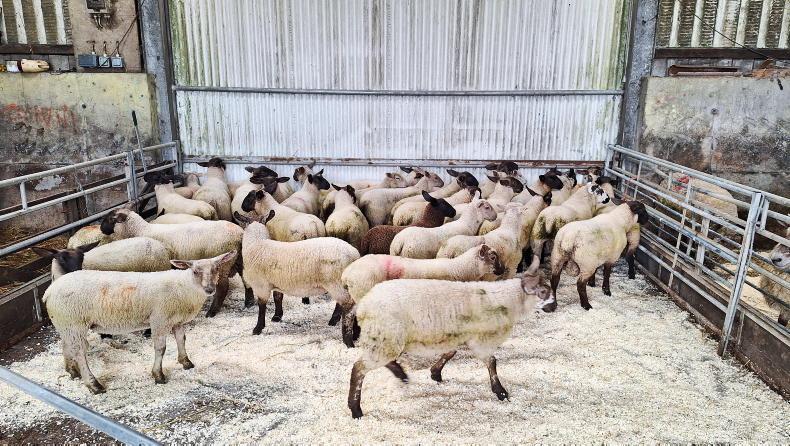
All new animals, including ewes and rams, should be held in isolation for three weeks prior to mixing with the main flock. During this time they should be inspected for signs of ectoparasites and treated if necessary. Routine treatment for sheep scab and other ectoparasites should be carried out on a whole flock basis at least once a year, usually in autumn, or if evidence of disease is noted. It is important to prevent sheep breaking into the flock, and breaking out into other neighbouring flocks, by ensuring that fencing is maintained well.



SHARING OPTIONS