



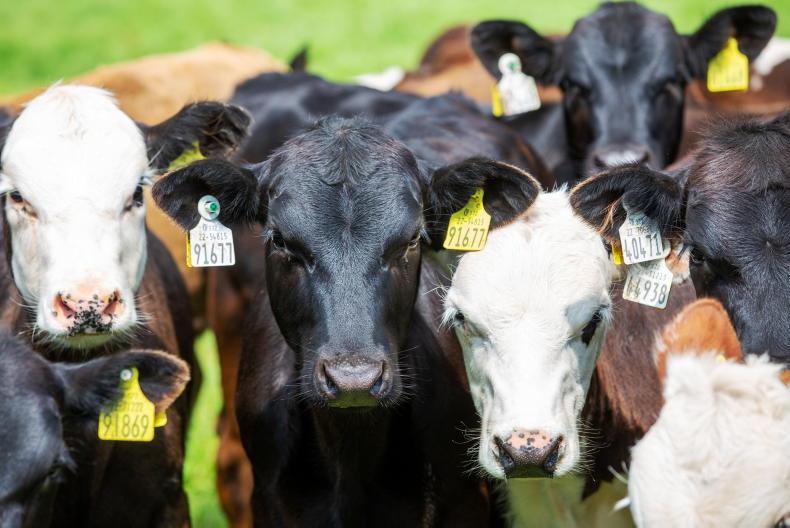
A number of farmers have contacted the Irish Farmers Journal over the last few weeks to report outbreaks of lungworm in youngstock. Indeed, in mid-July the Department of Agriculture reported that there has been patent lungworm infections diagnosed at the regional veterinary labs over the previous number of weeks.
This is somewhat unusual in the sense that lungworm is more commonly associated with wet summers and later in the season when lungworm larvae numbers are at their highest. The fact that lungworm appears to be present in large numbers early in the season, indicates that there was cross-over infected since the last grazing season. Perhaps the mild winter of 2024/2025 is also a factor.
The main symptom of lungworm is a deep, husky cough and infected animals have difficulty breathing, especially after being moved. The parasite is often referred to as a gateway disease, because it lowers immunity and creates an opportunity for other diseases such as pneumonia to strike affected animals.
According to Animal Health Ireland (AHI), the following are some of the symptoms of lungworm:
It normally affects young stock but can also be a problem in older stock, particularly dairy cows where body condition score and milk yield will be affected. This drop in milk league is often experienced before coughing is heard in the cows.
A key issue with lungworm is that animals don’t develop long-term immunity past six months and the disease challenge can be very high under Irish grazing conditions. This means that naïve animals can be exposed to high quantities of the parasite, making it a big challenge.
Life cycle
The life cycle of lungworm involves a number of stages. The infection starts with L3 larvae being eaten by animals when they graze contaminated grass. When this larvae is eaten by animals it pierces the intestinal wall and travels through the blood and lymphatic system to the animals lungs.
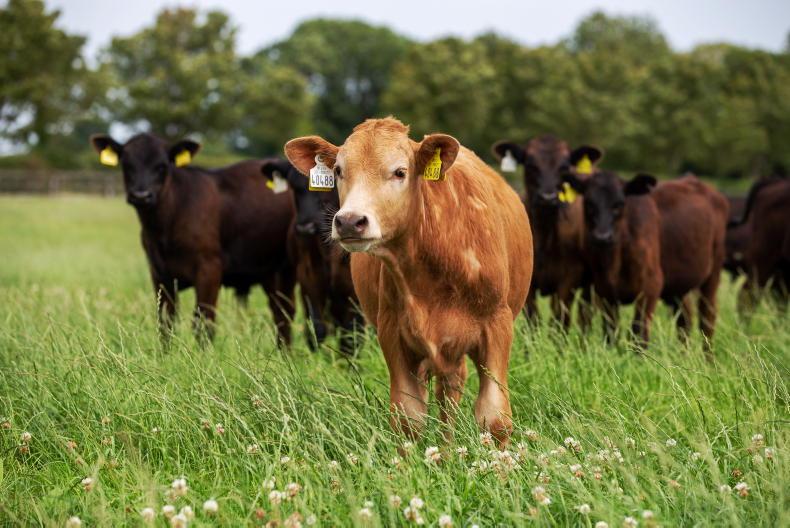
When the larvae get to the lungs they leave the blood system and penetrate the tissue of the lungs, growing rapidly to become adult worms. Within 24 to 28 days after being ingested as larvae, the now adult female worms lay eggs in the airways and cavities in the lungs.
These eggs are coughed up by the animal and then swallowed into the digestive system where the eggs pass through the rumen and the intestines. When in the intestine the eggs begin to hatch and immature L1 stage larvae are excreted in the dung.
According to AHI, the rate of progress of the L1 stage larvae to the L3 stage larvae that can be ingested by grazing animals all depends on the prevailing weather conditions at the time.
In warm and humid weather (over 20°C), the infective larvae can be on the grass within seven days.
Rain splashing on the dung pads can help to spread the larvae over the grass and there is evidence that some fungus will also help spread the larvae on to grass. In effect, the time taken for the life cycle to complete is only around 30 days. This means that the prevalence of the larvae on pasture can increase dramatically after a number of grazing rotations.
It’s a key risk where animals are purchased in to the farm in the autumn period. Take a farmer buying weanlings that were never exposed to the disease on their farm of birth and then arriving on to a farm in September, where the pasture has a high prevalence of lungworm. Those animals will be highly exposed and at risk.
Prevention
Preventing lungworm infections is extremely difficult under a typical grazing scenario. The hope is that young calves and cattle will be exposed to minor infections of lungworm and build up immunity to it that way.
However, AHI admit that this is not always possible and even where paddock management is practiced it’s not always effective in the face of a severe outbreak.
AHI recommend that young calves should graze pastures in their first season that were not grazed by any cattle in the previous year. At a practical level this is unlikely to be feasible on the majority of farms.
The second key point around preventing lungworm is to only turn out young calves in one batch, rather than staggering the turn out dates. This is to ensure that each calf gets exposed at the same rate. For example, the calves in the second or third stage of turnout will be exposed to a lot more lungworm larvae than the calves in the first round of turnout.
The advice is that if calves are to be turned out in stages, then the calves for later turnout should be sent to a different field with similar low levels of lungworm infection.
Treatment
Given Irish conditions and the prevalence of the disease, treatment for lungworm is inevitable. Having said that, the prolonged dry period this summer may help reduce the prevalence on lungworm.
There are three main types of wormers used to treat lungworm. These are benzimidazole, levamisole and then the ivermectin-type products. Only the ivermectin-type products have a persistency element to the dose, meaning treated animals will be protected for five or six weeks after being dosed.
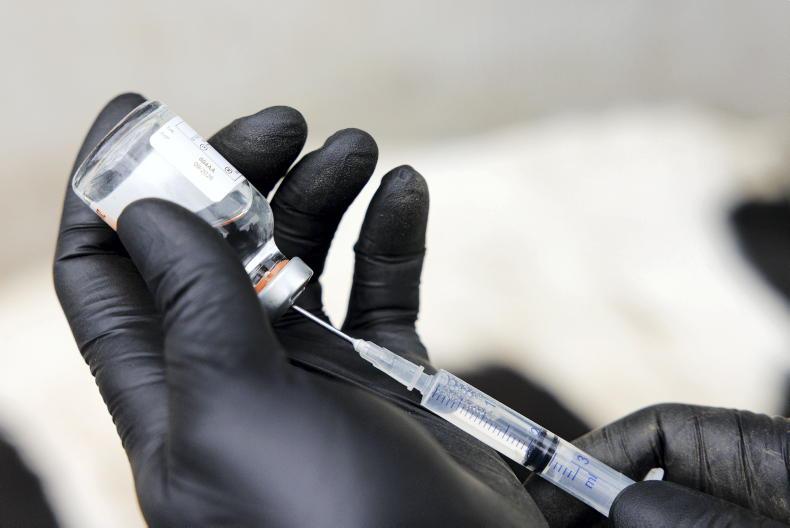
The white and yellow drenches will treat existing infections but provide no protection against new infections. Therefore, farmers using drenches need to treat their calves and youngstock more regularly. Lungworm vaccines are also available and are an effective way of preventing lungworm, particularly in high risk situations.



SHARING OPTIONS