With a high milk price and relatively good weather across most of the country, 2025 is shaping up to be a good year for dairy farming. Irish dairy farmers, like farmers all over the world tend to re-invest profits back into their business in good years.
While there are concerns over the future of the nitrates derogation and succession, it’s likely that many dairy farmers will be looking at undertaking capital projects over the coming months.
Similarly, high beef prices mean that farmers in other sectors who may have been thinking about getting into dairy could now decide to take advantage of the high beef prices and offload their cattle and move into dairying with a bigger war chest than before.
When it comes to investing money in dairy farming, the best returns will always come from investing in productive assets like cow genetics, soil fertility, drainage, reseeding and the infrastructure to harvest grazed grass such as roadways, fencing, water, etc.
For me, milking facilities are next in line because efficient milking facilities take a lot of the drudgery out of farming. If the task of milking cows can be done quickly and efficiently and without massive labour input then it will be more enjoyable for the operator and it will be easier to attract people to work on that farm.
The following are some of the key points to consider when planning investments in milking facilities.
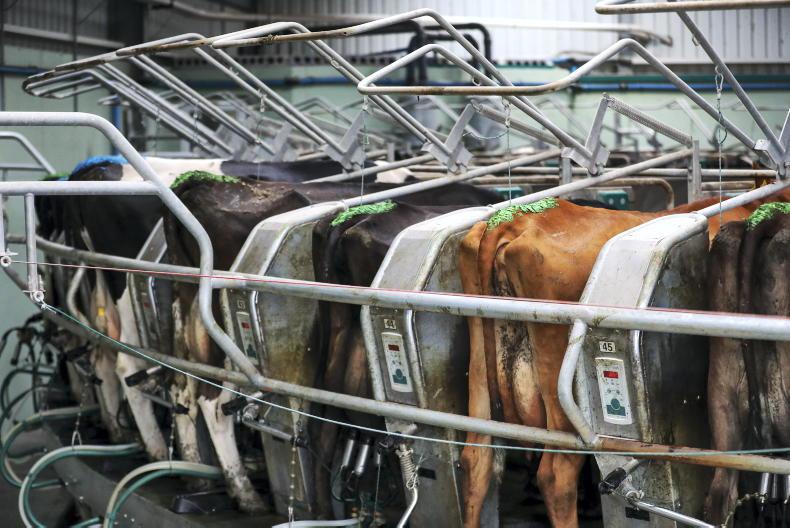
A rotary is really only a consideration when herd size goes above 280/300 cows. \ Odhran Ducie
Capital is capital
All investment requires capital spend and capital is finite, whether money is being borrowed or taken from savings or a windfall.
For grass based dairy farmers, the key priority for investment is in the aforementioned productive assets and then look at milking facilities.
It always amazes me when I visit some farms that have, by all measures, poor or inadequate milking facilities but a fresh tractor in the yard. It tells me that these farmers have prioritised investment in machinery at the expense of milking facilities.
This is despite the fact that machinery work can be easily outsourced. After all, every parish has a number of contractors competing for work.
The physical act of milking the cows is one of the few jobs on a dairy farm that cannot be outsourced. The person doing the milking can be hired in, but it has to be done on farm.
For me, an efficient milking system looks something like 80 to 90 minutes actual milking time plus 30 minutes wash-up time and is a one-person operation.
Think long term
If making an investment in milking facilities, always think long term. Don’t build something that cannot be easily expanded.
This is important because even though the parlour may serve the current purposes well, how well will it cater for an extra 30 or 40 cows or even an extra 100 cows?
While the opportunities to milk more cows may not seem obvious now, over time things change and very often it is the next generation who end up taking opportunities.
Don’t build a new parlour in a cramped location. Build the dairy to the side and stay back from slatted tanks and public roads. By doing this, additional units can be easily added on over time which will be the cheapest way of increasing milking efficiency in an enlarged herd.
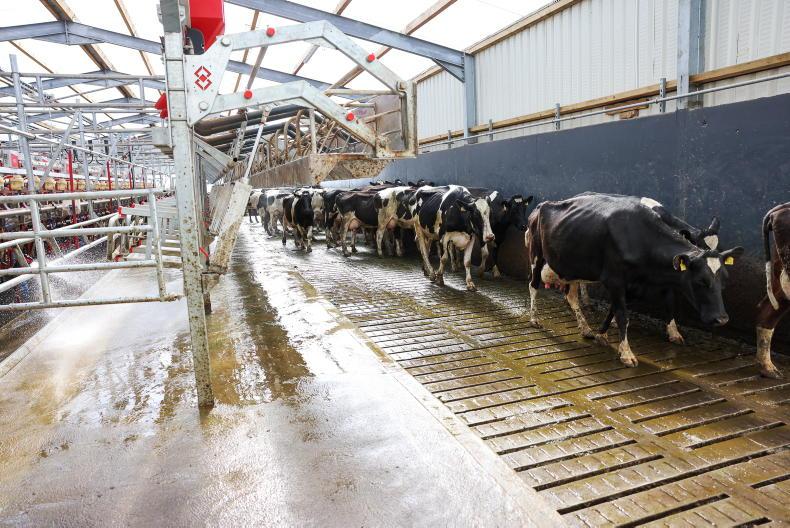
Efficient milking systems should be a one-person operation. / Odhran Ducie
Decide on the system
There are pros and cons to every milking system. Most farmers will consider there to be three milking systems available; robots, herringbone and rotary but really there is also a fourth system and that’s once-a-day milking.
For me, once a day is an alternative to investing in robots because it will allow for less time to be spent milking, while not having to make a big investment in robots.
As for sizing herringbone parlours, I think aiming for eight to 10 rows is probably sensible and keep the parlour to a one-person operation.
This effectively rules out larger herringbones of greater than 28 or 30 units as they require two operators.
Therefore, at 280 or 300 cows a rotary parlour is certainly worth considering but it depends on whether the capital budget is big enough to extend to building a rotary.
An alternative is to build a 26-unit one-person herringbone parlour and sweat the number of rows.
On these larger farms there are going to be two or three people employed anyway, so milking roles can be rotated to avoid any one employee getting burned out from too much time spent in the parlour.
Control the budget
It cannot be said that setting up a farm with a 20 unit herringbone will cost X, a 40-bail rotary will cost Y and two-robots will cost Z. Every project is different with different levels of specifications to both the plant and the buildings.
Over the years I have seen rotary parlours built cheaper than many herringbones and many herringbones built dearer than many rotaries. It all depends on what the farmer wanted and how much control they took of the budget.
There could be a three- or four-fold difference in cost between a bog standard herringbone plant and a top spec herringbone plant.
When buying a plant, farmers need to be very clear on what it is that they want.
It is the job of the salesperson to sell and to convince the buyer as to why they need extras.
All of these extras are high margin for the milking machine manufacturer and they lock in future business with repairs and maintenance of high spec equipment also.
I’m not saying farmers shouldn’t install higher spec milking parlours, but they should be aware of the cost creep associated with them.
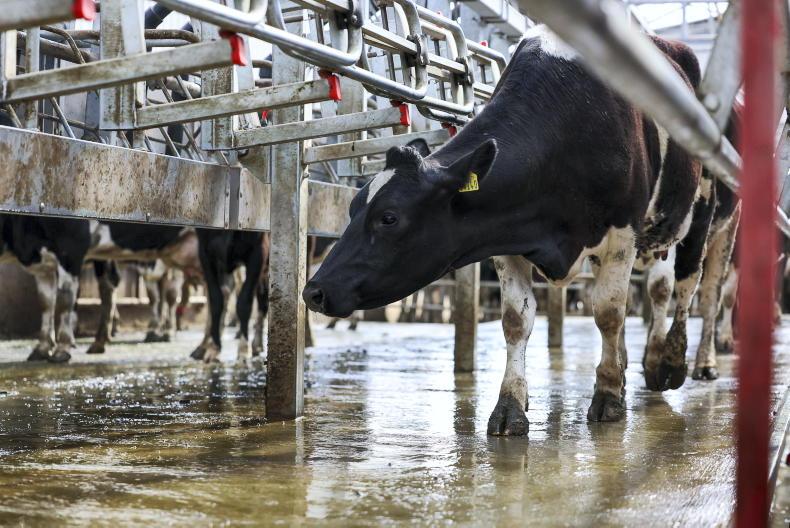
Efficient milking systems should be a one-person operation. \ Odhran Ducie
When shopping around, it makes sense to seek prices for a basic plant, such as a 16-unit herringbone with automatic cluster removers (ACRs) and then seek additions to that separately such as dump line, auto wash, milk meters, etc.
The same applies for the building contractor carrying out the building work.
There is a huge variation in the level of spec for buildings, with many buildings way over-specified for the task at hand.
Concrete and stone filling is an area that often catches farmers out in terms of cost, as these costs can go out of hand easily.
For larger projects, it’s worth getting an engineer or quantity surveyor to firstly minimise and then to quantify the amount of stone and concrete required which then needs to be agreed with the builder.
The cost of unexpected over-runs should then be shared between the builder and the farmer.
Consider aftersales service
Similar to the motor, plant and farm machinery industries, the number of self-employed fitters who are able to service and repair milking machines is becoming less and less.
Milking machine agents who install and service plants are covering larger areas. Labour costs are high and sourcing skilled people is a challenge, as it is for other sectors.
Aftersales service is critically important both in terms of the quality of the service and the cost. It’s an increasingly important factor when looking at what plant to go for. For robot farmers, its even more important as they are generally mandated to sign a service agreement with monthly payments and different levels of service depending on the package.
Service agreements are something that we’ll probably see more of in both herringbone and rotary parlours.
At a minimum, farmers should be consulting with trusted clients of any service provider to get an independent assessment of the level of service before deciding on that make of plant.
Secondly, the cost of a standard annual service including the annual cost of replacing wearables – e.g. liners, tubes, etc – should be factored in when deciding on the make of parlour or robot.
In short
Farmers should be thinking long term when planning milking parlour investments.An efficient milking system looks something like 80 to 90 minutes actual milking time plus 30 minutes wash-up time and is a one-person operation.Once a day milking should be considered where a farmer wants to do less milking but doesn’t want to invest in robots.
With a high milk price and relatively good weather across most of the country, 2025 is shaping up to be a good year for dairy farming. Irish dairy farmers, like farmers all over the world tend to re-invest profits back into their business in good years.
While there are concerns over the future of the nitrates derogation and succession, it’s likely that many dairy farmers will be looking at undertaking capital projects over the coming months.
Similarly, high beef prices mean that farmers in other sectors who may have been thinking about getting into dairy could now decide to take advantage of the high beef prices and offload their cattle and move into dairying with a bigger war chest than before.
When it comes to investing money in dairy farming, the best returns will always come from investing in productive assets like cow genetics, soil fertility, drainage, reseeding and the infrastructure to harvest grazed grass such as roadways, fencing, water, etc.
For me, milking facilities are next in line because efficient milking facilities take a lot of the drudgery out of farming. If the task of milking cows can be done quickly and efficiently and without massive labour input then it will be more enjoyable for the operator and it will be easier to attract people to work on that farm.
The following are some of the key points to consider when planning investments in milking facilities.

A rotary is really only a consideration when herd size goes above 280/300 cows. \ Odhran Ducie
Capital is capital
All investment requires capital spend and capital is finite, whether money is being borrowed or taken from savings or a windfall.
For grass based dairy farmers, the key priority for investment is in the aforementioned productive assets and then look at milking facilities.
It always amazes me when I visit some farms that have, by all measures, poor or inadequate milking facilities but a fresh tractor in the yard. It tells me that these farmers have prioritised investment in machinery at the expense of milking facilities.
This is despite the fact that machinery work can be easily outsourced. After all, every parish has a number of contractors competing for work.
The physical act of milking the cows is one of the few jobs on a dairy farm that cannot be outsourced. The person doing the milking can be hired in, but it has to be done on farm.
For me, an efficient milking system looks something like 80 to 90 minutes actual milking time plus 30 minutes wash-up time and is a one-person operation.
Think long term
If making an investment in milking facilities, always think long term. Don’t build something that cannot be easily expanded.
This is important because even though the parlour may serve the current purposes well, how well will it cater for an extra 30 or 40 cows or even an extra 100 cows?
While the opportunities to milk more cows may not seem obvious now, over time things change and very often it is the next generation who end up taking opportunities.
Don’t build a new parlour in a cramped location. Build the dairy to the side and stay back from slatted tanks and public roads. By doing this, additional units can be easily added on over time which will be the cheapest way of increasing milking efficiency in an enlarged herd.

Efficient milking systems should be a one-person operation. / Odhran Ducie
Decide on the system
There are pros and cons to every milking system. Most farmers will consider there to be three milking systems available; robots, herringbone and rotary but really there is also a fourth system and that’s once-a-day milking.
For me, once a day is an alternative to investing in robots because it will allow for less time to be spent milking, while not having to make a big investment in robots.
As for sizing herringbone parlours, I think aiming for eight to 10 rows is probably sensible and keep the parlour to a one-person operation.
This effectively rules out larger herringbones of greater than 28 or 30 units as they require two operators.
Therefore, at 280 or 300 cows a rotary parlour is certainly worth considering but it depends on whether the capital budget is big enough to extend to building a rotary.
An alternative is to build a 26-unit one-person herringbone parlour and sweat the number of rows.
On these larger farms there are going to be two or three people employed anyway, so milking roles can be rotated to avoid any one employee getting burned out from too much time spent in the parlour.
Control the budget
It cannot be said that setting up a farm with a 20 unit herringbone will cost X, a 40-bail rotary will cost Y and two-robots will cost Z. Every project is different with different levels of specifications to both the plant and the buildings.
Over the years I have seen rotary parlours built cheaper than many herringbones and many herringbones built dearer than many rotaries. It all depends on what the farmer wanted and how much control they took of the budget.
There could be a three- or four-fold difference in cost between a bog standard herringbone plant and a top spec herringbone plant.
When buying a plant, farmers need to be very clear on what it is that they want.
It is the job of the salesperson to sell and to convince the buyer as to why they need extras.
All of these extras are high margin for the milking machine manufacturer and they lock in future business with repairs and maintenance of high spec equipment also.
I’m not saying farmers shouldn’t install higher spec milking parlours, but they should be aware of the cost creep associated with them.

Efficient milking systems should be a one-person operation. \ Odhran Ducie
When shopping around, it makes sense to seek prices for a basic plant, such as a 16-unit herringbone with automatic cluster removers (ACRs) and then seek additions to that separately such as dump line, auto wash, milk meters, etc.
The same applies for the building contractor carrying out the building work.
There is a huge variation in the level of spec for buildings, with many buildings way over-specified for the task at hand.
Concrete and stone filling is an area that often catches farmers out in terms of cost, as these costs can go out of hand easily.
For larger projects, it’s worth getting an engineer or quantity surveyor to firstly minimise and then to quantify the amount of stone and concrete required which then needs to be agreed with the builder.
The cost of unexpected over-runs should then be shared between the builder and the farmer.
Consider aftersales service
Similar to the motor, plant and farm machinery industries, the number of self-employed fitters who are able to service and repair milking machines is becoming less and less.
Milking machine agents who install and service plants are covering larger areas. Labour costs are high and sourcing skilled people is a challenge, as it is for other sectors.
Aftersales service is critically important both in terms of the quality of the service and the cost. It’s an increasingly important factor when looking at what plant to go for. For robot farmers, its even more important as they are generally mandated to sign a service agreement with monthly payments and different levels of service depending on the package.
Service agreements are something that we’ll probably see more of in both herringbone and rotary parlours.
At a minimum, farmers should be consulting with trusted clients of any service provider to get an independent assessment of the level of service before deciding on that make of plant.
Secondly, the cost of a standard annual service including the annual cost of replacing wearables – e.g. liners, tubes, etc – should be factored in when deciding on the make of parlour or robot.
In short
Farmers should be thinking long term when planning milking parlour investments.An efficient milking system looks something like 80 to 90 minutes actual milking time plus 30 minutes wash-up time and is a one-person operation.Once a day milking should be considered where a farmer wants to do less milking but doesn’t want to invest in robots.
SHARING OPTIONS