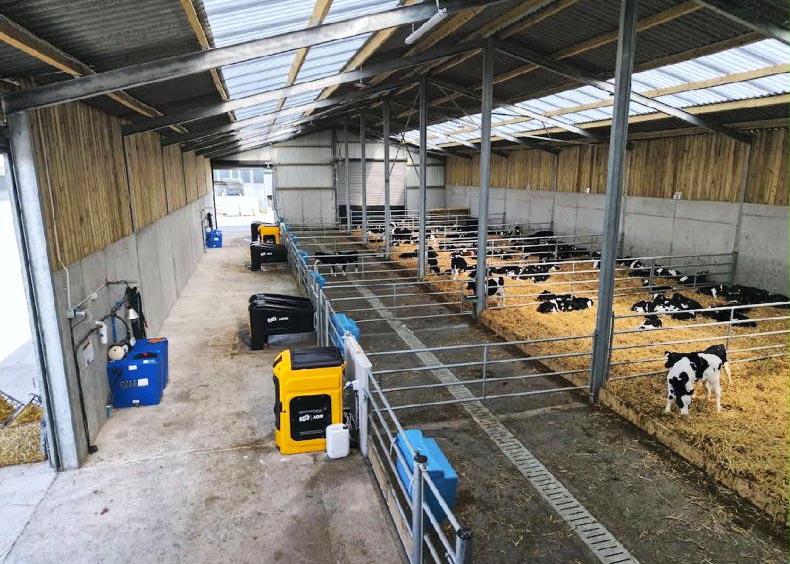
Calf sheds are becoming increasingly popular investment on Irish dairy farms, with time and labour being among the main drivers in farmers biting the bullet and investing.
The seasonality of spring calving of Irish dairying puts significant pressure on buildings and labour, with many farmers opting to automate calf feeding where possible to help alleviate this.
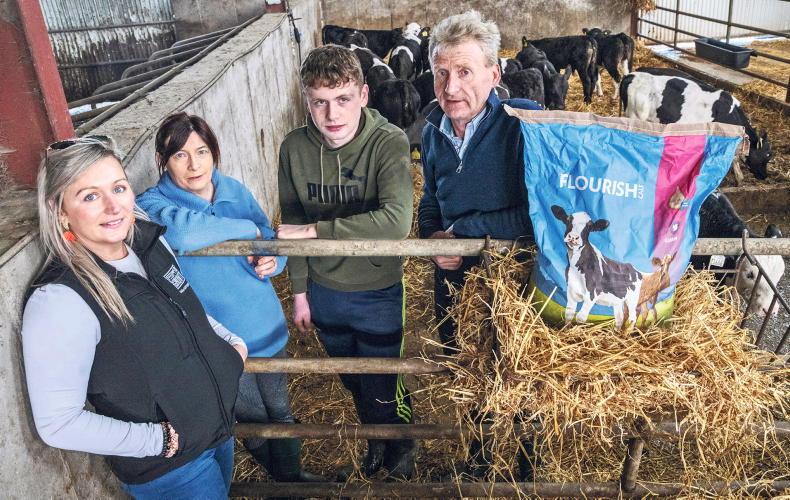
Noel Hogan was one such farmer. Located just outside the village of Aglish near Roscrea, Co Tipperary, Noel’s father Sean and his nephew Darragh are his two tight hand men.
The Hogan’s calf 320 spring calvers, with all calves brought through to finish. Noel explained that it was the labour of feeding whole milk to calves that pushed him to invest.
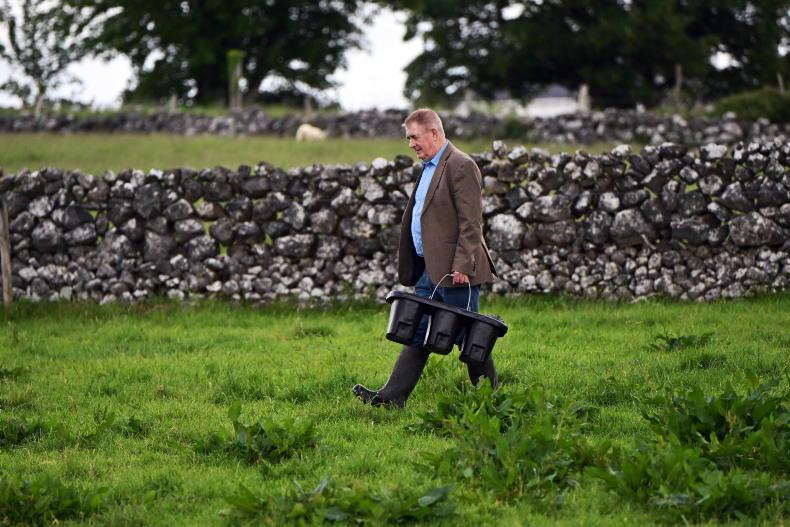
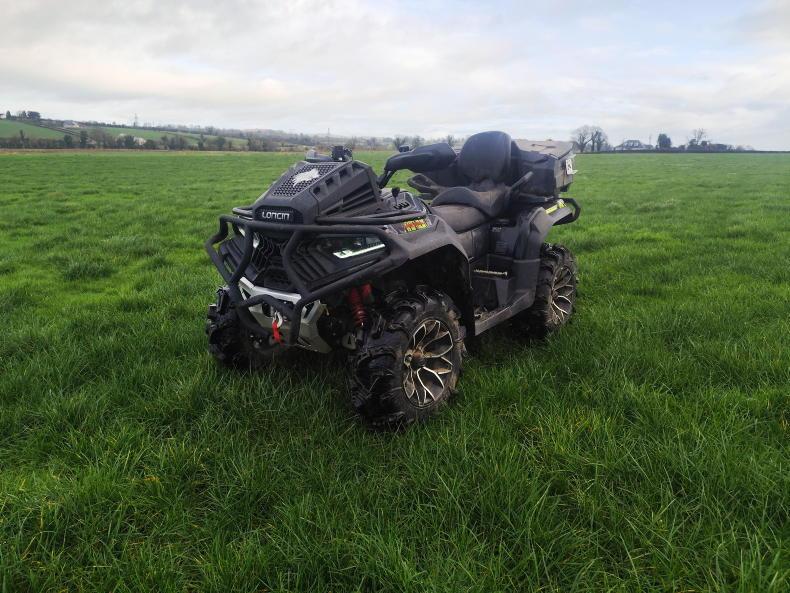
“We have 30 individual cubicles and an additional 12 loose pens fit to hold six-eight calves/pen. After calves became a bit stronger, they were moved in to batches of 40, with four separate sheds being used and a quad and 40-teat feeder used to feed them. It wasn’t such an issue when they were on once-a-day feeding, but it was a challenge feeding such a number of calves after each milking.”
Noel then began visiting calf sheds to get inspiration for his own, though he had a fair idea of what he wanted anyway, with automatic calf feeders being high on the list to cut down on labour.
Erection of the shed began in November of last year, with the structure being complete for calving in 2026, with an eight-bay hot-dipped galvanised shed soured from Earls Engineering, Kiltullagh.
“I could have rushed it and had it complete for the 2025 season but there were several small but important things I wanted to get right,” Noel explained.
His visits to other farms pushed him to do some things differently, while picking up some good ideas on the way.
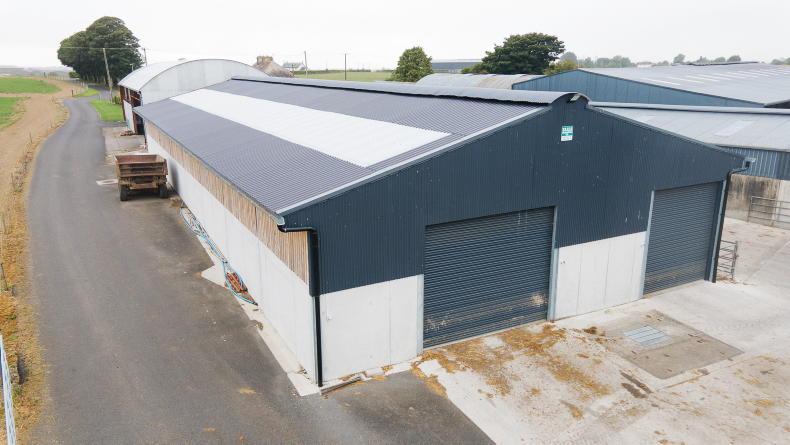
The wet area to the front of the pens is 15ft deep, with the bay width being the standard 15ft 9in in length.
“I saw some other wet areas that were close to half this in depth, but when you are pushing calves in to the wet area to clean the dry area, I didn’t want calves to be jammed in it. With that little bit of extra spacing, calves can continue drinking away for however long it takes you to clean out and rebed,” he stated.
The channel running through the centre of the wet area was also another key focus for Noel. He was keen that no debris would get caught up and block any channels, taking a two-prong approach to preventing this.
Firstly, he used a 15in JFC corri pipe cut in half, with the smooth inside wall of the pipe allowing for any dung, straw or urine to move easily through it, while a flush wash system has also been fitted. A 2in pipe feeds in to the channel, with Noel or one of the staff will then periodically turn on the flush system by opening a gate valve.
This then flushed any residue sitting in the pipe in to the 5,000-gallon effluent tank outside the shed. Sitting above this channel, Noel had steel grates specially manufacture and galvanised.
One gripe that Noel shares with many farmers building calf sheds is the recommended camber on dry area floors.
A 1:20 or 1:30 fall can be excessive to some farmers, with cleaning out made more difficult, while Noel pointed to the difficulty in keeping straw from moving away from the back wall with a camber of this size.
For this reason, a lesser fall was installed in the dry area, measuring 25ft deep, with a timber separating the wet and dry areas.
Careful thought and time have gone in to the dry area as well. Noel was keen that there would not be significant gaps under gates and that gates would remain level, a challenge when you are talking of a 25ft span and a fall in a floor.
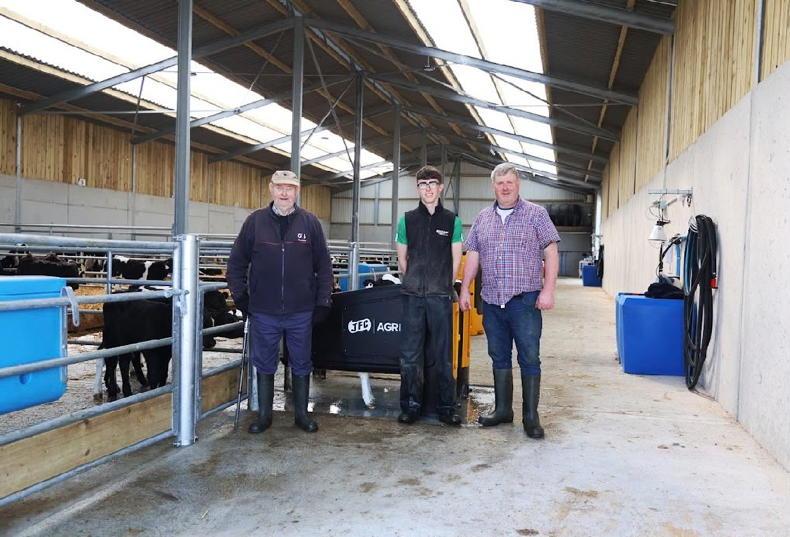
Aidan Gilbert of Roscrea was tasked with creating gates that sat flush on top while running parallel to the sloping floor which he successfully done.
There are no centre posts to be removed either, with a long latch securing the two gates in to each other. The longer of the two gates then folds back to lock calves in to the wet area for cleaning out.
One of the more striking features of the shed when you walk in is the Heat Guard sheeting used in two strips alongside the cement fibre.
Having seen similar on other farms, Noel was keen to implement it in his own shed, citing how pleasant it is to work in due to all the natural light entering.
A covered ridge outlet allows for stale, warm air to freely exit the building, while a heavy grade mesh has been installed to prevent entry in to the shed from birds or other vermin.
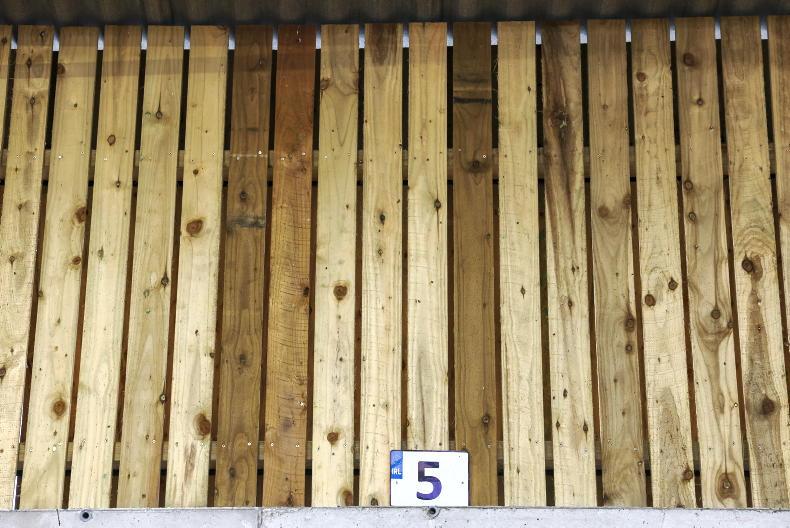
Yorkshire boarding has been used along the length of the shed on both sides, with a 5in board and a 1in gap implemented, with board gaps staggered to prevent water ingress.
Darragh explained “the temperature remains constant in here with the Yorkshire boarding, while there are no draughts; all the air is controlled. Even in the warmer months such as April when you would have calves in here, it was never stuffy.”
A nice feature on the Yorkshire boarding is the rounded ends of the board, something Noel credits to Noel and Liam O’Mara of O’Mara Farm Buildings, Birr, who completed all the concrete work and installed the Yorkshire boarding.
The shed has been well designed to accommodate an automatic feeding system, with JFC being the feeder of choice for the Hogans.
A pair of JFC Evolution S4 feeders, each with four stations off them, service the eight pens. Each pen holds 25 calves, with Darragh pointing to this being an extremely comfortable number for both pen space and the feeder. Declan O’Donnell of JFC was the rep in charge of the Hogan’s project, with Noel being highly complimentary of Declan and the team.
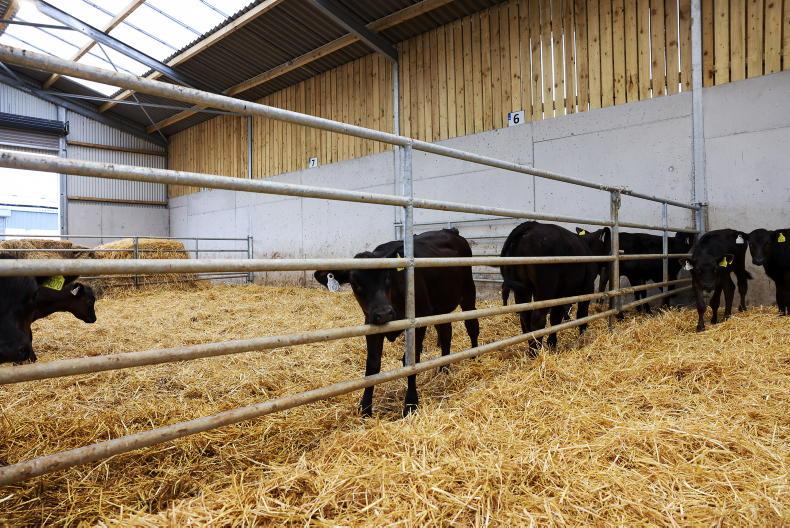
“The back up and support is second to none; it’s a very simple system to use, though Darragh is better at it than me. The day we were putting calves on to the feeder Declan was here in the yard helping us get all set up.”
Darragh highlighted the traffic light system as being a simple way to identify which calves have or haven’t drunk.
“Calves have their three set periods of eight hours to drink their allocated milk. If they have drank it in that eight-hour window, they show up as green.
"If they are yet to drink it, they show as orange, but if they miss a feed in that eight-hour window they will flag as red. In any case of a calf not presenting to the feeder this spring, it was always due to a calf starting to get sick.”
Darragh had both beef and dairy replacements on the same feeding curve, with two types of powder used as a trial, though no significant difference in weight gain was seen.
“When you walk in to the shed now with the automatic feeders, calves are settled; there’s no bawling.”
Both Noel and Darragh were highly complimentary of everyone working on the project, and the finish of the shed is second to none due to the high level of workmanship but also the careful planning of every detail from Noel.