As July rolls on and second-cut silage arrives in the yard, winter fodder budgets can begin to be assessed. Where there may be a deficit between what is required and what is available, decisions must be made to fill the void.
Brassica crops can provide a low-cost, outwintering feed option. Yet, they are often dismissed by many due to land type. While outwintering animals for the entire winter period may not be feasible, brassica crops could help significantly reduce the wintering period on some farms and stretch silage stocks.
There are many crops that can be grown, however, as the optimum sowing date for both swedes and kale has now passed. This article concentrates on stubble turnips, forage rape and the kale/rape hybrid Redstart.
Location
Ideally, crops should be grown in drier fields preferably with some shelter for stock grazing during spells of colder and wetter weather. Target fields with older unproductive swards that would benefit from reseeding. By targeting the poorest performing swards each year, growing a brassica crop can become a great way to bring ground into a reseeding plan.
Crop establishment
Soil samples should be taken to ensure maximum crop yield and efficient use of fertilisers.
Addressing soil fertility problems now will also benefit when reseeding in spring. Brassica crops like high pH soils, so in most instances lime will be required.
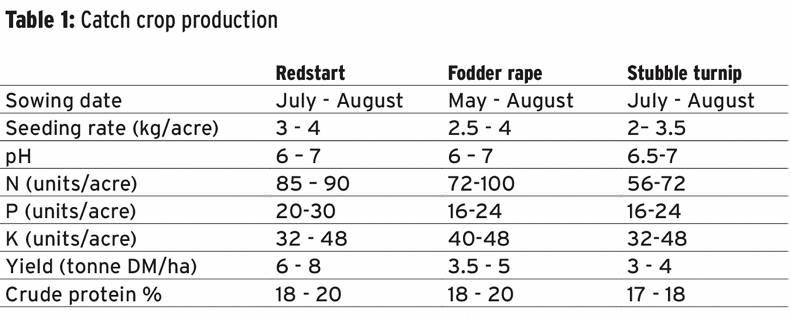
Fertiliser requirements differ slightly between crops (Table 1), but typically three bags of 10-10-20 per acre at sowing is sufficient with the balance of nitrogen applied post-establishment.
A fine firm seed-bed is required and so direct drilling is an attractive, lower-cost option for these crops. This gives the added benefit of a firmer seed bed that will be less susceptible to poaching during the grazing stage.
Grazing
The earlier the crop is planted, the sooner it will be available for grazing. With a typical 12-week growing period from planting until grazing, sowing a catch crop now means you should target a mid to late October grazing date.
Animals need to be introduced to the crop slowly to avoid digestive upsets, especially with cattle. Mineral supplementation may be necessary as catch crops can be low in copper, iodine and magnesium.
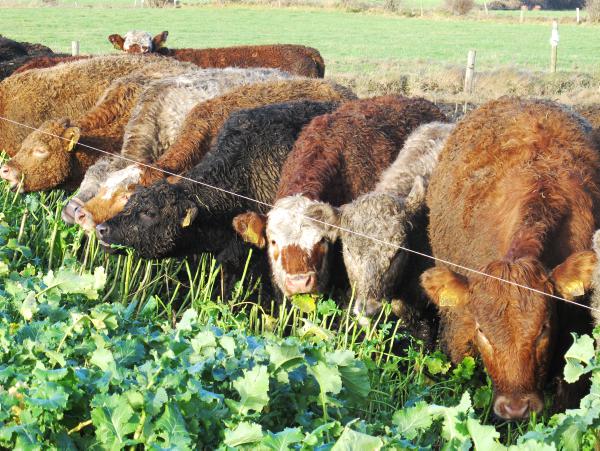
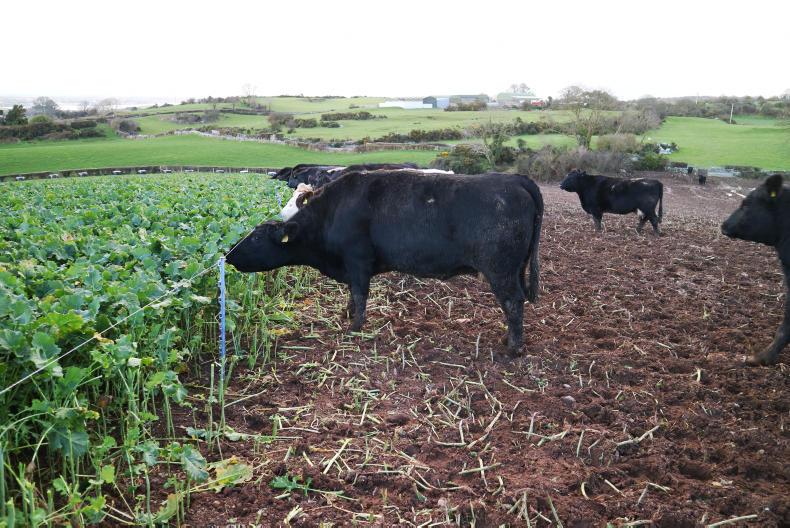
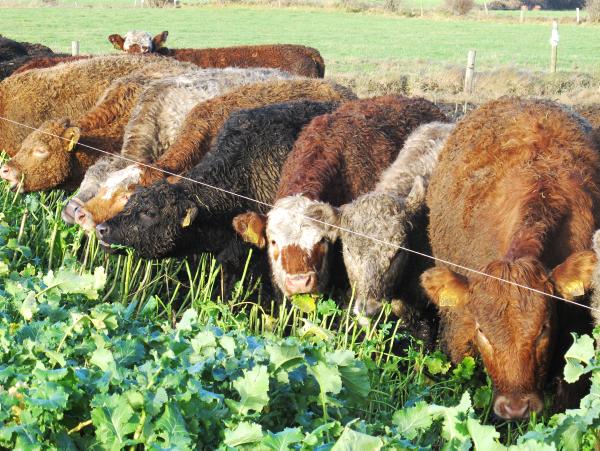
Strip-grazing works best with these crops with animals given a fresh, daily allocation of grazing. Ideally, graze in long, narrow strips to provide plenty of feed space for the animals without tramping freshly allocated herbage.
Maintaining good fence power and moving animals at the same time each day can help to reduce the risk of stock breaking though the fence. Depending on stock type, this may vary from a single strand of electric fence to four strands required with sheep.
Brassica crops are low in fibre and so roughage needs to be provided to the animals at around 25% of their diet. Bales should be placed along the length of the field, ideally before ground conditions deteriorate, to minimise soil compaction. Ring feeders can then be used at feed out as the strip wire moves along the field.
Stock type
Brassica crops are suitable for most stock types. They provide high-quality forage for finishing lambs. Beef animals post-weaning can grow in excess of 0.7 kg/day, as well as the added benefit of the reduced likelihood of respiratory diseases associated with housing. Dry cows can also be wintered on brassica crops once mineral supplementation is correct.
Read more
Focus: Reseeding and feed options
As July rolls on and second-cut silage arrives in the yard, winter fodder budgets can begin to be assessed. Where there may be a deficit between what is required and what is available, decisions must be made to fill the void.
Brassica crops can provide a low-cost, outwintering feed option. Yet, they are often dismissed by many due to land type. While outwintering animals for the entire winter period may not be feasible, brassica crops could help significantly reduce the wintering period on some farms and stretch silage stocks.
There are many crops that can be grown, however, as the optimum sowing date for both swedes and kale has now passed. This article concentrates on stubble turnips, forage rape and the kale/rape hybrid Redstart.
Location
Ideally, crops should be grown in drier fields preferably with some shelter for stock grazing during spells of colder and wetter weather. Target fields with older unproductive swards that would benefit from reseeding. By targeting the poorest performing swards each year, growing a brassica crop can become a great way to bring ground into a reseeding plan.
Crop establishment
Soil samples should be taken to ensure maximum crop yield and efficient use of fertilisers.
Addressing soil fertility problems now will also benefit when reseeding in spring. Brassica crops like high pH soils, so in most instances lime will be required.
Fertiliser requirements differ slightly between crops (Table 1), but typically three bags of 10-10-20 per acre at sowing is sufficient with the balance of nitrogen applied post-establishment.
A fine firm seed-bed is required and so direct drilling is an attractive, lower-cost option for these crops. This gives the added benefit of a firmer seed bed that will be less susceptible to poaching during the grazing stage.
Grazing
The earlier the crop is planted, the sooner it will be available for grazing. With a typical 12-week growing period from planting until grazing, sowing a catch crop now means you should target a mid to late October grazing date.
Animals need to be introduced to the crop slowly to avoid digestive upsets, especially with cattle. Mineral supplementation may be necessary as catch crops can be low in copper, iodine and magnesium.
Strip-grazing works best with these crops with animals given a fresh, daily allocation of grazing. Ideally, graze in long, narrow strips to provide plenty of feed space for the animals without tramping freshly allocated herbage.
Maintaining good fence power and moving animals at the same time each day can help to reduce the risk of stock breaking though the fence. Depending on stock type, this may vary from a single strand of electric fence to four strands required with sheep.
Brassica crops are low in fibre and so roughage needs to be provided to the animals at around 25% of their diet. Bales should be placed along the length of the field, ideally before ground conditions deteriorate, to minimise soil compaction. Ring feeders can then be used at feed out as the strip wire moves along the field.
Stock type
Brassica crops are suitable for most stock types. They provide high-quality forage for finishing lambs. Beef animals post-weaning can grow in excess of 0.7 kg/day, as well as the added benefit of the reduced likelihood of respiratory diseases associated with housing. Dry cows can also be wintered on brassica crops once mineral supplementation is correct.
Read more
Focus: Reseeding and feed options






SHARING OPTIONS