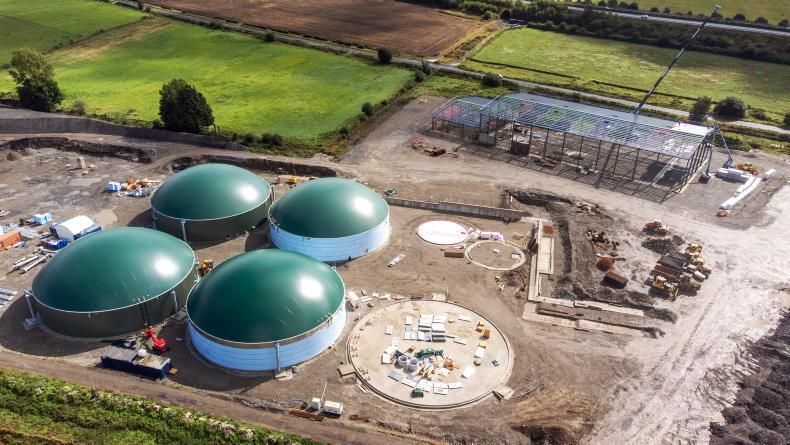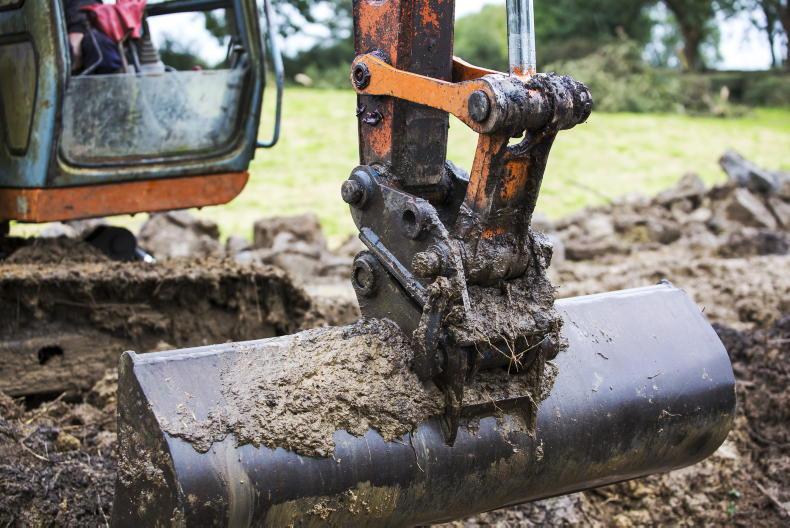
As we come into the summer months, we will see a greater level of construction happening on farms. Improved weather conditions allow for unimpeded work days, while the lowering of water tables makes digging out footings for buildings or tanks for slurry storage more commonplace.
Underground services are typical in yards and fields and, while overhead services are obviously more visible, both pose a risk when completing on-farm construction.
Thankfully, several options exist for farmers regarding locating underground services in order to avoid these.
Electricity
There are essentially two areas regarding electricity in which caution is required; main power lines servicing several dwellings/farms in the local area and power lines running between different buildings etc within your own yard.
Regarding the first, information surrounding underground power lines can be sought from the ESB.
It is vital to request maps of underground electricity cables before carrying out any digging work as the consequences of unsafe digging could affect the entire community or could cause injury/death to you or a contractor working on a construction project. Farmers or contractors can email dig@esb.ie to request the necessary maps before starting work to see what electricity cables are underground.
In order for the ESB to provide you with the necessary maps, you will need to email with the following information:
Full address of site location including Eircode.Geographic coordinates of site locationMap of area (this can be a screenshot on Google Maps).Name and email address that the ESB can respond to with requested map.Once you make a request, you will receive your map within ten working days.
With regard to underground power lines that have been installed by yourself or a contractor in a previous project eg bringing power to a new shed, then you will need the necessary equipment to detect power cables.
A cable and pipe locator will usually be available to hire at your local plant hire firm if your contractor does not have one, which will be able to detect the presence of underground cables (to a certain depth).
If installed correctly, underground cable will be carried through appropriate ducting which has been partially backfilled using 8-0-4 material with underground warning tape laid over this.
If you come across this tape, then this indicates that ducting for power cable lies beneath, somewhere between 50-100mm typically.
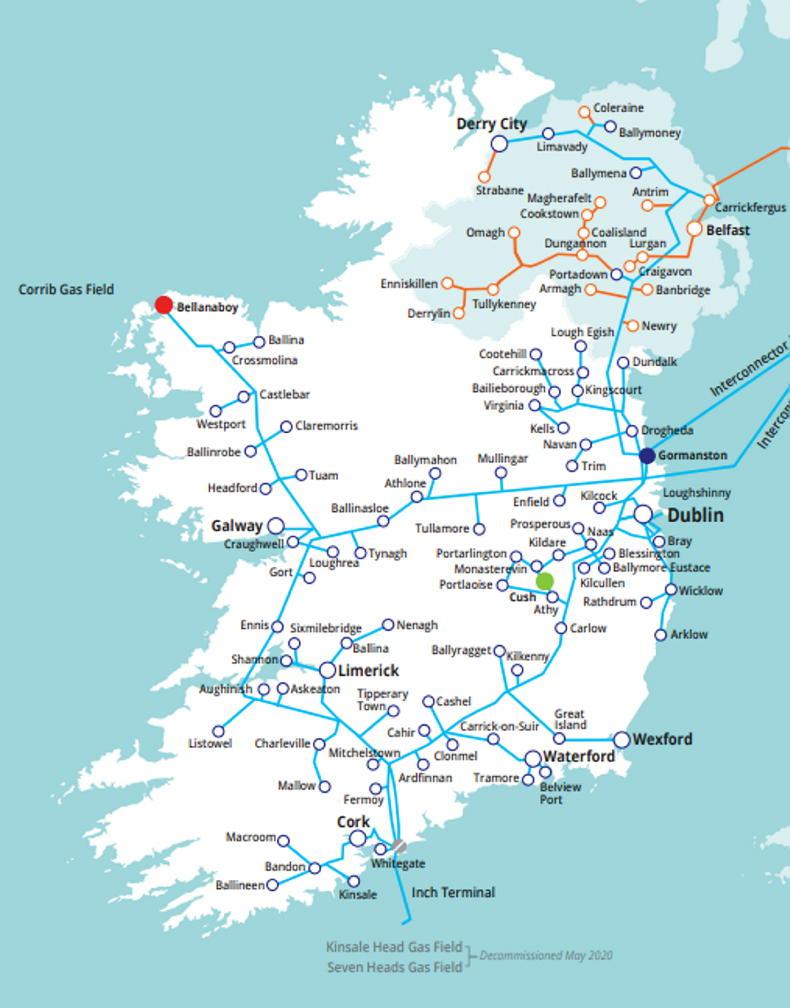
Natural gas main pipelines across the ROI and NI/ Gas Networks Ireland.
Altering services
Service alteration is necessary at times due to the location of new buildings or a change in yard layout/design. Again, you can contact the ESB Networks which offers a service alteration to help with this.
A service alteration involves a change to the service bringing electricity to a premises. If you’re moving your service within 50 metres of the main ESB Networks connection, this is a standard service alteration.
There is a charge for this service. If the relocation is more than 50 metres, this is a non-standard service alteration and you will need to call the ESB Customer support team.
Your electrical contractor will be able to best advise you if this is a necessity. Both overground and underground services can be altered.
If your electricity service is being moved underground, ducting will be required. The cost of ducting will fall on the farmer and your contractor must install the duct, with the ESB Networks then informed once it is ready for inspection.
A standard service alteration will be completed within 5-6 weeks. A non-standard service alteration will take longer. It is not necessary to avail of the above services if you are:
Connecting electricity for the first time.Changing your service capacity.Moving an electricity pole on your property. For these services, please register for an ESB Networks online account and request the service you require online.
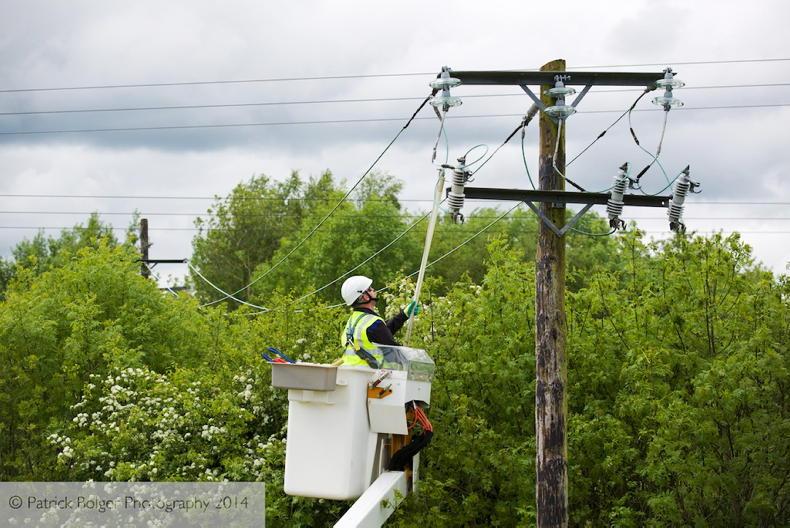
Applications to move poles will be assessed by an ESB’s design officer who will contact you to discuss the next steps and advise you if a charge is applicable.
Relocating a pole
Conversely to the above but similar in that it may obstruct new construction, overhead poles and power lines can be moved / raised if necessary.
Using an Ordnance Survey map (scale 1:2500-1:10560) of your site and detailed site plan (scale 1:100-1:500) showing the layout of any new or existing buildings, mark the exact location of the line or pole to be moved with a red pen.
If the work being done requires planning permission, you must provide details of the permission.
Applications can then be completed online or via post (see ESB website for form download).
Your request will then be sent to a design officer in your local ESB Networks Office.
The application will be assessed and the ESB’s design officer will contact you to discuss the next steps and advise you if a charge is applicable.
Gas lines
Gas lines are another essential power infrastructure in Ireland, with 13,000km sprawled throughout the country.
To prevent gas pipelines from being damaged and to keep them safe, certain activities are restricted in the “wayleave” – the strip of land above, and either side of, the pipeline. Gas Networks Ireland recommend following these eight key tips when it comes to working close to gas lines on farms.
1. Normal agricultural work including ploughing, tilling, subsoiling to a depth of 300mm does not require a permit.2. Always contact Gas Networks Ireland before repairing or installing a new drainage system, clearing out existing ditches or open drains or undertaking any other kind of excavation work. 3. Call Gas Networks Ireland before installing gate posts and/or straining posts within the wayleave.4. Ground cover should not be reduced or increased, or materials stored on the gas pipeline wayleave.5. Pipelines are identified with marker posts at roads and property boundaries. Remember, gas marker posts can be accidentally damaged or moved and pipeline routes may change direction within any particular field. Do not assume that the pipeline runs in a straight line between posts. 6. Gas Networks Ireland should be contacted prior to planting trees in close proximity to the wayleave. 7. Please contact Gas Networks Ireland before undertaking forestry plantation and subsequent operations in or near the wayleave, such as drainage, construction of haul roads, harvesting, or cultivating.8. If necessary or requested, a Gas Networks Ireland representative will visit your property/site to locate and mark out the pipeline, and will give advice on what type of work can be carried out on the pipeline wayleave. This is a free service.Don’t take a chance – dial before you dig
This is the key message from Gas Networks Ireland with regard to working within the wayleave of a pipeline.
Other than routine agricultural activities, do not carry out work in the vicinity of a pipeline wayleave without the prior consent of Gas Networks Ireland, giving as much notice as possible, ideally a minimum of seven days.
Gas Networks Ireland will then check the location of the pipeline in the vicinity of the proposed works and send out maps on request and an engineer if required.
All the above services are free of charge to the farmer and should be availed of when completing any works near a gas pipeline.
As we come into the summer months, we will see a greater level of construction happening on farms. Improved weather conditions allow for unimpeded work days, while the lowering of water tables makes digging out footings for buildings or tanks for slurry storage more commonplace.
Underground services are typical in yards and fields and, while overhead services are obviously more visible, both pose a risk when completing on-farm construction.
Thankfully, several options exist for farmers regarding locating underground services in order to avoid these.
Electricity
There are essentially two areas regarding electricity in which caution is required; main power lines servicing several dwellings/farms in the local area and power lines running between different buildings etc within your own yard.
Regarding the first, information surrounding underground power lines can be sought from the ESB.
It is vital to request maps of underground electricity cables before carrying out any digging work as the consequences of unsafe digging could affect the entire community or could cause injury/death to you or a contractor working on a construction project. Farmers or contractors can email dig@esb.ie to request the necessary maps before starting work to see what electricity cables are underground.
In order for the ESB to provide you with the necessary maps, you will need to email with the following information:
Full address of site location including Eircode.Geographic coordinates of site locationMap of area (this can be a screenshot on Google Maps).Name and email address that the ESB can respond to with requested map.Once you make a request, you will receive your map within ten working days.
With regard to underground power lines that have been installed by yourself or a contractor in a previous project eg bringing power to a new shed, then you will need the necessary equipment to detect power cables.
A cable and pipe locator will usually be available to hire at your local plant hire firm if your contractor does not have one, which will be able to detect the presence of underground cables (to a certain depth).
If installed correctly, underground cable will be carried through appropriate ducting which has been partially backfilled using 8-0-4 material with underground warning tape laid over this.
If you come across this tape, then this indicates that ducting for power cable lies beneath, somewhere between 50-100mm typically.

Natural gas main pipelines across the ROI and NI/ Gas Networks Ireland.
Altering services
Service alteration is necessary at times due to the location of new buildings or a change in yard layout/design. Again, you can contact the ESB Networks which offers a service alteration to help with this.
A service alteration involves a change to the service bringing electricity to a premises. If you’re moving your service within 50 metres of the main ESB Networks connection, this is a standard service alteration.
There is a charge for this service. If the relocation is more than 50 metres, this is a non-standard service alteration and you will need to call the ESB Customer support team.
Your electrical contractor will be able to best advise you if this is a necessity. Both overground and underground services can be altered.
If your electricity service is being moved underground, ducting will be required. The cost of ducting will fall on the farmer and your contractor must install the duct, with the ESB Networks then informed once it is ready for inspection.
A standard service alteration will be completed within 5-6 weeks. A non-standard service alteration will take longer. It is not necessary to avail of the above services if you are:
Connecting electricity for the first time.Changing your service capacity.Moving an electricity pole on your property. For these services, please register for an ESB Networks online account and request the service you require online.

Applications to move poles will be assessed by an ESB’s design officer who will contact you to discuss the next steps and advise you if a charge is applicable.
Relocating a pole
Conversely to the above but similar in that it may obstruct new construction, overhead poles and power lines can be moved / raised if necessary.
Using an Ordnance Survey map (scale 1:2500-1:10560) of your site and detailed site plan (scale 1:100-1:500) showing the layout of any new or existing buildings, mark the exact location of the line or pole to be moved with a red pen.
If the work being done requires planning permission, you must provide details of the permission.
Applications can then be completed online or via post (see ESB website for form download).
Your request will then be sent to a design officer in your local ESB Networks Office.
The application will be assessed and the ESB’s design officer will contact you to discuss the next steps and advise you if a charge is applicable.
Gas lines
Gas lines are another essential power infrastructure in Ireland, with 13,000km sprawled throughout the country.
To prevent gas pipelines from being damaged and to keep them safe, certain activities are restricted in the “wayleave” – the strip of land above, and either side of, the pipeline. Gas Networks Ireland recommend following these eight key tips when it comes to working close to gas lines on farms.
1. Normal agricultural work including ploughing, tilling, subsoiling to a depth of 300mm does not require a permit.2. Always contact Gas Networks Ireland before repairing or installing a new drainage system, clearing out existing ditches or open drains or undertaking any other kind of excavation work. 3. Call Gas Networks Ireland before installing gate posts and/or straining posts within the wayleave.4. Ground cover should not be reduced or increased, or materials stored on the gas pipeline wayleave.5. Pipelines are identified with marker posts at roads and property boundaries. Remember, gas marker posts can be accidentally damaged or moved and pipeline routes may change direction within any particular field. Do not assume that the pipeline runs in a straight line between posts. 6. Gas Networks Ireland should be contacted prior to planting trees in close proximity to the wayleave. 7. Please contact Gas Networks Ireland before undertaking forestry plantation and subsequent operations in or near the wayleave, such as drainage, construction of haul roads, harvesting, or cultivating.8. If necessary or requested, a Gas Networks Ireland representative will visit your property/site to locate and mark out the pipeline, and will give advice on what type of work can be carried out on the pipeline wayleave. This is a free service.Don’t take a chance – dial before you dig
This is the key message from Gas Networks Ireland with regard to working within the wayleave of a pipeline.
Other than routine agricultural activities, do not carry out work in the vicinity of a pipeline wayleave without the prior consent of Gas Networks Ireland, giving as much notice as possible, ideally a minimum of seven days.
Gas Networks Ireland will then check the location of the pipeline in the vicinity of the proposed works and send out maps on request and an engineer if required.
All the above services are free of charge to the farmer and should be availed of when completing any works near a gas pipeline.
SHARING OPTIONS