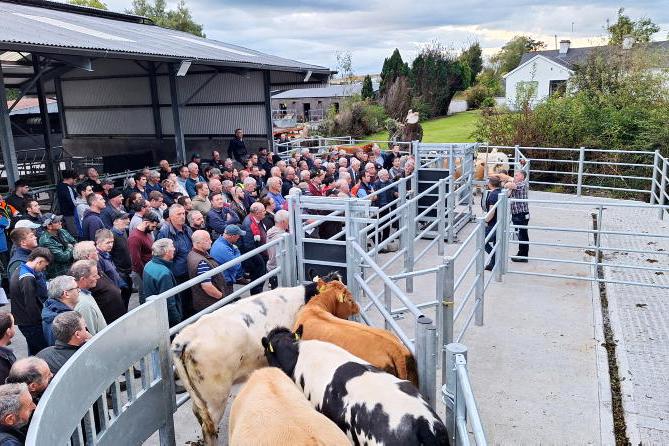
Having moved from their Athenry base two years ago, the Newford herd’s new home in Athleague, Co Roscommon, came with some superb cattle accommodation facilities. Investment was made in grazing infrastructure and reseeding, with the latest development in the project being a bespoke new handling facility to make handling the herd safer and more efficient.
As well as the 90-cow strong herd, the move to Athleague also provided the farm with a large-scale finishing shed, which was surplus to the herd’s requirements.
As part of the ethos of ongoing trials, batches of store cattle are purchased and finished indoors on one of two diets: red clover silage plus concentrates, or grass silage plus concentrates, to study the effect that red clover has on liveweight gain and carcase weight.
Just over 500 cattle were finished last year, with each of these animals clipped and vaccinated on arrival, as well as being weighed and drafted on a regular basis. The new handling facility runs parallel to the finishing shed, allowing for ease of movement between the shed for handling and loading.
The demonstration farm is a collaboration between Teagasc, McDonald’s and Dawn Meats, with Matthew Murphy of Dawn explaining that “while there were handling facilities on-farm, the volume of cattle that are being handled here, particularly on the finishing side, prompted us to invest in a safer and more efficient facility”.
Some of the more interesting features of the yard include the calf crush, Clipex handler and the circular forcing gate.
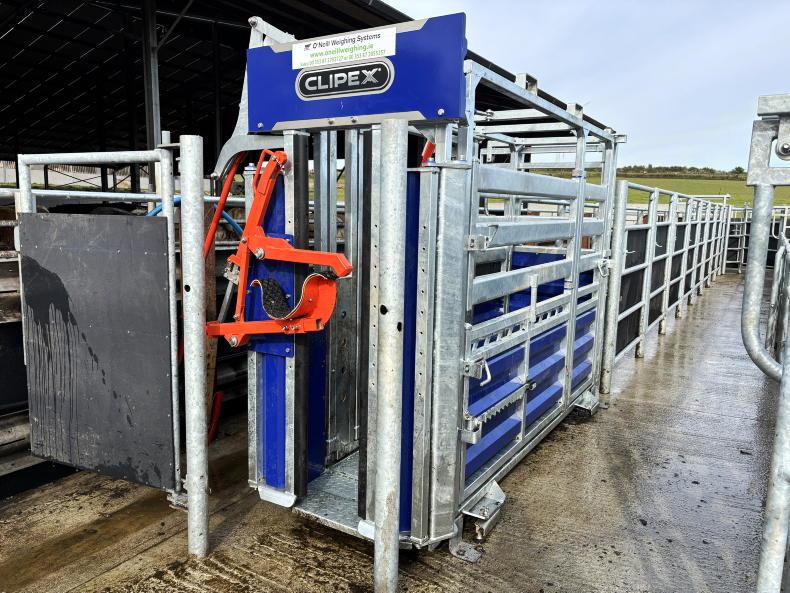
The single squeeze crush unit is kitted out with a head scoop and an integrated scale, as well as an AI gate.
Layout
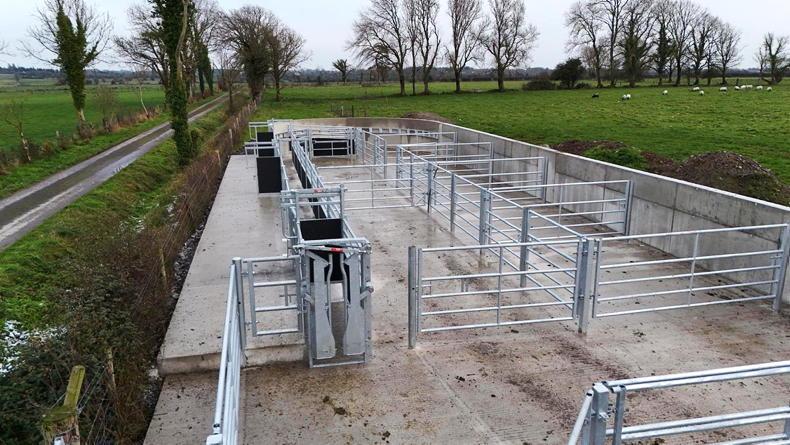
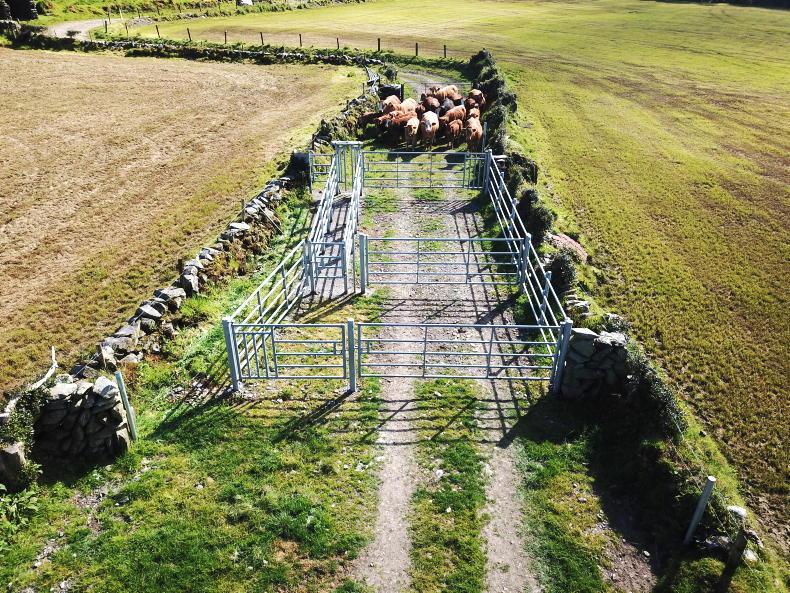
The layout of the new handling facility can be seen in Figure 1. A total of five holding pens of different sizes can run throughout. Cattle enter the yard through three different gates: through holding pen one at the left-hand side of the picture, which also acts as the main unloading/loading area, or into holding pen five either from the yard or the field.
Large gates on wheels are used to funnel cattle from the finishing shed to the holding pens, making the operation a one-person job if needs be. Each pen of the finishing shed holds 50 cattle, with Murphy stating that two pens of cattle can be held with ease within the yard without mixing. The 90-cow suckler herd is split into two batches of 45 for ease of management, and again 45 cows and their calves can be easily split within the yard.
The gates between holding pens are split, with one gate having a drop bolt in to the ground for rigidity, as opposed to one large cumbersome gate, while an interesting feature is that there are no bolt latches on them, with gates linked together by a chain.
“It’s something that we have seen work well in our lairage facilities,” explained Murphy.
Gates will invariably drop a little over the years, and using the chain to latch them together prevents anyone having to try and lift gates to get them to bolt in together.
The panels either running along the field side of the yard sit at 1.8m in height, with the bottom 1.2m clad in stock board right to the ground. This aids in cleaning the yard, through minimising dirt and soiled water escaping.
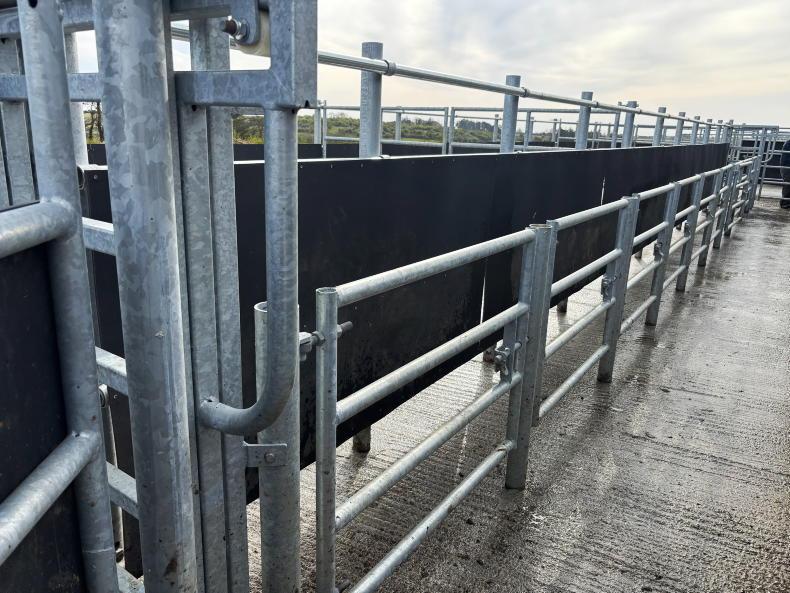
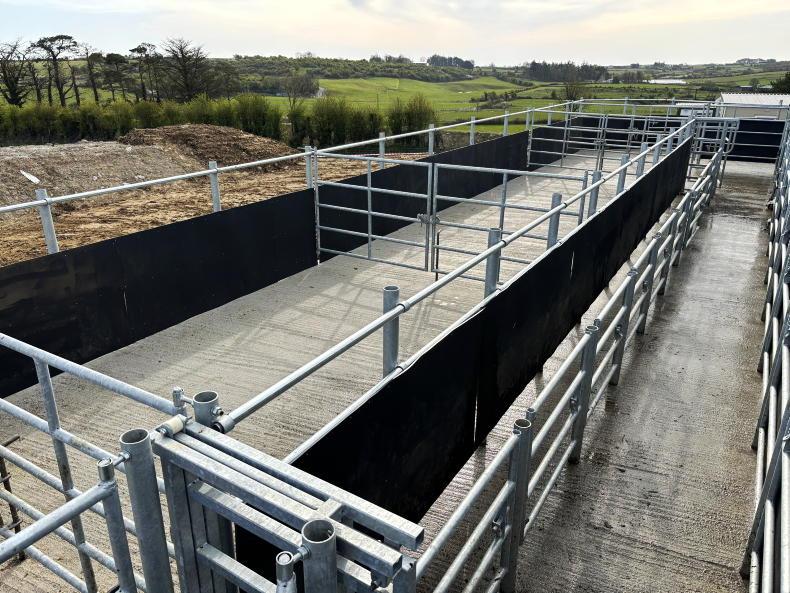
The new calf chute was designed similar to those used in a veal unit and has proven invaluable in administering vaccinations to calves this spring.

There are a total of five holding pens, with the yard capable of accommodating 100 store cattle. The recovery passage to the right of the calf chute can also be seen.
Forcing pen and chutes
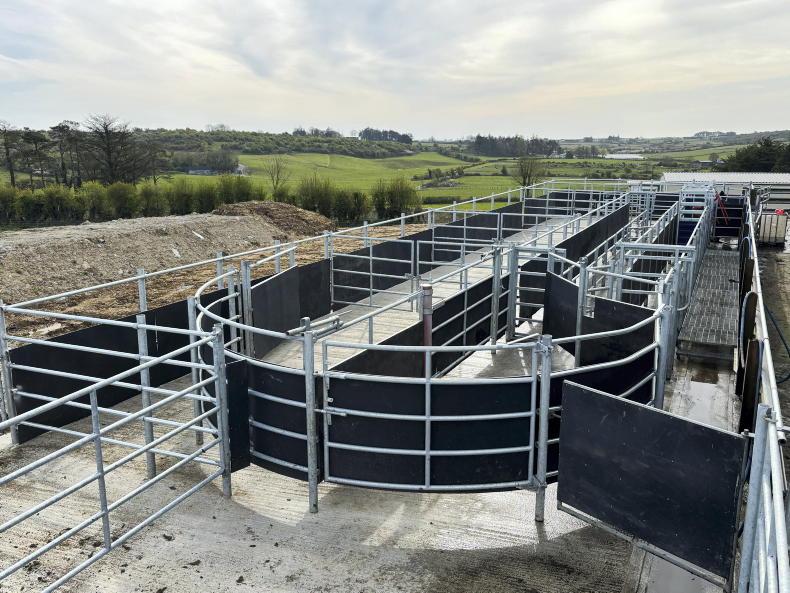
At the bottom of the yard, we find the circular forcing pen. A central post has been fitted with two 360° forcing gates, each measuring 4m in length. At the top of the curved panels along the edge are incremental latching points, which the gate latch at the top of the forcing gate slides over and drops down behind. Again, panels and gates have been blanked off with stock board to divert cattle to the handling chute.
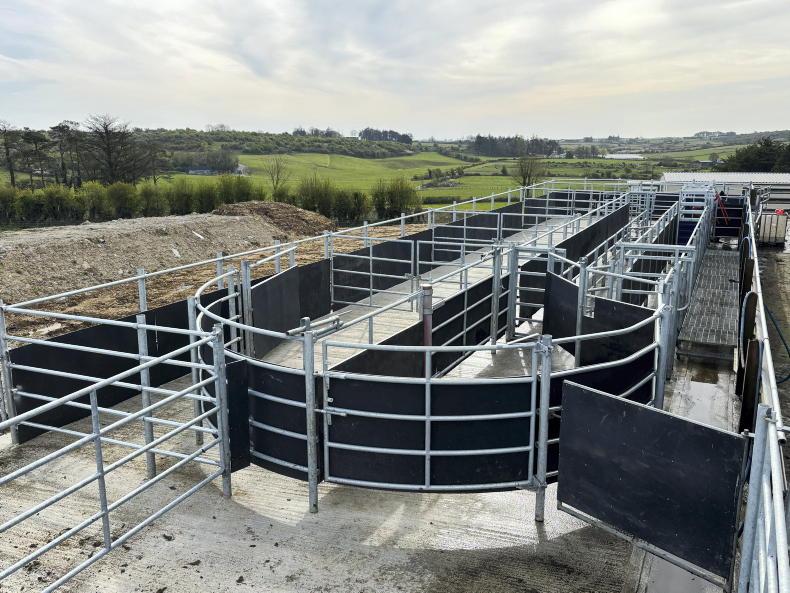
One of the more interesting features of the yard is the calf chute. Measuring 600mm wide, the design has been based around similar handling units on veal farms and will be used for vaccination and weighing of the suckler calves in the first few months of life.
Murphy said: “We brought one batch of 45 cows with their calves up from a paddock last week, with all calves receiving two vaccinations and all cows being tail painted. Cows and calves were back in the paddock within 45 minutes.”
Calves can also be diverted to the Clipex crush unit for weighing if required.
The main cattle chute measures 11.2m in length and 800mm in width and sits parallel to the calf chute, with a 1195mm recovery chute sitting between the two. With the entire length of each of the chutes gated, this recovery chute allows access to personnel to open a gate and release an animal if necessary.
Running along the outer edge of the chute is the raised operator platform measuring 1.2m in width.
Solid panels sit on the side closest to the operator, while the access gates on the other side leading out in to the recovery chute are again sheeted with stock board. Guillotine gates have been installed at the entrance of both the adult and calf chutes.
The steel work of the yard was supplied and fitted by Cathair Engineering, Co Waterford.
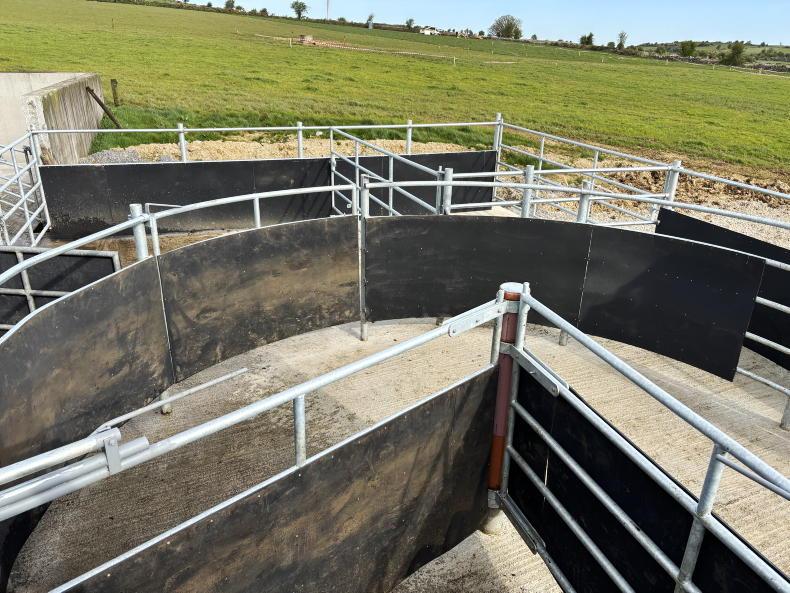
The circular forcing pen allows for easy direction of cattle to either the calf chute or cattle chute, with two 360° gates that latch incrementally.
Clipex crush
Supplied by O’Neill Weighing Systems, a manual single squeeze cattle crush has been fitted at the head of the adult cattle chute. Once inside the crush, a guillotine gate closes behind them. A manually operated head locking gate that can be operated from the head or the rear of the crush holds the animals head in place, with a head scoop also fitted for ease of drenching.
The width of the crush is fully adjustable using a long lever bar which pushes the side panel closest to the operator against the animal in what’s known as an infinite locking mechanism. The animal is easily released by the operator after by simply pulling the lever bar back.
An AI gate has also been fitted to the crush unit for breeding time, while the unit also comes complete with a weighing system, with weighing frequently being completed on the farm.
Newford has spec-ed the unit to be EID compatible, meaning weights are directly attributed to the tag number of the animal in the crush and automatically uploaded; no notebooks and pens needed.
Nylon brushes are fitted throughout at each of the hinge points which means zero wear and no greasing.
Being a manual unit, there is no air required and no excessive noise. It’s a fault that some farmers have pointed out to me with automatic units in that the noise can make it difficult to get cattle in to the crush until they become acclimatised.
While the unit is mobile, it is in-situ in the yard, held in place by some angle iron bolted to the ground.
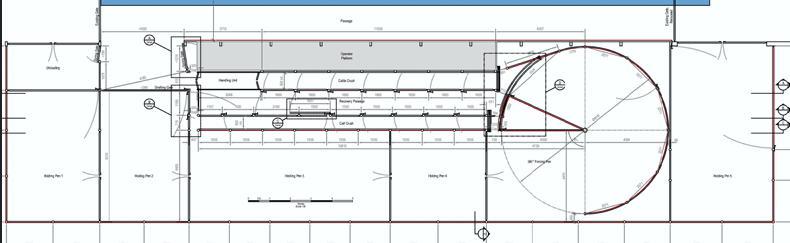
Figure 1: the layout of the new cattle handling facility for the Newford Herd.
Opinion: top-class facility for handling large numbers
While the above unit may be overkill for a 90-cow suckler herd, the addition of the finishing unit means that something of this size and spec is required. As always with these larger units, there are things that smaller operators can take from it, and one of my favourite features is the calf chute.
Between six weeks and four months of age, calves can be troublesome creatures to handle in an adult cattle crush and we invariably end up in the chute alongside them when vaccinating or drenching. The likes of the above chute would also work superbly for a dairy calf-to-beef unit. It’s great to see the stakeholder of the project investing in a quality unit like this, which was sure to be a huge talking point at Wednesday’s open day.
Having moved from their Athenry base two years ago, the Newford herd’s new home in Athleague, Co Roscommon, came with some superb cattle accommodation facilities. Investment was made in grazing infrastructure and reseeding, with the latest development in the project being a bespoke new handling facility to make handling the herd safer and more efficient.
As well as the 90-cow strong herd, the move to Athleague also provided the farm with a large-scale finishing shed, which was surplus to the herd’s requirements.
As part of the ethos of ongoing trials, batches of store cattle are purchased and finished indoors on one of two diets: red clover silage plus concentrates, or grass silage plus concentrates, to study the effect that red clover has on liveweight gain and carcase weight.
Just over 500 cattle were finished last year, with each of these animals clipped and vaccinated on arrival, as well as being weighed and drafted on a regular basis. The new handling facility runs parallel to the finishing shed, allowing for ease of movement between the shed for handling and loading.
The demonstration farm is a collaboration between Teagasc, McDonald’s and Dawn Meats, with Matthew Murphy of Dawn explaining that “while there were handling facilities on-farm, the volume of cattle that are being handled here, particularly on the finishing side, prompted us to invest in a safer and more efficient facility”.
Some of the more interesting features of the yard include the calf crush, Clipex handler and the circular forcing gate.

The single squeeze crush unit is kitted out with a head scoop and an integrated scale, as well as an AI gate.
Layout
The layout of the new handling facility can be seen in Figure 1. A total of five holding pens of different sizes can run throughout. Cattle enter the yard through three different gates: through holding pen one at the left-hand side of the picture, which also acts as the main unloading/loading area, or into holding pen five either from the yard or the field.
Large gates on wheels are used to funnel cattle from the finishing shed to the holding pens, making the operation a one-person job if needs be. Each pen of the finishing shed holds 50 cattle, with Murphy stating that two pens of cattle can be held with ease within the yard without mixing. The 90-cow suckler herd is split into two batches of 45 for ease of management, and again 45 cows and their calves can be easily split within the yard.
The gates between holding pens are split, with one gate having a drop bolt in to the ground for rigidity, as opposed to one large cumbersome gate, while an interesting feature is that there are no bolt latches on them, with gates linked together by a chain.
“It’s something that we have seen work well in our lairage facilities,” explained Murphy.
Gates will invariably drop a little over the years, and using the chain to latch them together prevents anyone having to try and lift gates to get them to bolt in together.
The panels either running along the field side of the yard sit at 1.8m in height, with the bottom 1.2m clad in stock board right to the ground. This aids in cleaning the yard, through minimising dirt and soiled water escaping.

The new calf chute was designed similar to those used in a veal unit and has proven invaluable in administering vaccinations to calves this spring.

There are a total of five holding pens, with the yard capable of accommodating 100 store cattle. The recovery passage to the right of the calf chute can also be seen.
Forcing pen and chutes
At the bottom of the yard, we find the circular forcing pen. A central post has been fitted with two 360° forcing gates, each measuring 4m in length. At the top of the curved panels along the edge are incremental latching points, which the gate latch at the top of the forcing gate slides over and drops down behind. Again, panels and gates have been blanked off with stock board to divert cattle to the handling chute.
One of the more interesting features of the yard is the calf chute. Measuring 600mm wide, the design has been based around similar handling units on veal farms and will be used for vaccination and weighing of the suckler calves in the first few months of life.
Murphy said: “We brought one batch of 45 cows with their calves up from a paddock last week, with all calves receiving two vaccinations and all cows being tail painted. Cows and calves were back in the paddock within 45 minutes.”
Calves can also be diverted to the Clipex crush unit for weighing if required.
The main cattle chute measures 11.2m in length and 800mm in width and sits parallel to the calf chute, with a 1195mm recovery chute sitting between the two. With the entire length of each of the chutes gated, this recovery chute allows access to personnel to open a gate and release an animal if necessary.
Running along the outer edge of the chute is the raised operator platform measuring 1.2m in width.
Solid panels sit on the side closest to the operator, while the access gates on the other side leading out in to the recovery chute are again sheeted with stock board. Guillotine gates have been installed at the entrance of both the adult and calf chutes.
The steel work of the yard was supplied and fitted by Cathair Engineering, Co Waterford.

The circular forcing pen allows for easy direction of cattle to either the calf chute or cattle chute, with two 360° gates that latch incrementally.
Clipex crush
Supplied by O’Neill Weighing Systems, a manual single squeeze cattle crush has been fitted at the head of the adult cattle chute. Once inside the crush, a guillotine gate closes behind them. A manually operated head locking gate that can be operated from the head or the rear of the crush holds the animals head in place, with a head scoop also fitted for ease of drenching.
The width of the crush is fully adjustable using a long lever bar which pushes the side panel closest to the operator against the animal in what’s known as an infinite locking mechanism. The animal is easily released by the operator after by simply pulling the lever bar back.
An AI gate has also been fitted to the crush unit for breeding time, while the unit also comes complete with a weighing system, with weighing frequently being completed on the farm.
Newford has spec-ed the unit to be EID compatible, meaning weights are directly attributed to the tag number of the animal in the crush and automatically uploaded; no notebooks and pens needed.
Nylon brushes are fitted throughout at each of the hinge points which means zero wear and no greasing.
Being a manual unit, there is no air required and no excessive noise. It’s a fault that some farmers have pointed out to me with automatic units in that the noise can make it difficult to get cattle in to the crush until they become acclimatised.
While the unit is mobile, it is in-situ in the yard, held in place by some angle iron bolted to the ground.

Figure 1: the layout of the new cattle handling facility for the Newford Herd.
Opinion: top-class facility for handling large numbers
While the above unit may be overkill for a 90-cow suckler herd, the addition of the finishing unit means that something of this size and spec is required. As always with these larger units, there are things that smaller operators can take from it, and one of my favourite features is the calf chute.
Between six weeks and four months of age, calves can be troublesome creatures to handle in an adult cattle crush and we invariably end up in the chute alongside them when vaccinating or drenching. The likes of the above chute would also work superbly for a dairy calf-to-beef unit. It’s great to see the stakeholder of the project investing in a quality unit like this, which was sure to be a huge talking point at Wednesday’s open day.
SHARING OPTIONS