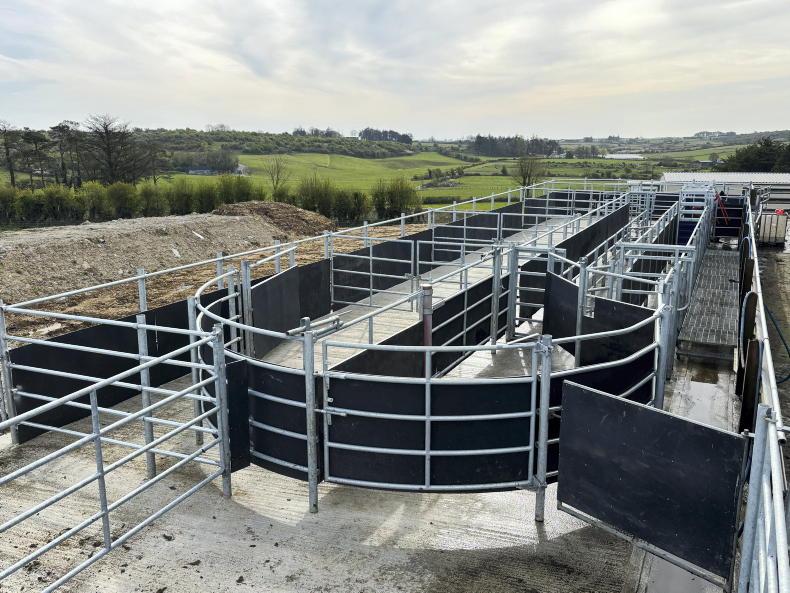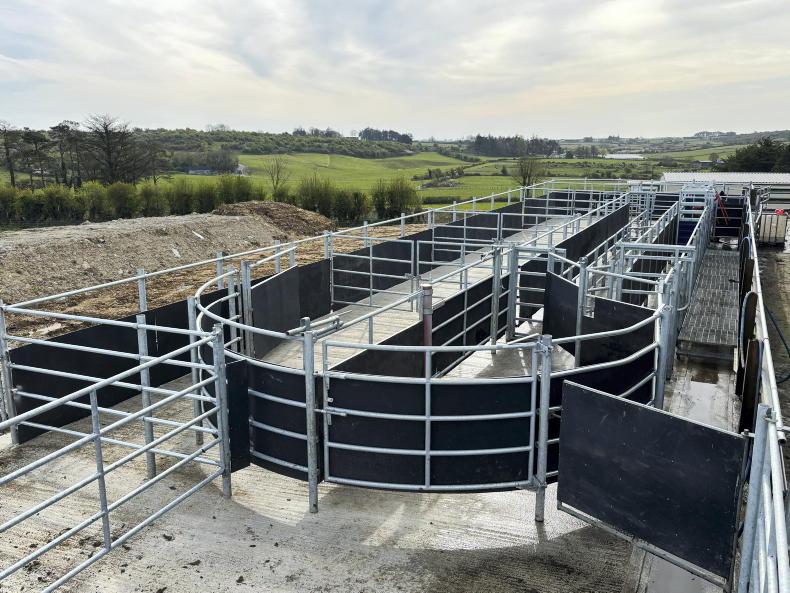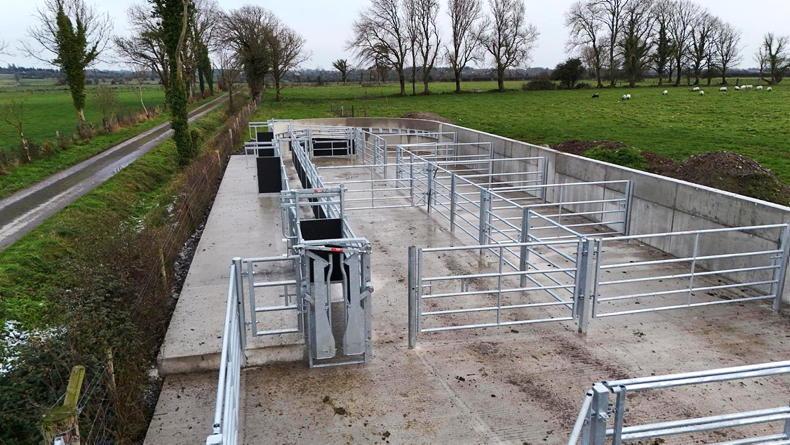
Despite all of its caveats, the TAMS III has been hugely successful, with over 45,000 applications approved to date. Another gem in the TAMS crown has been the 60% grant aid for all farmers under the Farm Safety Capital Investment Scheme (FSCIS) which covers a multitude of investments aimed at improving farm safety, including bale slices, slat replacements and more. With regard to animal handling, nearly all items associated with cattle and sheep handling are classed under the FSCIS, with these items proving some of the most popular across all sub schemes.
Despite a recent drop in approval rates by the Department, all eligible applications under the FSCIS will receive approval, the only sub scheme of the 11 to be granted this.
With regard to cattle handling, the above specifications cover the bulk of penning and gates. Skulling gates, head scoops etc, also fall into this category, and there is no approved list of manufacturers that these have to be sourced from, meaning farmers are free to purchase from where they so choose.
The specs
The ‘crush’ area is defined as the main handling area, where an animal is restrained for treatment, dosing etc, with the race seen as the chute leading up to the crush. Mobile cattle handling equipment is defined by the Department as being equipment that can be transported using a trailer unit, attachable wheels or tractor three-point linkage. There is no mention in specification regarding pallet forks being used to move mobile crushes. The equipment should not be concreted, bolted or permanently fixed in place.
Each mobile crush should consist of, at least, a front gate, rear gate, non-slip floor and full sides. The crush must be a minimum of 2m long, and the sides shall be a minimum of 1.45m high.
The front gate may be a manual, semi-automatic or automatic crush gate. The crush gate at the front should not be less than 1.6m high, and the front gate must finish within 300mm of the floor. If the front gate is fully automatic (hydraulic opening) then it is permitted for the head restraint to finish up to 600mm above floor level.
The sides of the crush should consist of at least four bars, or hinged solid panels, to a height of 1.45m minimum above the crush floor level. A combination of solid panels and bars are acceptable. The sides may open fully, or partially, to allow access to treat the animal contained within the crush. There should be at least two steel hoops across both the top and bottom of the crush holding the sides together.
Each mobile crush unit must have a facility to secure mobile penning to the back of the crush unit.
All side rails and hoops shall consist of at least circular hollow section (tubular) steel with an outside diameter of 48.3 mm and a thickness of 2.5 mm. Alternatively, square hollow section (box iron) steel may be used, of at least 50mm x 50mm x 2.5 mm thick.
Specifications also permit additional items such as leg hoists, weighing scales and head scoops to be incorporated in to the crush. Where the crush is designed to be trailed or carried on the rear three point-linkage of a tractor, the unit must be fitted with lights and relevant plating for road transport.
Mobile cattle penning
Mobile penning (cattle hurdles) must be at least 1.5m high (above ground level), and must consist of at least five rails. The pen sections shall be design to be interlocking, preferable using pins, and should be able to be fastened to the mobile crush unit. The panels may be either mounted on skids or have straight legs.
Lesser-diameter steel compared to the crush section is permitted for the cattle hurdles. The pen sections should be manufactured from circular hollow section (tubular) steel with an outside diameter of 41.28 mm and a thickness of 1.5 mm, or, alternatively, square hollow section steel may be used, of at least 38.1 mm x 38.1 mm x 2.5 mm. The use of field or yard gates as mobile penning is not permitted and where it is desired to install sleeves into the ground to stabilise the pillars joining mobile penning, these sleeves should not be placed in a concrete yard.
Galvanising or painting
Much the same way as steel rolled steel joists (RSJs) for sheds, farmers have two options when it comes to protection of steel from corrosion for cattle handling.
Hop-dip galvanised coating shall be applied after fabrication in accordance with IS EN ISO 1461:2009 to a minimum average coating weight of 610g/m². Small areas of galvanised coating damaged by any subsequent welding, cutting, or by excessively rough treatment during transit and erection may be renovated by the use of at least two coats of “spray-on cold galvanising” supplied by the galvanising company; or at least two coats of zinc-rich paint/primer or two coats of ‘Zinga’.
Alternatively, penning and crushes can be shotblasted and painted, with a holding zinc-rich primer of 25 microns applied within 12 hours of shotblasting. A further 50 microns of primer, and 50 microns of micaceous iron oxide finishing coat, should be sued to provide a total dried coat of minimum 125 microns. (Eighty microns in two coats of the proprietary paint Zinga can be used as an alternative on shotblasted steel to the above standard).