


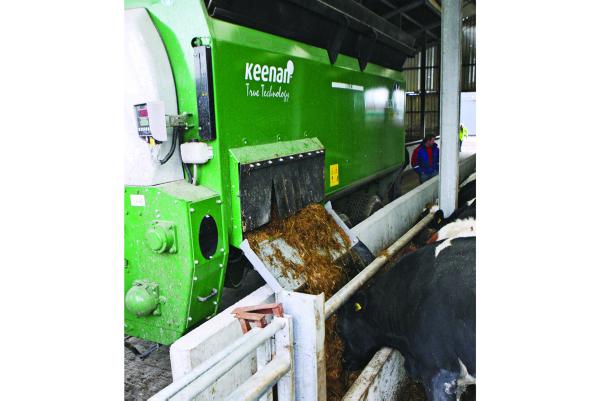
Some farmers claim that they have been the best thing they have recently purchased. Other farmers would never consider having one.
Here, we look at some of the features of the system and examine some of the points that need to be considered before making the change to a wagon feeding system.
What is a mixer wagon/diet feeder?
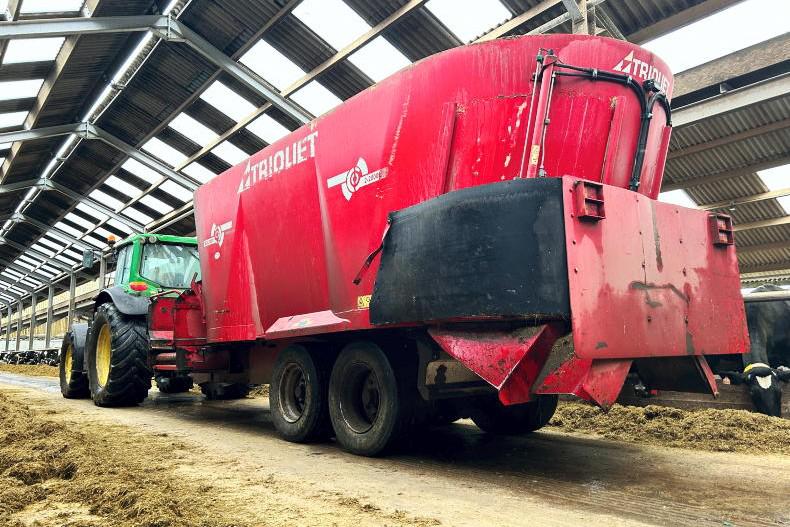
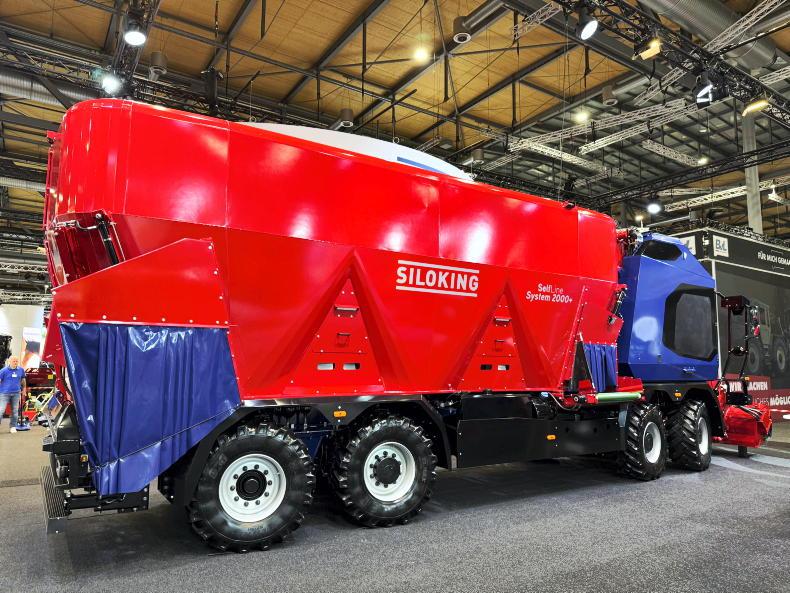
This is a tub type machine that simply mixes a number of feeds together, so the ration can be fed back to the herd on a pad, in a trough or along a fence line. When the nutritional value of each feed in the mix is known, what is called a complete balanced ration can be formulated and mechanically fed to the animals.
In theory, each mouthful that the animal takes is balanced. The danger of over feeding some feeds and over consumption of individual feeds is claimed to be eliminated.
The feeds to be used can be grouped by their nutritive content and/or origin, e.g. fibre — silage, hay and straw; protein — barley, soybean meal, cottonseed meal or byproducts, such as brewer’s grain. More recently, many other byproducts have become available and they can also be classified or grouped as energy or protein feeds.
It is possible to use a fresh grass crop in a mixer wagon, but it is not a common practice.
Fresh grass will have a high water content, so will add to the volume of material that has to be mixed and then fed out. The machines can be used for a form of zero grazing where fresh grass is loaded directly into the feeder in the field and then transported to the yard.
Rations from a mixing wagon are described in two ways as either:
TMR: a total mixed ration, when the herd receives 100% of it diet as the mix.
PMR: a partial mixed ration, when the mix only contributes a part of the daily ration and the herd also grazes. A PMR can be fed after milking or between milking during the day on a dairy farm.
Thinking about a mixer wagon?
Most farmers who consider using a mixer wagon/diet feeder are most likely already feeding significant quantities of silage or
byproducts. They see the wagon as a way of contributing positively to ration formulation and their general farming operation.
In these situations, the mixer wagon and feeding a TMR or PMR could have the following benefits:
improved milk production from a better balanced and mixed ration.
a reduction in (or reduced risk of) metabolic diseases like acidosis, grain engorgement, etc.
a decrease in feed wastage, particularly when compared with round bales fed in ring feeders or on the ground in the paddock.
with a mixed ration, there is less opportunity for animals to sort, separate and reject ingredients.
improved labour efficiency if the old feeding system was labour demanding. It is important to note that adding a mixing wagon can add complexity and cost to the feed system.
obviously, there is the cost of the mixing wagon, but there may be additional costs for other equipment and storage facilities.
there is a need to formulate the mix. This can be done by a nutrition consultant or is a skill that must be learned by the farmer.
by feeding in a confined area, there is potential for manure and nutrient build-up. Issues to consider are effluent run-off and the value of manure as fertilizer.
Consider a partial budget
It is always useful to carry out a partial enterprise budget when considering an investment, such as that when changing to a mixer wagon. This is because adding a mixing wagon to your enterprise will change your costs and returns.
To evaluate the effect of this change, a partial budget should be done.
The budget should estimate:
added capital required.
additional returns from increased milk/beef and reduced wastage.
added costs associated with using a mixer wagon.
1) Added capital could include:
feed mill.
mixer wagon with scales.
front-end loader or telehandler.
new or upgraded shed or bays for storing bulk quantities of feed.
additional feed bunkers.
additional fencing, feed and water troughs.
effluent management.
2) Additional returns could include:
increase in cow and herd production, 3% to 25%.
increase in beef animal output.
reduced feed wastage, 3% to 15%; more if round bales have been used.
3) Added costs could include:
added feed cost, extra milk requires more feed.
added labour costs.
fuel plus repairs and maintenance costs for tractors and mixer wagon.
financial costs of additional machinery, interest or lease fees, plus residual payments.
Advice when considering buying a mixer wagon
Initially, there is the temptation to buy a smaller wagon but herds expand over time and some byproducts are bulky. It is often cost effective to mix one large load rather than 1.5 smaller loads.
Consider the wagon capacity, if feeding at more than one yard.
Consider what happens in wet weather and the slopes around the farmyard that need to be negotiated.
If more than two thirds full, the wagon may not mix properly.
Be prepared to pay more attention to detail when you have a wagon, ration formulation, contract purchase of feed, etc.
Tractor requirements
Over 100 cows need a 14m3 capacity mixer wagon.
Think about safety. A full wagon weighs between seven and 10 tonnes.
A 4WD tractor is required.
Using round bales needs more power as they take longer to break up.
Most feed wagons mix feed adequately with an 80hp tractor but, for safety in operation, a 100hp tractor is more desirable.




SHARING OPTIONS