



The Irish dairy industry is highly seasonal, reflecting the availability of high-quality pasture over a long grazing season.
0As a result, the majority of spring-calving cows are non-lactating during the winter months.
Winter-milk production therefore plays an important role in maintaining a consistent year-round supply of quality fresh milk for the domestic market, while also meeting the demand for winter milk for the manufacture of specific dairy products.
It is estimated that approximately 100,000 dairy cows calve in Ireland each autumn, equivalent to 6.5% of the national dairy cow herd.
There were 1,094 registered liquid milk producers in Ireland during the 2024/25 winter, down from 1,808 in 2016/17.
Despite this decline in producer numbers, the volume of contracted liquid milk supplied has remained relatively consistent.
This reflects the increasing specialisation of autumn-calving systems in Ireland.
In addition, an estimated 600-800 producers supply winter milk through non-registered price-incentive schemes.
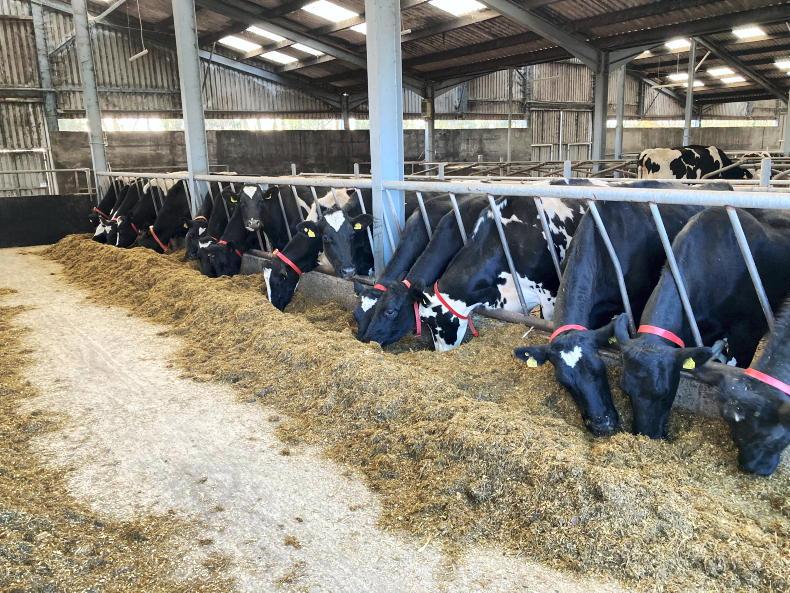
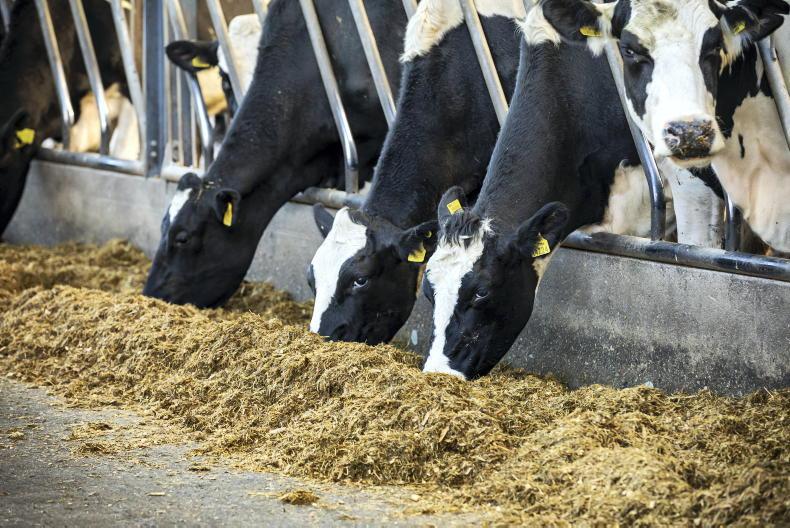
Winter milk systems generally have a greater reliance on conserved forages and concentrate feed than spring-calving systems.
This can result in greater production costs, greater greenhouse gas emissions and increased reliance on imported protein feed ingredients.
At the same time, targets for reducing agricultural emissions and increasing protein self-sufficiency at both national and European level are increasing the need for more efficient and sustainable winter milk production systems.
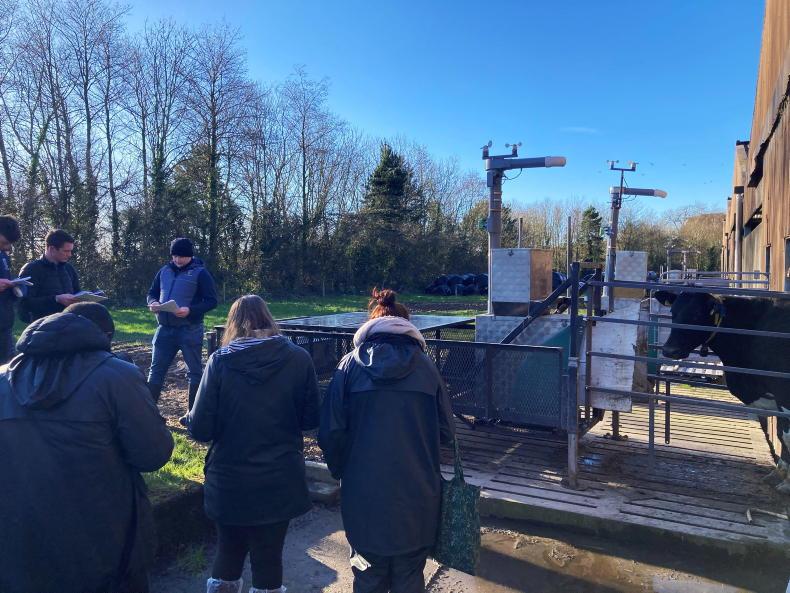
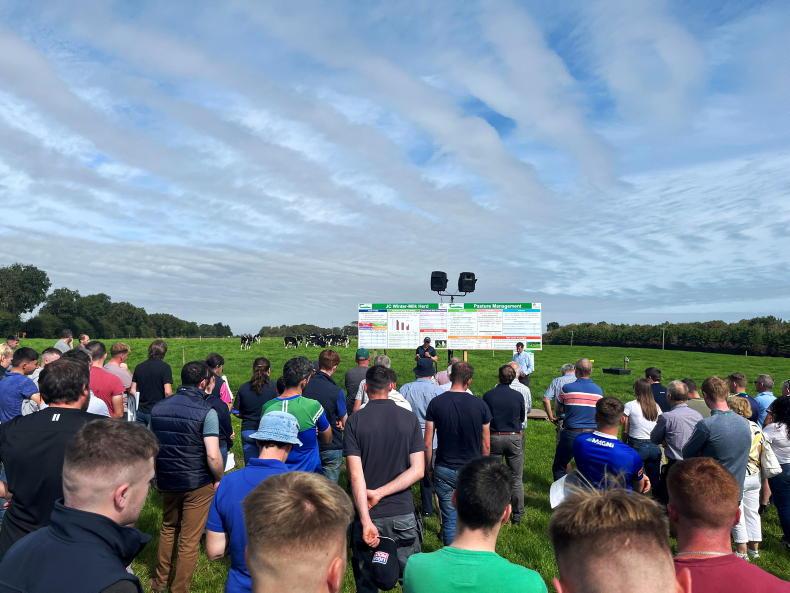
To help address these challenges, a series of experiments has been undertaken at the Teagasc Winter-Milk Farm at Johnstown Castle.
The research has focused on practical strategies to improve the efficiency and sustainability of winter milk production, including maximising the use of grazed pasture, increasing the use of home-grown protein sources, maintaining animal performance and reducing enteric methane emissions.
Doing the basics right – pasture and genetics
At the Johnstown Castle Winter-Milk Farm, considerable focus is placed on the two main drivers of profitability in dairy production: maximising the proportion of high-quality grazed grass in the diet and breeding the right cow.
These principles are no different for winter milk production than they are for spring-calving systems.
Getting these fundamentals right provides a solid foundation on which other mitigation strategies can build, helping to reduce emissions while maintaining animal performance and farm profitability.
The same grassland management principles used in spring-calving systems can be applied to winter milk herds, although some adjustments are required.
During the autumn, pre-grazing yield should be maintained below 1,800kg dry matter (DM)/ha, as freshly calved cows can struggle to graze and utilise heavy autumn covers effectively.
A closing average farm cover of approximately 650kg DM/ha on 15 November should also be targeted, helping to achieve a greater opening farm cover in early spring.
EBI
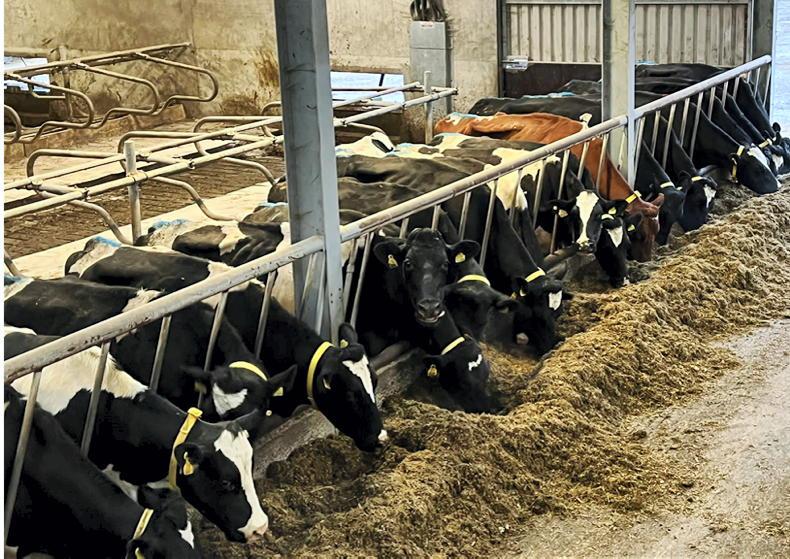
The Johnstown Castle winter milk herd consists of 90 high-EBI (€172) Holstein Friesian cows. The herd has an average calving interval of 370 days and a six-week in-calf rate of 74%. Over the past five years, the herd has averaged 7,268kg of milk per cow, with milk protein and fat concentrations of 3.68% and 4.52%, respectively.
This equates to an average milk solids yield of 596kg/cow, from 1,659kg of concentrate supplementation per cow.
Approximately 1,000kg of concentrate is fed during the winter-housing period, with the remaining 600kg fed during the grazing season.
Breeding management is also an important component of the system. A defined 10-week breeding period, combined with no recycling of cows between breeding seasons, helps to maintain a compact calving pattern.
This is important for maintaining feed efficiency, controlling feed costs and ensuring that production is aligned with the period of highest demand for winter milk.
It also helps to minimise the volume of milk produced outside the contracted winter milk period from November to February.
Home-grown protein sources
Increasing the use of home-grown and EU-sourced protein ingredients, such as field beans and rapeseed meal, could reduce the reliance of Irish dairy farms on imported protein while improving protein self-sufficiency.
At Johnstown Castle, we first compared a standard winter milk diet containing grass silage, maize silage and concentrate based on imported protein sources with a diet based on grass silage and concentrates containing native cereals and protein sources, including barley and field beans
It could also reduce the greenhouse gas emissions associated with feed production. However, the challenge is to achieve these environmental benefits without compromising animal performance.
At Johnstown Castle, we first compared a standard winter milk diet containing grass silage, maize silage and concentrate based on imported protein sources with a diet based on grass silage and concentrates containing native cereals and protein sources, including barley and field beans.
Modelling of feed-related greenhouse gas emissions, which represents one component of a full life-cycle assessment, estimated a 43% reduction in feed emissions for the home-grown diet. However, this came with a reduction in animal performance.
Cows fed the home-grown diet produced 2.04kg of milk solids/cow/day, compared with 2.30kg/cow/day for cows fed the standard diet.
As several dietary factors differed between the treatments, including concentrate ingredients and maize silage inclusion, it was not possible to determine which individual component was responsible for the difference in performance.
A follow-up experiment was undertaken to isolate the effect of the protein source.
In this experiment, concentrates containing home-grown protein sources – field beans and rapeseed meal – were compared with concentrates containing imported protein sources – soybean meal and maize distillers.
The concentrates were formulated to have similar crude protein and energy concentrations.
Again, the home-grown diet was estimated to reduce feed-related greenhouse gas emissions, in this case by 34%.
However, milk solids production was lower for cows receiving the home-grown protein sources, at 2.23kg/cow/day compared with 2.38kg/cow/day for cows receiving the imported protein sources.
Explanation
One possible explanation was that the home-grown protein sources did not provide an adequate supply of metabolisable protein or specific amino acids to support optimal milk production.
This led to the next question: could the performance of cows fed home-grown protein sources be maintained by supplementing the diet with rumen-protected amino acids? We investigated the inclusion of rumen-protected methionine and lysine in diets containing home-grown protein sources.
Overall, amino acid supplementation increased milk protein concentration by 0.1 percentage points, milk fat concentration by 0.1 percentage points and milk solids yield by 0.11kg/cow/day. In this experiment, cows receiving the home-grown protein sources achieved a similar milk solids yield to those receiving imported protein sources, although milk protein yield was slightly lower (-0.05kg/cow/day). These results indicate that targeted amino acid supplementation may help to overcome some of the limitations associated with feeding home-grown protein sources.
However, rumen-protected amino acids also increase feed costs.
Therefore, any improvement in milk production or milk composition needs to be considered against the additional cost of supplementation when assessing the overall economic and environmental sustainability of the strategy.
Further work is required to establish why the milk production response to home-grown protein sources differed between experiments and to determine when amino acid supplementation provides a sufficient production response to justify the additional feed cost.It is also important to put these results into context. These experiments investigated the full replacement of imported protein ingredients.
In commercial diets, home-grown protein sources are more commonly included at lower rates alongside imported soybean and other protein sources.
This approach can maintain satisfactory animal performance, although the potential reduction in feed-related greenhouse gas emissions will be smaller.
Research from University College Dublin has also demonstrated that, at lower feeding rates and inclusion levels in spring-calving grazing dairy systems, the inclusion of home-grown protein sources did not reduce milk production.
Reducing methane production
Enteric methane is a major source of greenhouse gas emissions from Irish agriculture and so reducing methane emissions will be an important component of meeting Ireland’s agricultural greenhouse gas reduction target.
A range of mitigation strategies are available, including breeding for lower methane emissions, improving pasture quality and incorporating methane-reducing feed additives into the diet.
At Johnstown Castle, we investigated a methane-reducing feed additive as part of the winter milk production system, building on the home-grown protein and amino acid nutritional strategies described previously.
The additive was incorporated into the diet feeder alongside the other dietary ingredients each morning and offered to the relevant treatment group.
The results were promising. Cows receiving the methane-reducing feed additive produced 335g of methane/day, compared with 452 g/day for cows receiving the control diet. This represented a 26% reduction in daily methane emissions.
Importantly, there was no negative effect on milk production, with milk solids yield slightly greater for cows receiving the feed additive at 2.48kg/cow/day compared with 2.42kg/cow/day for the control cows.
These results demonstrate the potential for methane-reducing feed additives to reduce emissions from winter milk systems while maintaining animal performance.
However, feed additives are one component of a broader mitigation strategy and their contribution needs to be considered alongside improvements in genetics, grassland management, feed efficiency and overall farm system efficiency.
Implications
The research at Johnstown Castle highlights both the opportunities and challenges associated with improving the sustainability of Irish winter milk systems.
Increasing the use of home-grown protein sources can reduce feed-related greenhouse gas emissions and improve protein self-sufficiency, but our experiments also demonstrated that full replacement of imported protein sources can reduce milk solids production.
Maintaining animal performance will therefore be critical if these nutritional strategies are to deliver environmental benefits without compromising the economic sustainability of the system.
The results from the rumen-protected amino acid work indicate one potential approach to addressing this challenge, although further research is required to understand the variation in animal responses to different home-grown protein sources. Likewise, the methane-reducing feed additive reduced daily methane emissions while maintaining milk solids production. Ultimately, there is unlikely to be a single solution to improving the sustainability of winter milk production.
Rather, a combination of strategies – including efficient use of grazed pasture, appropriate genetics and breeding management and increased use of home-grown feed ingredients will be required.
The challenge for winter milk producers and researchers is to integrate these technologies in a way that reduces environmental impact while maintaining the economic and social sustainability of the farm system.




SHARING OPTIONS