



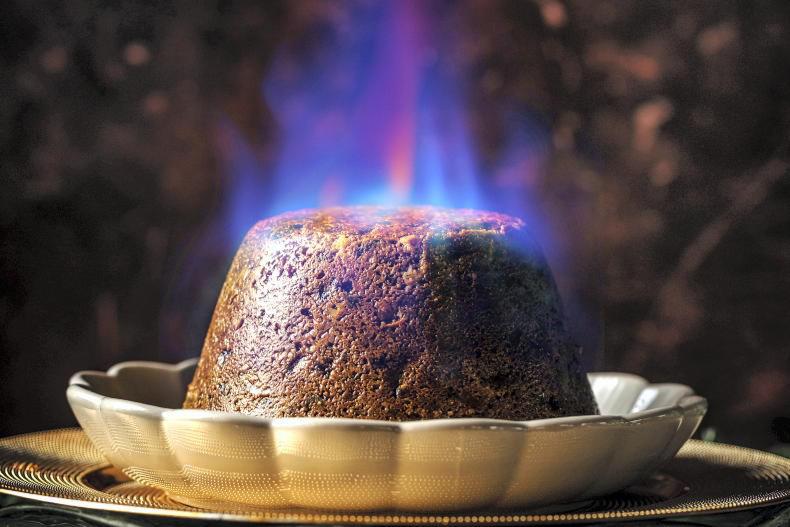
Once upon a time, you couldn’t have Christmas without a well-aged Christmas pudding. Today, pudding seems to have fallen a bit out of favour. The team at the Irish Country Living Food Test Kitchen believe it should be brought back to its former glory.
This recipe is ideal for the traditional steaming method for Christmas puddings. Using a large stock pot, place a wire rack on the bottom on which the pudding bowl will sit.
It also works well in a steam oven. We tested this method using an AEG 8000 SteamPro. Set the oven to full steam at 100°C. Place the pudding in the oven and steam for 5 hours.
Pot or oven: we found there was absolutely no difference between the two puddings – each featured a tender, moist crumb with a rich, boozy flavour. While we needed to regularly top up the water with the stovetop method, we also had to refill the water vessel in the steam oven several times over the course of steaming.
We used a traditional ceramic pudding bowl for this recipe, but you can also use plastic pudding moulds with tight-fitting lids. Both need to be well-greased to ensure the pudding comes out whole, with that characteristically smooth surface.
To create the non-stick coating, we mixed equal parts melted butter, vegetable oil and flour. We used 30g of each before brushing a generous amount inside our pudding bowl.
Once cooled, we removed our puddings from their moulds. We know many choose to keep their puddings in the mould for the duration of ageing, but by removing them we were able to wrap and store them in a brandy-soaked muslin cloth; injecting another dose of boozy flavour.
Puddings are better when they’re aged. Some are aged for up to two years before being eaten. The alcohol and sugars all do their bit to preserve the pudding. The ageing process breaks down molecules, resulting in a complex flavour and finer texture. If you can, let your pudding age for at least one month. Keep it well-wrapped in a cool, dark spot.
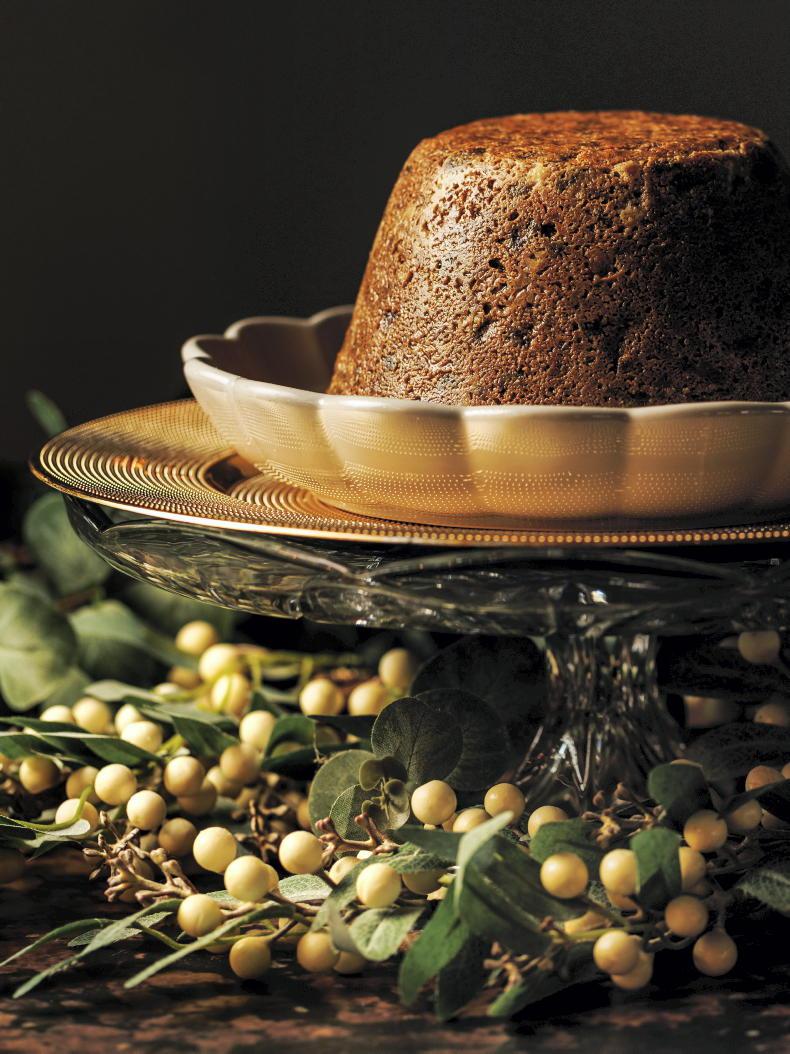
Ingredients: makes one pudding
For the pudding:
200g raisins
100g sultanas
50g glacè cherries, diced
100g dried apricots, diced
50g mixed citrus peel
100g blanched almonds, finely chopped
150ml brandy
1 vanilla bean, split lengthwise and seeds scraped
Zest of one orange
150g vegetable suet
150g fresh breadcrumbs
100g plain flour
1 tsp baking powder
½ tsp fine sea salt
200g dark brown sugar
3 large eggs
50ml Irish honey
1 Bramley apple, peeled, cored and grated
2 tsp ground cinnamon
½ tsp each: ground cloves, allspice, nutmeg, ginger
For the pan release:
30g each of melted butter, vegetable oil and plain flour
For ageing:
200ml brandy
Method
1. One week before you plan to make your pudding, place the raisins, sultanas, glacè cherries, dried apricots, mixed citrus peel and almonds into a large mixing bowl. Pour in 150ml of brandy and mix carefully with a spatula.
2. Cover the bowl with muslin and let the fruit and nuts sit in the brandy for a full week, stirring once every 24 hours.
3. When you''re ready to make the pudding, scrape the seeds out of the vanilla bean and, along with the orange zest and juice, add this to the mixed fruit. Then, add the suet and breadcrumbs. Mix carefully to ensure the breadcrumbs and suet are evenly dispersed.
4. Add the flour, baking powder and salt to the mixture and once again fold gently into the fruit.
5. In another bowl, add the brown sugar, eggs, honey, grated apple and all of the spices. Using a hand mixer, mix on high for 3-4 minutes until light and fluffy. Then, using a spatula, scrape this mixture into the fruit and fold until everything is well mixed.
6. The resulting batter will be wet, but not too loose. Let sit for 20 minutes at room temperature.
7. Mix the melted butter, oil and flour together to make a slightly runny mixture. Brush the inside of a 1.5L pudding bowl or mould, then add a small circle of parchment to the very bottom of the mould (this will be the top of the finished pudding).
8. Pour the batter into the bowl, leaving about 5cm from the rim (any extra batter can be steamed in a smaller tin). If using a ceramic pudding bowl, place another piece of baking parchment over the top followed by a sheet of foil. If using a plastic mould, simply grease the inside of the lid and fit tightly onto the mould.
9. If using a steam oven, steam the pudding for 5 hours at full steam/100°C. If using the stovetop method, place a wire rack or heat-proof trivet on the bottom of a large pot. Place the pudding on the rack and fill with water until it reaches halfway up the pudding mould. Steam for 5 hours, replenishing water as it evaporates.
10. Once steamed, let the pudding cool completely. Then, add the 200ml of brandy to a mixing bowl. Add a large, clean piece of muslin cloth and let it soak up the brandy. When the pudding is cool, carefully remove it from the bowl. Wrap it in the brandy-soaked muslin, then wrap in a layer of cling film followed by a double layer of foil. Leave in a cool, dark place for at least four weeks or up to six months.
11. When ready to serve, add one more feed of brandy or vodka and set it alight to flambé. Serve with warm custard.





SHARING OPTIONS