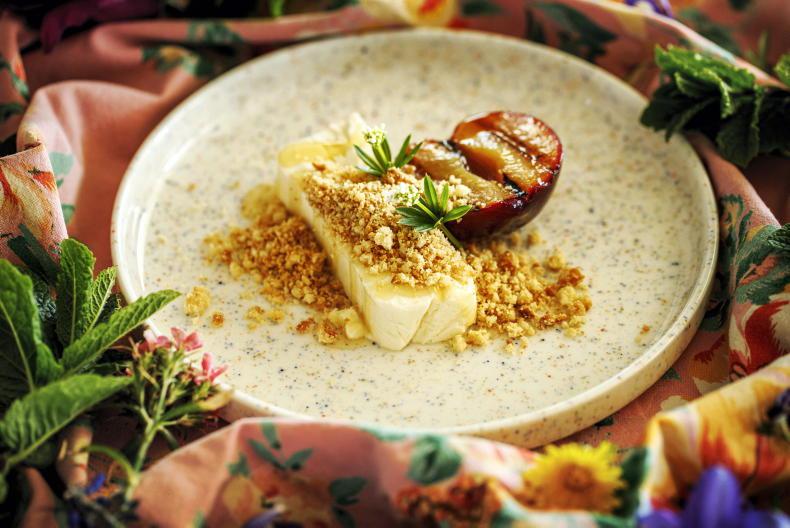
Is there anything better than biting into a plump, juicy peach, plum, nectarine or cherry when they are at their peak? This summer, the Irish Country Living Food test kitchen will be making the most of stone fruit season whether it’s indulging in sweet Irish-grown cherries, making Irish plum chutneys and jams to last through the winter months or indulging in peaches and apricots from our local greengrocers (they always pick the best fruit to sell).
Summer entertaining can be as simple as a chilled glass of rosé enjoyed outdoors with a nice salad, or grilled burgers paired with a great locally-brewed beer (get some drinks inspiration from columnists Caroline Hennessy and Ciara Leahy). But what about dessert?
There’s no way you want to spend hours in the kitchen when the sun is shining.
This is where the test kitchen has you covered – for our cover recipe, we have paired some classic summer flavours, prepared simply in the freezer and on the grill with no need to turn on the oven.
Peaches may not be regularly grown in Ireland, but there are some varieties here which ripen (generally grown under cover in polytunnels) at the end of June or early July.
Mostly, though, when we consider peach, apricot and nectarine season, we are looking at varieties grown in Spain or Italy. If you are lucky enough to get your hands on some Irish-grown peaches (or if you are able to grow them yourself), grilling is a great way to bring out their natural sweetness while maintaining their shape.
The same goes for plums, which tend to ripen in Ireland around the month of August.
Cherries are the forgotten child of the stone fruit family. Irish cherries are grown commercially by some fruit growers (again, they tend to grow their cherries under cover as the trees are prone to wind damage) and they come into season around late June or early July.
A splash of amaretto
We made this cover recipe with some deliciously juicy peaches, but it can be made with any relatively firm-fleshed stone fruit. If you wanted to serve cherries with this dessert, we recommend pitting them and letting them macerate (soak) in a splash of amaretto or Irish whiskey with a touch of honey.
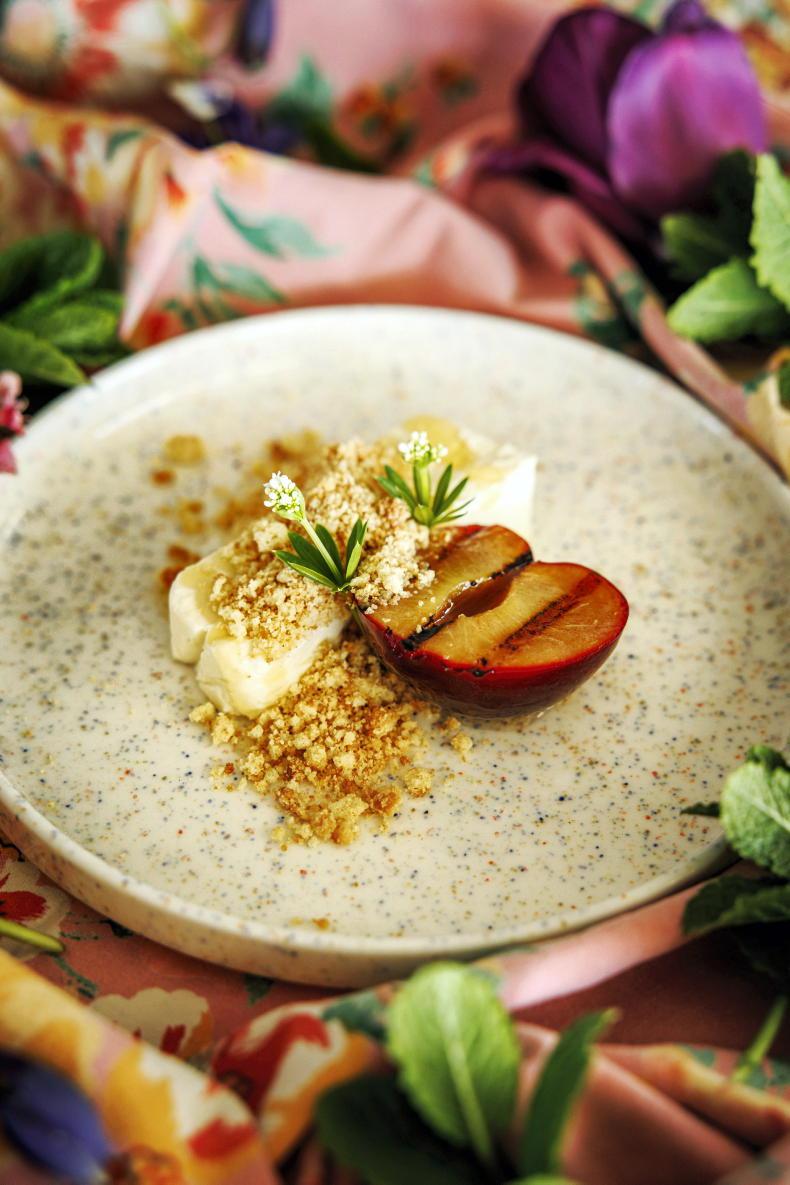
The creamy mascarpone-based semifreddo is the perfect accompaniment to lightly grilled stone fruit. \ Philip Doyle
Working with stone fruit
Stone fruit like peaches, nectarines, apricots and plums have soft flesh around a large pit, or stone.
While some varieties are firmer than others, the flesh around the pit can easily bruise, so we recommend working with a gentle touch.
To remove the stones, simply run a sharp paring knife around the outer edge of the fruit, then twist. If the fruit is ripe, it should easily separate into its halves. One half will still have the stone embedded in its centre. Gently remove the stone from this side of the fruit.
Some prefer to eat peaches peeled, but all stone fruit can be enjoyed with the skin intact. In fact, you will find nutritional benefits in the skin – like fibre and antioxidants – that you might not get in the sweeter flesh of the fruit.
When you’re grilling a peach, apricot, nectarine or plum, the skin helps the fruit stay intact as the flesh softens in the heat. We recommend leaving the skin intact for all of these combined reasons.
Whichever type of stone fruit you decide to use in this recipe, the flavour combination will work well. Most stone fruits carry undertones of almond flavour, which is why flavours like amaretto or amaretti biscuits are so complementary.

We recommend leaving the skin on the peaches as it will help the fruit hold together as it softens on the grill. \ Philip Doyle
A mascarpone-based semifreddo, which is a type of sliced frozen dessert – very similar to an ice cream – provides creaminess which balances out the sweet and tartness of the fruit. Finally, local Irish honey provides the perfect punch of aromatic sweetness to the grilled fruit.
Depending on the location of the beehives, a local honey will take on different flavours. A wildflower honey will taste differently from one where the bees were mainly feeding from heather, for example. Local honey is more expensive than the types you will find in the supermarket, but the quality and flavour is far superior. If you are planning on a dessert where honey is a key component, investing in a local honey is the best way to showcase the flavours of your natural surroundings.
Mascarpone
semifreddo with wild honey and buttery grilled peaches
Serves 6
Ingredients
2 eggs, separated1 vanilla bean, split lengthwise and seeds scraped out60g icing sugar250g mascarpone250g cream100g local Irish honey, divided1/2 tsp cream of tartarPinch of fine sea salt1 tbsp sunflower oil
(or any neutral flavoured oil)4 ripe, plump peaches,
pitted and halved2 tbsp butter, divided1 tsp fresh thyme leavesFresh mint leaves, for garnish½ pack of Amaretti biscuitsMethod
1 Make the semifreddo: in a large mixing bowl (or the bowl of your stand mixer) place 2 egg yolks with the vanilla bean seeds and icing sugar. Using a hand mixer or the whisk attachment of your stand mixer, whisk this mixture on medium high for 5-7 minutes, until pale in colour and increased in volume. Add the mascarpone and honey. Whip for an additional 2-3 minutes to completely incorporate everything.
2 In another bowl, whip the cream to soft peaks and then fold the whipped cream into the mascarpone mixture. Add the egg whites, cream of tartar and pinch of sea salt to another bowl and whip to soft peaks (about 5 minutes with a hand or stand mixer). Fold the whipped egg whites into the mascarpone cream.
3 Generously line a large loaf tin (around 250mm in length) or two smaller tins with cling film. Line the tin both lengthways and widthways, leaving a good amount of cling film hanging over the sides. Pour the mascarpone cream mixture into the prepared tins and gently cover the tops with the overhanging cling film. Place the tins into the freezer for at least 6 hours or overnight.
4 Place amaretti biscuits into a food processor and blitz to a fairly fine crumb. Add 1 tbsp of melted butter and pulse a few times to mix it into the crumbs. Place the amaretti crumbs in a bowl and set aside until read to serve. Half an hour before serving, take the semifreddo out of the freezer to soften at room temperature (if it’s a very hot day, this time can be shortened to 15 minutes).
5 Heat your barbecue to medium high. Slice each peach in half and remove the stone. Place the peaches in a bowl and add the sunflower oil. Toss to coat. Melt the remaining 1 tbsp of butter and add in the thyme leaves. Set aside to infuse while the grill preheats.
6 Place the peaches, cut side down, on the preheated grill. Close the lid and let the peaches grill for 2-3 minutes. The idea is for the internal heat to soften them while you get attractive grill marks on the other side. If your barbecue runs hot, you may want to check on the peaches after 1 minute. You want nicely charred marks, but you do not want the peaches to stick to the grill or burn.
7 Once the cut side of the peaches is nicely grilled, place the peaches on the upper rack of the barbecue, on their rounded side, and close the lid. Again, leave the peaches for a few minutes in the heat to soften and release their juices.
8 Generously brush each peach with the melted thyme-infused butter and remove from the grill.
9 Fill a pitcher with freshly boiled water from the kettle and place a sharp chef’s knife in to heat.
Wipe the water from the knife and cut the semifreddo into generous slices, heating the knife in the boiled water in between slices (this will ensure a nice, clean slice each time).
10 Add a slice of semifreddo to each plate alongside a grilled peach. Drizzle over more honey and add a generous sprinkling of amaretti crumbs. Garnish with fresh mint and thyme and serve right away.
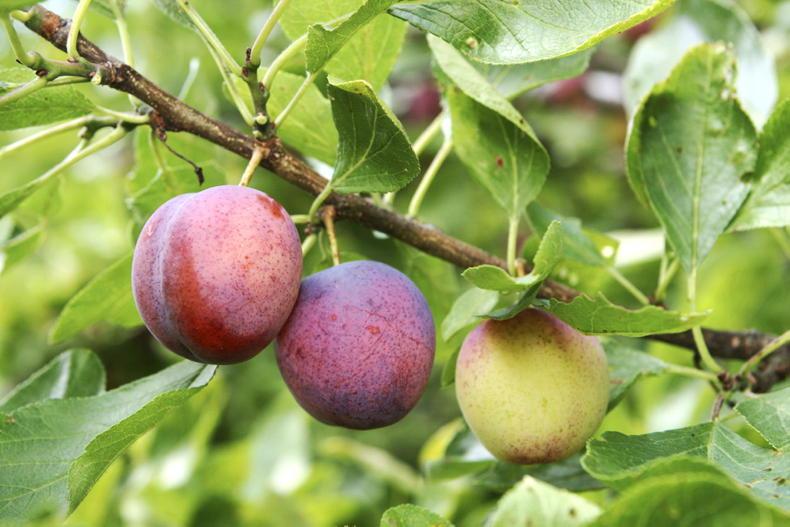
If you want to make this recipe with Irish-grown stone fruit, using plums is a great alternative.
Read more
In-season sweetness at The Apple Farm
Slow it down... Irish lamb, reimagined
Is there anything better than biting into a plump, juicy peach, plum, nectarine or cherry when they are at their peak? This summer, the Irish Country Living Food test kitchen will be making the most of stone fruit season whether it’s indulging in sweet Irish-grown cherries, making Irish plum chutneys and jams to last through the winter months or indulging in peaches and apricots from our local greengrocers (they always pick the best fruit to sell).
Summer entertaining can be as simple as a chilled glass of rosé enjoyed outdoors with a nice salad, or grilled burgers paired with a great locally-brewed beer (get some drinks inspiration from columnists Caroline Hennessy and Ciara Leahy). But what about dessert?
There’s no way you want to spend hours in the kitchen when the sun is shining.
This is where the test kitchen has you covered – for our cover recipe, we have paired some classic summer flavours, prepared simply in the freezer and on the grill with no need to turn on the oven.
Peaches may not be regularly grown in Ireland, but there are some varieties here which ripen (generally grown under cover in polytunnels) at the end of June or early July.
Mostly, though, when we consider peach, apricot and nectarine season, we are looking at varieties grown in Spain or Italy. If you are lucky enough to get your hands on some Irish-grown peaches (or if you are able to grow them yourself), grilling is a great way to bring out their natural sweetness while maintaining their shape.
The same goes for plums, which tend to ripen in Ireland around the month of August.
Cherries are the forgotten child of the stone fruit family. Irish cherries are grown commercially by some fruit growers (again, they tend to grow their cherries under cover as the trees are prone to wind damage) and they come into season around late June or early July.
A splash of amaretto
We made this cover recipe with some deliciously juicy peaches, but it can be made with any relatively firm-fleshed stone fruit. If you wanted to serve cherries with this dessert, we recommend pitting them and letting them macerate (soak) in a splash of amaretto or Irish whiskey with a touch of honey.

The creamy mascarpone-based semifreddo is the perfect accompaniment to lightly grilled stone fruit. \ Philip Doyle
Working with stone fruit
Stone fruit like peaches, nectarines, apricots and plums have soft flesh around a large pit, or stone.
While some varieties are firmer than others, the flesh around the pit can easily bruise, so we recommend working with a gentle touch.
To remove the stones, simply run a sharp paring knife around the outer edge of the fruit, then twist. If the fruit is ripe, it should easily separate into its halves. One half will still have the stone embedded in its centre. Gently remove the stone from this side of the fruit.
Some prefer to eat peaches peeled, but all stone fruit can be enjoyed with the skin intact. In fact, you will find nutritional benefits in the skin – like fibre and antioxidants – that you might not get in the sweeter flesh of the fruit.
When you’re grilling a peach, apricot, nectarine or plum, the skin helps the fruit stay intact as the flesh softens in the heat. We recommend leaving the skin intact for all of these combined reasons.
Whichever type of stone fruit you decide to use in this recipe, the flavour combination will work well. Most stone fruits carry undertones of almond flavour, which is why flavours like amaretto or amaretti biscuits are so complementary.

We recommend leaving the skin on the peaches as it will help the fruit hold together as it softens on the grill. \ Philip Doyle
A mascarpone-based semifreddo, which is a type of sliced frozen dessert – very similar to an ice cream – provides creaminess which balances out the sweet and tartness of the fruit. Finally, local Irish honey provides the perfect punch of aromatic sweetness to the grilled fruit.
Depending on the location of the beehives, a local honey will take on different flavours. A wildflower honey will taste differently from one where the bees were mainly feeding from heather, for example. Local honey is more expensive than the types you will find in the supermarket, but the quality and flavour is far superior. If you are planning on a dessert where honey is a key component, investing in a local honey is the best way to showcase the flavours of your natural surroundings.
Mascarpone
semifreddo with wild honey and buttery grilled peaches
Serves 6
Ingredients
2 eggs, separated1 vanilla bean, split lengthwise and seeds scraped out60g icing sugar250g mascarpone250g cream100g local Irish honey, divided1/2 tsp cream of tartarPinch of fine sea salt1 tbsp sunflower oil
(or any neutral flavoured oil)4 ripe, plump peaches,
pitted and halved2 tbsp butter, divided1 tsp fresh thyme leavesFresh mint leaves, for garnish½ pack of Amaretti biscuitsMethod
1 Make the semifreddo: in a large mixing bowl (or the bowl of your stand mixer) place 2 egg yolks with the vanilla bean seeds and icing sugar. Using a hand mixer or the whisk attachment of your stand mixer, whisk this mixture on medium high for 5-7 minutes, until pale in colour and increased in volume. Add the mascarpone and honey. Whip for an additional 2-3 minutes to completely incorporate everything.
2 In another bowl, whip the cream to soft peaks and then fold the whipped cream into the mascarpone mixture. Add the egg whites, cream of tartar and pinch of sea salt to another bowl and whip to soft peaks (about 5 minutes with a hand or stand mixer). Fold the whipped egg whites into the mascarpone cream.
3 Generously line a large loaf tin (around 250mm in length) or two smaller tins with cling film. Line the tin both lengthways and widthways, leaving a good amount of cling film hanging over the sides. Pour the mascarpone cream mixture into the prepared tins and gently cover the tops with the overhanging cling film. Place the tins into the freezer for at least 6 hours or overnight.
4 Place amaretti biscuits into a food processor and blitz to a fairly fine crumb. Add 1 tbsp of melted butter and pulse a few times to mix it into the crumbs. Place the amaretti crumbs in a bowl and set aside until read to serve. Half an hour before serving, take the semifreddo out of the freezer to soften at room temperature (if it’s a very hot day, this time can be shortened to 15 minutes).
5 Heat your barbecue to medium high. Slice each peach in half and remove the stone. Place the peaches in a bowl and add the sunflower oil. Toss to coat. Melt the remaining 1 tbsp of butter and add in the thyme leaves. Set aside to infuse while the grill preheats.
6 Place the peaches, cut side down, on the preheated grill. Close the lid and let the peaches grill for 2-3 minutes. The idea is for the internal heat to soften them while you get attractive grill marks on the other side. If your barbecue runs hot, you may want to check on the peaches after 1 minute. You want nicely charred marks, but you do not want the peaches to stick to the grill or burn.
7 Once the cut side of the peaches is nicely grilled, place the peaches on the upper rack of the barbecue, on their rounded side, and close the lid. Again, leave the peaches for a few minutes in the heat to soften and release their juices.
8 Generously brush each peach with the melted thyme-infused butter and remove from the grill.
9 Fill a pitcher with freshly boiled water from the kettle and place a sharp chef’s knife in to heat.
Wipe the water from the knife and cut the semifreddo into generous slices, heating the knife in the boiled water in between slices (this will ensure a nice, clean slice each time).
10 Add a slice of semifreddo to each plate alongside a grilled peach. Drizzle over more honey and add a generous sprinkling of amaretti crumbs. Garnish with fresh mint and thyme and serve right away.

If you want to make this recipe with Irish-grown stone fruit, using plums is a great alternative.
Read more
In-season sweetness at The Apple Farm
Slow it down... Irish lamb, reimagined
SHARING OPTIONS