The European Parliament represents EU citizens and works with other institutions to debate, amend, and pass laws that shape policies across the European Union.
Irish people have a wide range of career opportunities in the European Parliament and within Brussels’ EU institutions, reflecting Ireland’s strong role within the EU.
Many work as policy officers, legal experts, economists, translators, and communications professionals in the Parliament, Commission, and Council, contributing to legislation and policy shaping across areas such as climate, trade, and digital affairs.
There are also positions for assistants to Members of the European Parliament (MEPs), roles in research and administration, and opportunities within Ireland’s Permanent Representation to the EU.
Graduates can enter through traineeships like the Blue Book or the Schuman Programme, which often lead to permanent EU careers. Additionally, Irish people find employment in lobbying firms, non-profit organisations (NGOs) and consultancy agencies that influence or support EU decision-making.
In 2022, Irish became recognised as an official working language of the European Union, meaning that with English as our first language, it also provides greater job opportunities.
Irish Country Living spoke to four people with very different roles in Brussels.
Maria Walsh, member of the European Parliament (MEP)
“I was born in Boston, Massachusetts and raised in Shrule, a rural village on the border between Mayo and Galway. My grá for farming came at a young age, helping my dad on our farm and joining my Uncle Liam and Aunt Maureen at agricultural and Connemara Pony shows across Connaught.
“I regret not seeing or understanding agriculture as a full-time job but after my Leaving Certificate I completed an introduction to nursing PLC in Galway Technical Institute. My path then took me elsewhere. I grew up volunteering with various youth organisations, and curiosity led me to do my undergraduate degree in journalism at Griffith College Dublin.
“I champion lifelong learning, and have completed my Green Certificate and a Master’s in Agriculture Extension and Innovation in UCD.
“It was my decision to run for the European Parliament in 2019 that brought me to Brussels. Over the last six years, as an elected Member of the European Parliament, I have lived in two places: three to four days in Brussels working on policy and returning to Ireland for the other three or four days to meet with constituents. Once a month, for four days I travel to Strasbourg, France for an official plenary (voting) session.
“I represent the constituency of midlands-northwest as a Fine Gael MEP, and I sit in the European People’s Party (EPP) group in the Parliament.
“I work with colleagues from 26 other EU countries in the European Parliament – a process which is both challenging and eye-opening. Because of differing national interests and political priorities, we are always working to reach compromises and agreements. This is not always easy to achieve, but reaching consensus is at the heart of what we must do in the European Parliament.
“Splitting my time between Brussels and the constituency on a weekly basis was a challenge at the beginning. MEPs have to prioritise policy-making in Brussels at the same time as constituency work at home. Both are vital to our work, but are also very different.
“As we prepare for the Irish presidency beginning in July 2026, where the Irish Government will chair the European Council and negotiate on behalf of the EU, it offers us an opportunity to “take stock” of where Irish people are working within Brussels and the key positions they hold.
“We need to ensure people, especially students and young workers in Ireland, are looking into roles in Europe to build their skillset and network on behalf of Ireland.
“There are so many opportunities available for young people in Brussels but it can be difficult to know where to start, if you don’t know anyone working or living here. If you have any questions, please feel free to reach out to me.”
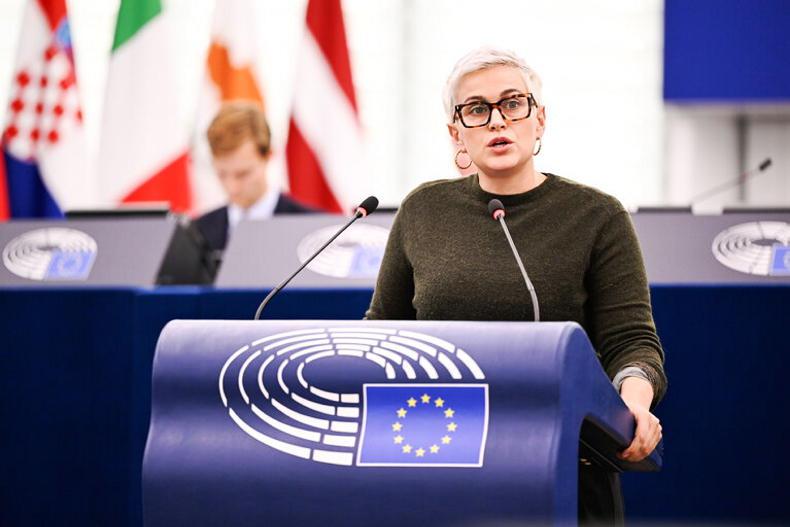
Maria Walsh, Midlands-Northwest, Fine Gael MEP.
Noel Banville, European policy executive, IFA
“I always had a big interest in agricultural policy. Outside of agriculture, I always enjoyed history, geography and economics and these all kind of feed into how policies like the CAP are formed in Brussels.
“When I was in the third year of my agriculture science degree at UCD, I got in contact with the IFA as I knew they had an office in Brussels. They were able to offer me a placement and that’s how I got started in Brussels.
“Most decisions in Brussels can have significant impacts on how farms are managed day-to-day, so it is essential that farmers have the representation through IFA here via the European Farmers Organisation, COPA.
“I am now the European policy executive with the IFA, working alongside the director of European affairs, Liam MacHale. I was very lucky to get to come back, and I would encourage any agriculture students to take full advantage of their placement opportunities, as you never know what it could lead to.
“My biggest learning curve was probably getting to see the diversity of farming systems across the EU and seeing the different challenges that farmers face combined with learning the complexity of how EU laws are made.
“One thing I like about the job is how different every day is depending on what is happening politically. Some days I could be contributing to IFA responses to pieces of legislation while on other days we could be out meeting MEPs or Commission officials on the relevant files for Irish farmers.
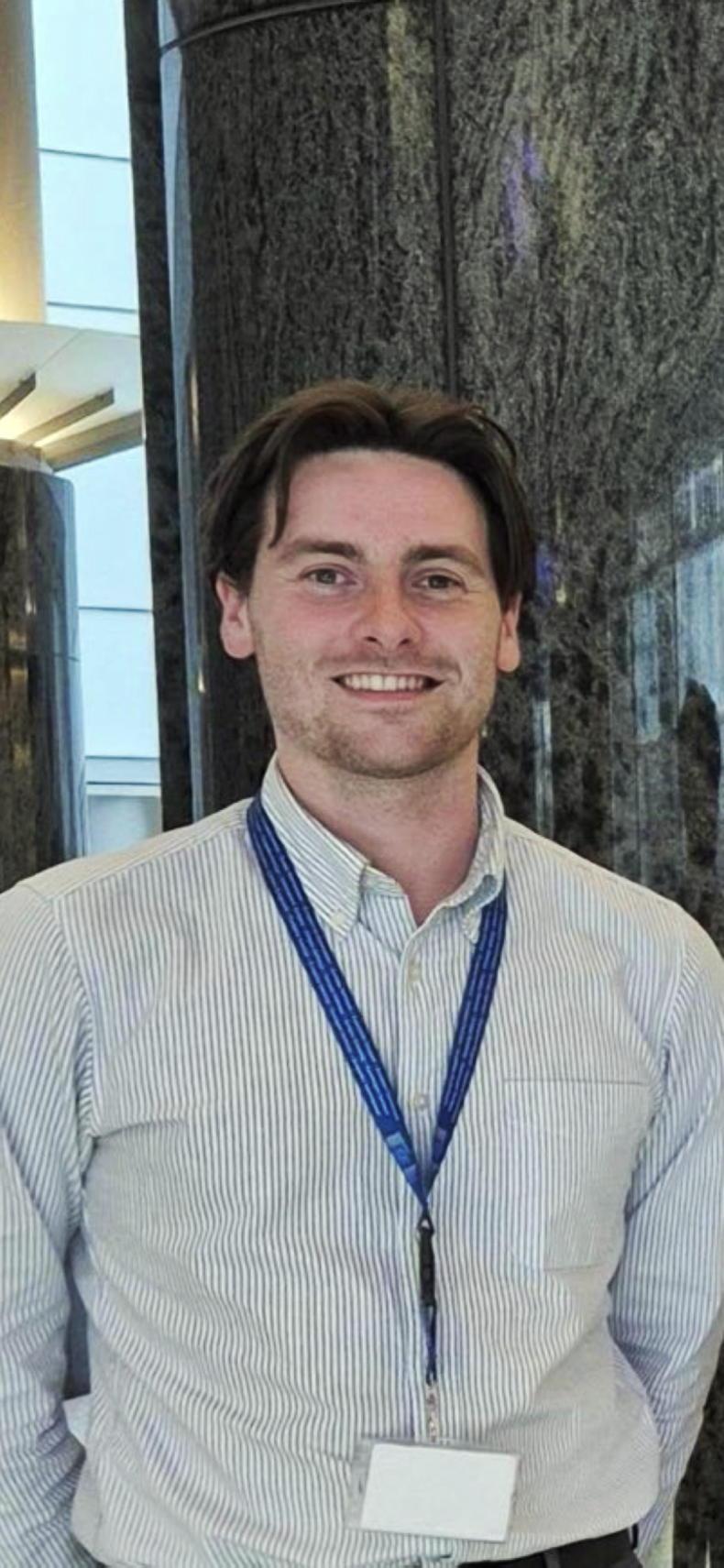
Noel Banville, European policy executive, IFA.
Redmond McEvoy,
agriculture attaché (CAP)
“Like the majority of agriculture graduates, I had a strong interest in all things farming growing up. I come from a part-time beef farm, and this sparked my interest in pursuing a career in the agriculture sector.
“I am currently an agriculture attaché in the Permanent Representation of Ireland to the European Union. There was an opportunity to join the agriculture team here in Brussels as a result of the proposed CAP reform and Ireland’s presidency of the EU, which is due to commence in July 2026.
“Being seconded to work in a new city has presented me with lots of learning curves already in my short time here. I have learned the importance of building relationships with colleagues from other member states. Technical knowledge will always be essential, but effective communication and relationship building are just as important here.
“Given Ireland’s position as a leading agri food exporter, there are numerous career opportunities for Irish professionals overseas. The Department of Agriculture, Food and the Marine offers the chance for staff to wear the green jersey abroad with several agriculture attachés placed around the EU and across the world.
“My personal advice for anyone thinking of taking up a position abroad is to go for it. Working abroad broadens your perspective in ways that you can’t fully appreciate until you do so.
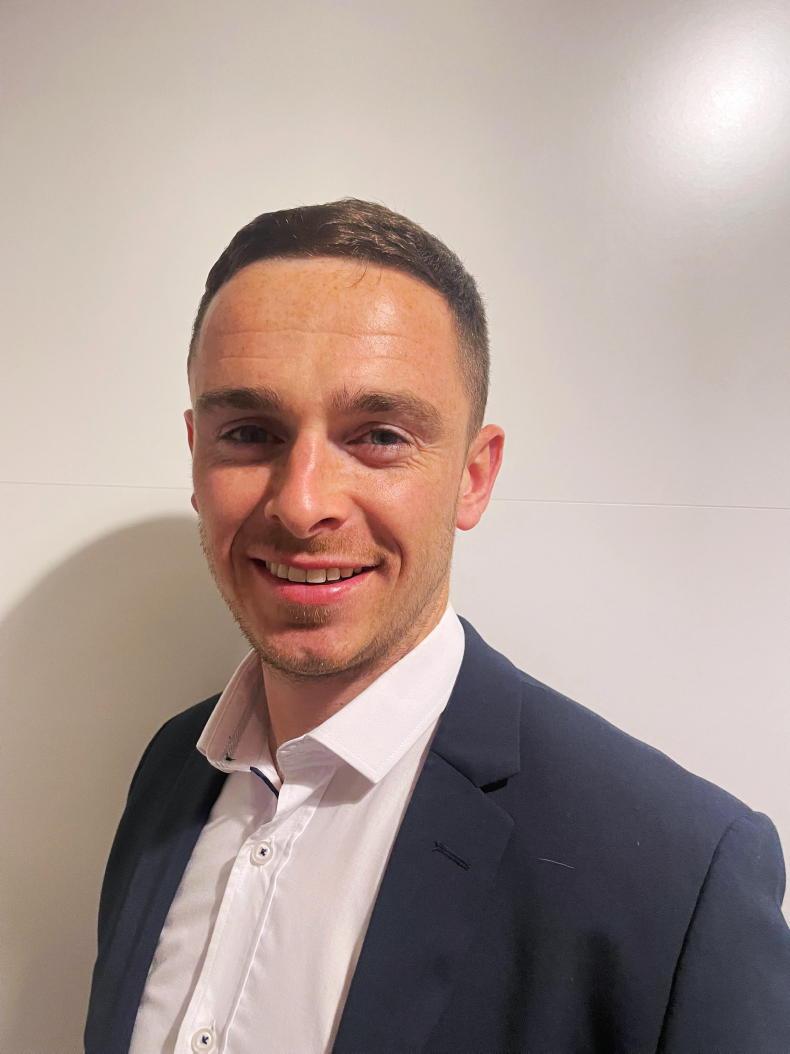
Redmond McEvoy, agriculture attaché (CAP), Permanent Representation of Ireland to the EU.
Rose O’Donovan, editor of Agra Facts
“I come from a farm in west Cork, and I would say it was my upbringing that sparked my interest in the sector. At UCC, I studied French, German and European studies and spent my third year studying abroad in Brittany. Once I got my degree, I headed to a fishing village located in Brittany and taught English to secondary school children.
“Fluent in the French language, I returned to UCC to complete a Master’s in Rural Development, Marketing and Cooperatives and worked at the Department of Food Business and Development before moving to Brussels in February 2004.
“I worked in the European Parliament 21 years ago in the Cabinet of the then-president Pat Cox. It was a fantastic experience, exactly how I imagined it would be – very fast-paced, no day was the same, but it was the perfect opportunity to hone my writing, communication, networking and of course political skills.
“I am currently the editor of the Brussels-based publication Agra Facts. Following my stint in the European Parliament, you could say that I “fell into” working as deputy editor. I became the boss in February 2010.
“Since I started working in the agri sector in May 2007, I cannot get over the number of Irish people moving overseas. Now that the UK is no longer part of the EU, there are even more opportunities for native English speakers and lots of interesting jobs for those with an agri science, communications/media, legal, and public relations background.
“I would advise anyone looking at opportunities abroad to simply do their research and take a chance. If there is an organisation that you are interested in, find out more about it and drop them a line.”
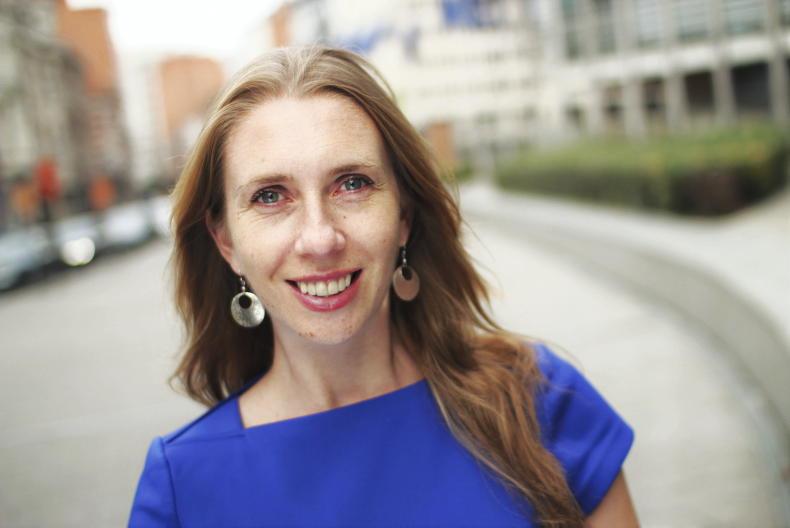
Rose O’Donovan, editor of Agra Facts.
The European Parliament represents EU citizens and works with other institutions to debate, amend, and pass laws that shape policies across the European Union.
Irish people have a wide range of career opportunities in the European Parliament and within Brussels’ EU institutions, reflecting Ireland’s strong role within the EU.
Many work as policy officers, legal experts, economists, translators, and communications professionals in the Parliament, Commission, and Council, contributing to legislation and policy shaping across areas such as climate, trade, and digital affairs.
There are also positions for assistants to Members of the European Parliament (MEPs), roles in research and administration, and opportunities within Ireland’s Permanent Representation to the EU.
Graduates can enter through traineeships like the Blue Book or the Schuman Programme, which often lead to permanent EU careers. Additionally, Irish people find employment in lobbying firms, non-profit organisations (NGOs) and consultancy agencies that influence or support EU decision-making.
In 2022, Irish became recognised as an official working language of the European Union, meaning that with English as our first language, it also provides greater job opportunities.
Irish Country Living spoke to four people with very different roles in Brussels.
Maria Walsh, member of the European Parliament (MEP)
“I was born in Boston, Massachusetts and raised in Shrule, a rural village on the border between Mayo and Galway. My grá for farming came at a young age, helping my dad on our farm and joining my Uncle Liam and Aunt Maureen at agricultural and Connemara Pony shows across Connaught.
“I regret not seeing or understanding agriculture as a full-time job but after my Leaving Certificate I completed an introduction to nursing PLC in Galway Technical Institute. My path then took me elsewhere. I grew up volunteering with various youth organisations, and curiosity led me to do my undergraduate degree in journalism at Griffith College Dublin.
“I champion lifelong learning, and have completed my Green Certificate and a Master’s in Agriculture Extension and Innovation in UCD.
“It was my decision to run for the European Parliament in 2019 that brought me to Brussels. Over the last six years, as an elected Member of the European Parliament, I have lived in two places: three to four days in Brussels working on policy and returning to Ireland for the other three or four days to meet with constituents. Once a month, for four days I travel to Strasbourg, France for an official plenary (voting) session.
“I represent the constituency of midlands-northwest as a Fine Gael MEP, and I sit in the European People’s Party (EPP) group in the Parliament.
“I work with colleagues from 26 other EU countries in the European Parliament – a process which is both challenging and eye-opening. Because of differing national interests and political priorities, we are always working to reach compromises and agreements. This is not always easy to achieve, but reaching consensus is at the heart of what we must do in the European Parliament.
“Splitting my time between Brussels and the constituency on a weekly basis was a challenge at the beginning. MEPs have to prioritise policy-making in Brussels at the same time as constituency work at home. Both are vital to our work, but are also very different.
“As we prepare for the Irish presidency beginning in July 2026, where the Irish Government will chair the European Council and negotiate on behalf of the EU, it offers us an opportunity to “take stock” of where Irish people are working within Brussels and the key positions they hold.
“We need to ensure people, especially students and young workers in Ireland, are looking into roles in Europe to build their skillset and network on behalf of Ireland.
“There are so many opportunities available for young people in Brussels but it can be difficult to know where to start, if you don’t know anyone working or living here. If you have any questions, please feel free to reach out to me.”
Maria Walsh, Midlands-Northwest, Fine Gael MEP.
Noel Banville, European policy executive, IFA
“I always had a big interest in agricultural policy. Outside of agriculture, I always enjoyed history, geography and economics and these all kind of feed into how policies like the CAP are formed in Brussels.
“When I was in the third year of my agriculture science degree at UCD, I got in contact with the IFA as I knew they had an office in Brussels. They were able to offer me a placement and that’s how I got started in Brussels.
“Most decisions in Brussels can have significant impacts on how farms are managed day-to-day, so it is essential that farmers have the representation through IFA here via the European Farmers Organisation, COPA.
“I am now the European policy executive with the IFA, working alongside the director of European affairs, Liam MacHale. I was very lucky to get to come back, and I would encourage any agriculture students to take full advantage of their placement opportunities, as you never know what it could lead to.
“My biggest learning curve was probably getting to see the diversity of farming systems across the EU and seeing the different challenges that farmers face combined with learning the complexity of how EU laws are made.
“One thing I like about the job is how different every day is depending on what is happening politically. Some days I could be contributing to IFA responses to pieces of legislation while on other days we could be out meeting MEPs or Commission officials on the relevant files for Irish farmers.
Noel Banville, European policy executive, IFA.
Redmond McEvoy,
agriculture attaché (CAP)
“Like the majority of agriculture graduates, I had a strong interest in all things farming growing up. I come from a part-time beef farm, and this sparked my interest in pursuing a career in the agriculture sector.
“I am currently an agriculture attaché in the Permanent Representation of Ireland to the European Union. There was an opportunity to join the agriculture team here in Brussels as a result of the proposed CAP reform and Ireland’s presidency of the EU, which is due to commence in July 2026.
“Being seconded to work in a new city has presented me with lots of learning curves already in my short time here. I have learned the importance of building relationships with colleagues from other member states. Technical knowledge will always be essential, but effective communication and relationship building are just as important here.
“Given Ireland’s position as a leading agri food exporter, there are numerous career opportunities for Irish professionals overseas. The Department of Agriculture, Food and the Marine offers the chance for staff to wear the green jersey abroad with several agriculture attachés placed around the EU and across the world.
“My personal advice for anyone thinking of taking up a position abroad is to go for it. Working abroad broadens your perspective in ways that you can’t fully appreciate until you do so.
Redmond McEvoy, agriculture attaché (CAP), Permanent Representation of Ireland to the EU.
Rose O’Donovan, editor of Agra Facts
“I come from a farm in west Cork, and I would say it was my upbringing that sparked my interest in the sector. At UCC, I studied French, German and European studies and spent my third year studying abroad in Brittany. Once I got my degree, I headed to a fishing village located in Brittany and taught English to secondary school children.
“Fluent in the French language, I returned to UCC to complete a Master’s in Rural Development, Marketing and Cooperatives and worked at the Department of Food Business and Development before moving to Brussels in February 2004.
“I worked in the European Parliament 21 years ago in the Cabinet of the then-president Pat Cox. It was a fantastic experience, exactly how I imagined it would be – very fast-paced, no day was the same, but it was the perfect opportunity to hone my writing, communication, networking and of course political skills.
“I am currently the editor of the Brussels-based publication Agra Facts. Following my stint in the European Parliament, you could say that I “fell into” working as deputy editor. I became the boss in February 2010.
“Since I started working in the agri sector in May 2007, I cannot get over the number of Irish people moving overseas. Now that the UK is no longer part of the EU, there are even more opportunities for native English speakers and lots of interesting jobs for those with an agri science, communications/media, legal, and public relations background.
“I would advise anyone looking at opportunities abroad to simply do their research and take a chance. If there is an organisation that you are interested in, find out more about it and drop them a line.”
Rose O’Donovan, editor of Agra Facts.





SHARING OPTIONS